
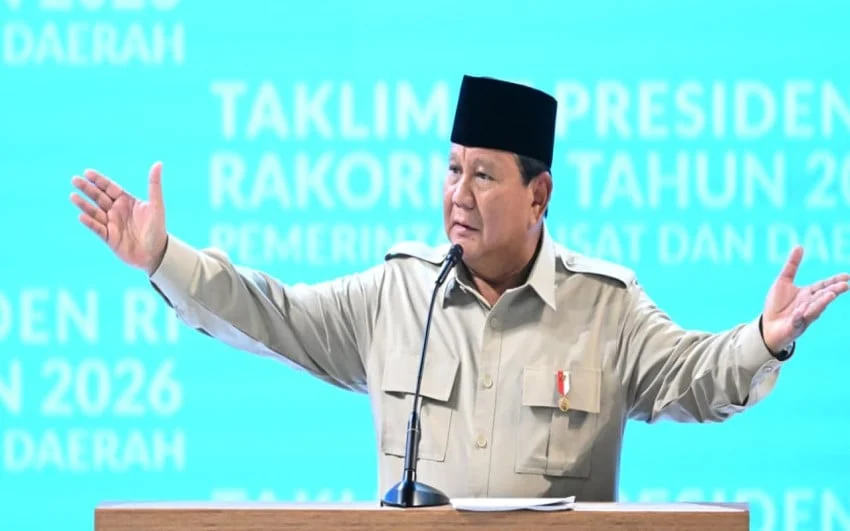
JAKARTA – The Indonesian Ministry of Communication and Digital (Komdigi) has officially declared a video uploaded by prominent political figure Amien Rais concerning President Prabowo Subianto as a hoax, containing elements of slander, and hate speech. The ministry asserted that the content has the potential to incite public unrest and sow division within society. Minister of Communication and Digital, Meutya Hafid, confirmed the identification of the video circulating on social media, stating that its content comprised personal attacks lacking any factual basis.
“Komdigi emphasizes that the content of the video is a hoax, slander, and contains hate speech,” Meutya stated on Friday, May 1st, 2026. This strong condemnation from the government underscores the seriousness with which it views the dissemination of misinformation, particularly when it targets high-ranking public officials and carries the risk of destabilizing the nation.
The video in question, approximately eight minutes in length, was reportedly uploaded by Amien Rais to his personal YouTube channel on Thursday, April 30th, 2026. Within the video, Rais reportedly touched upon the perceived closeness between President Prabowo and the State Secretary, Teddy Indra Wijaya, suggesting that this relationship exceeded professional boundaries. While the specifics of Rais’s allegations were not fully detailed in the initial report, the ministry’s swift and decisive response indicates that the claims were deemed significant enough to warrant immediate governmental intervention.
Background and Chronology of the Allegations
The emergence of this video follows a period of intense political discourse in Indonesia, with President Prabowo Subianto recently assuming office. The relationship between a president and their close aides is often a subject of public scrutiny, but the ministry’s assessment suggests that Rais’s video crossed a line from legitimate observation to malicious falsehoods.
The timeline leading up to Komdigi’s statement can be traced as follows:
- Thursday, April 30th, 2026: Amien Rais uploads an approximately eight-minute video to his personal YouTube channel. The video reportedly discusses the relationship between President Prabowo Subianto and State Secretary Teddy Indra Wijaya, raising concerns about its nature and potential implications.
- Friday, May 1st, 2026: The Ministry of Communication and Digital (Komdigi) identifies the video and issues a formal statement. Minister Meutya Hafid declares the video a hoax, slander, and hate speech, citing its potential to cause public unrest and societal division.
The ministry’s assessment that the video contains "attacks personal and lacks factual basis" is a critical element in their declaration. This implies that the content did not present verifiable evidence but rather relied on unsubstantiated claims and potentially defamatory narratives.
Government’s Stance and Legal Ramifications
Komdigi views the narrative constructed within the video as a form of provocation with the potential to divide the nation. The government reiterated its commitment to ensuring that digital spaces serve as platforms for healthy idea exchange, rather than as conduits for hatred and attacks on individual dignity. This stance reflects a broader global concern about the weaponization of social media and online platforms for political manipulation and character assassination.
In light of these findings, Komdigi has announced its intention to pursue legal action against all parties involved in the creation and distribution of the content. This action will be taken in accordance with the provisions of Law No. 1 of 2024 on Information and Electronic Transactions (UU ITE), specifically referencing Articles 27A and 28 paragraph (2).
Article 27A of the UU ITE generally deals with the prohibition of spreading false information that causes harm. Article 28 paragraph (2) specifically addresses the dissemination of information aimed at inciting hatred or hostility towards individuals or certain groups based on their ethnicity, religion, race, and intergroup relations (SARA). The ministry’s invocation of these specific articles indicates that the video is believed to have violated prohibitions against disinformation and the incitement of intergroup animosity.
The Indonesian government has a history of taking a firm stance against the spread of hoaxes and hate speech, particularly during periods of political transition or heightened public sensitivity. The UU ITE, while intended to safeguard digital communication, has also been a subject of debate regarding its potential for misuse in suppressing freedom of expression. However, in cases where content is deemed to be deliberately misleading and harmful, the government has demonstrated its willingness to enforce legal measures.
Broader Implications and Societal Impact
The implications of such hoaxes and inflammatory content extend far beyond the individuals directly targeted. The spread of misinformation can erode public trust in institutions, polarize communities, and even incite real-world conflict. In a diverse nation like Indonesia, which comprises numerous ethnic groups, religions, and cultural backgrounds, the potential for hate speech to trigger social unrest is a significant concern.
The ministry’s statement serves as a warning to individuals and entities that engage in the creation and dissemination of false and malicious content. It underscores the government’s role as a guardian of public discourse and its responsibility to maintain a stable and harmonious society. The focus on "healthy idea exchange" suggests a desire to foster a digital environment where constructive debate can thrive, free from the corrosive influence of lies and personal vendettas.
The government’s proactive stance in identifying and denouncing the video as a hoax can be seen as an attempt to preemptively mitigate any potential damage. By issuing a clear and unambiguous statement, Komdigi aims to disarm the narrative and prevent its wider adoption by the public. This is crucial in the digital age, where information, whether true or false, can spread with unprecedented speed and reach.
Expert Analysis and Public Reaction (Inferred)
While specific reactions from other political figures or civil society organizations were not detailed in the initial report, it is reasonable to infer that the ministry’s declaration would likely elicit varied responses. Supporters of the government would likely commend Komdigi for its decisive action, viewing it as a necessary step to protect national stability. Conversely, those who align with Amien Rais or are critical of the current administration might question the government’s interpretation or accuse it of suppressing dissent.
Analysts specializing in digital communication and political stability would likely view this incident as a microcosm of the ongoing challenges posed by disinformation in democratic societies. The ability of a single video to trigger a government response of this magnitude highlights the power of digital media to shape public opinion and influence political discourse. The emphasis on "personal attacks without factual basis" suggests that the content likely relied on innuendo, emotional appeals, and unsubstantiated accusations rather than evidence-based arguments.
The involvement of a figure like Amien Rais, a seasoned politician with a significant following, lends weight to the allegations in the eyes of some, even if they are deemed false by the authorities. This underscores the importance of verifying information from all sources, regardless of the purported credibility of the uploader. The ministry’s legal recourse aims to hold those responsible accountable, sending a strong message that such actions will not go unpunished.
The Role of UU ITE in Combating Misinformation
The UU ITE, first enacted in 2008 and amended in 2024, has been a cornerstone of Indonesia’s efforts to regulate online activities. While it has been praised for its role in addressing cybercrime and the spread of harmful content, it has also faced criticism for being too broad and potentially stifling freedom of speech. However, the government’s reliance on specific articles like 27A and 28(2) suggests a targeted approach to combating clearly defined forms of digital harm.
The amendment in 2024 likely introduced new provisions or refined existing ones to address the evolving landscape of digital threats. The ministry’s reference to the amended law indicates that the legal framework is being updated to remain relevant in the face of new challenges, including sophisticated disinformation campaigns.
The legal action initiated by Komdigi will likely involve an investigation into the creation process of the video, the individuals involved, and the methods of its dissemination. The aim is not only to punish offenders but also to deter future violations. The government’s commitment to this process signals its resolve to protect the integrity of the digital space and safeguard the public from the damaging effects of misinformation.
In conclusion, the Indonesian Ministry of Communication and Digital’s strong denouncement of Amien Rais’s video as a hoax, slander, and hate speech, coupled with the threat of legal action under the UU ITE, highlights the government’s firm stance against the proliferation of disinformation. This incident underscores the ongoing battle for control over narratives in the digital age and the critical role of government in ensuring that online platforms contribute to, rather than detract from, societal stability and informed public discourse. The ministry’s actions are a clear signal that the government is prepared to defend the digital realm against malicious content that threatens to undermine public trust and national cohesion.
