
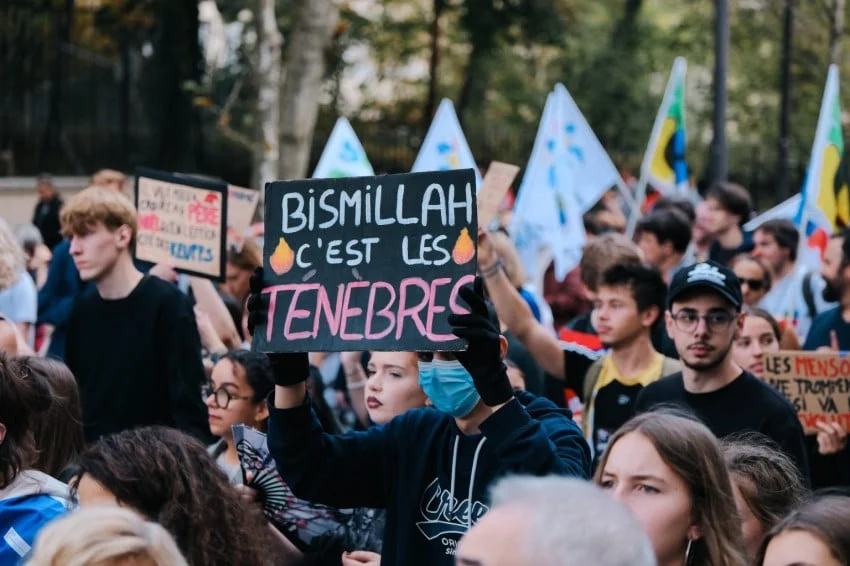
Paris stands on the precipice of another potential wave of civil unrest as the French government implements stringent security measures to manage nationwide demonstrations. Following a week marked by widespread violence, looting, and arson that severely tested the capabilities of national law enforcement, authorities have adopted a multi-layered strategy to maintain public order. The tension has been exacerbated by a last-minute legal dispute between the police prefecture and trade unions regarding the designated routes for upcoming protests. As the government attempts to balance the constitutional right to assembly with the imperative of public safety, the deployment of 70,000 security personnel signifies the gravity of the current situation.
Chronology of Escalation: From Localized Protest to National Unrest
The current volatility is not an isolated event but rather the culmination of simmering social grievances that have periodically boiled over throughout the year. The roots of this cycle of protest trace back to economic pressures, including the cost-of-living crisis and public dissatisfaction with government labor reforms.
The most recent surge in violence began mid-October, when peaceful demonstrations were infiltrated by radicalized elements, leading to systematic vandalism. On October 17, the situation reached a breaking point. Reports from the Ministry of the Interior indicate that more than 3,000 commercial establishments—ranging from small boutique retailers to large retail chains—were either damaged or looted in cities across the country. The scale of the destruction caught local police forces off guard, leading to a state of heightened alert that has persisted ever since.
In the days following the October 17 incidents, the government initiated a series of crisis meetings. President Emmanuel Macron’s administration has faced mounting pressure from both the opposition and local business associations to restore order while simultaneously facing criticism from civil liberties groups concerned about the heavy-handed response of the state.
The Clash Over Public Space: The Bastille-Nation Route Dispute
A central point of contention in the lead-up to this weekend’s protests is the geographic path of the demonstration in Paris. Historically, the route from Place de la Bastille to Place de la Nation is a traditional artery for political expression in the capital. However, the police prefecture issued an emergency order on Friday evening, banning the march through the city center and mandating an alternative route along the outer highway in southeastern Paris.
The rationale provided by the authorities is grounded in intelligence reports suggesting that the narrow streets of the city center provide too many tactical advantages for rioters and make crowd control significantly more difficult. By forcing the protest toward more open, peripheral areas, the police believe they can better contain potential outbreaks of violence.
However, labor unions and civil rights organizers have formally challenged this decision in court, arguing that the relocation of the march is an infringement on the fundamental right to protest. They contend that the alternative route is intentionally designed to render the protest invisible to the political decision-makers and the public at large. As of Saturday morning, the situation remains fluid, with organizers signaling their intent to proceed with the original route despite the police prohibition.
Strategic Deployment: The 70,000 Officer Mobilization
To mitigate the risk of a repeat of the October 17 chaos, Minister of the Interior Laurent Nuñez has announced a massive security apparatus. A total of 70,000 police officers and gendarmes will be deployed nationwide, a figure that highlights the administration’s determination to prevent the mobilization from spiraling out of control.
This force is not merely composed of standard patrol officers. The deployment includes:
- Specialist Intervention Units: Elite tactical squads trained in counter-terrorism and high-stakes riot control.
- Heavy Hardware: The use of armored personnel carriers and water cannons has been authorized as a deterrent against barricade construction and violent surges.
- Aerial Surveillance: Increased use of drone technology and police helicopters to provide real-time situational awareness to field commanders.
- Logistical Buffers: Pre-emptive blocking of key intersections to prevent the convergence of violent groups in sensitive districts.
While the scale of this deployment is significant, officials have noted that it is not unprecedented. The logistics mirror the security architecture utilized on July 14—the French National Day—which coincided with the high-stakes atmosphere of a FIFA World Cup semi-final match against Spain. By drawing on the operational blueprints of major national events, the Ministry of the Interior aims to provide a stable environment for those who wish to protest peacefully while suppressing opportunistic criminal activity.
The Economic and Social Toll
The broader implications of these events are profound for the French economy. The retail sector, already struggling with inflation and declining consumer confidence, has been hit particularly hard. The French Retail Federation (FCD) has expressed deep concern, noting that the repeated closures and security costs associated with these protests are creating a "chilling effect" on urban commerce. Small business owners in Paris have taken to boarding up storefronts with plywood, a visual reminder of the persistent fear of looting.
Beyond the economic data, there is a mounting social cost. The cycle of protest and state crackdown is widening the divide between the government and segments of the population. Observers note that the lack of dialogue between the administration and the protest leadership is preventing a political resolution. While the government maintains that dialogue is open, unions argue that it has been performative, focusing on logistics rather than the underlying policy grievances that sparked the unrest.
Official Responses and Political Implications
The government’s stance has been a delicate balancing act. President Macron has consistently advocated for a "firm but fair" approach, emphasizing that while the right to demonstrate is non-negotiable, the destruction of public and private property is a crime that will be prosecuted with the full force of the law.
Opposition parties have taken varying approaches. Some have criticized the government’s reliance on police force as a sign of weakness and a failure of diplomacy. Others, particularly from the center-right, have urged the interior ministry to take an even tougher stance, suggesting that the leniency shown in the past has emboldened violent fringes.
The judiciary’s role has also come under the spotlight. As the courts evaluate the legality of the route bans, they are effectively deciding the limits of state power in a period of civil strife. The outcome of these legal challenges will set a precedent for how France manages dissent in an era of heightened social polarization.
Analysis: Can Order Be Maintained?
From a tactical perspective, the current strategy of containment and overwhelming presence is a double-edged sword. While it serves to deter casual rioters and protect critical infrastructure, it also risks creating a "siege mentality" among protesters. The presence of armored vehicles and water cannons in the heart of Paris can be perceived as an escalation by the state, potentially radicalizing peaceful participants and narrowing the space for de-escalation.
Furthermore, the intelligence-led approach is dependent on the quality of information provided to the police. The challenge, as seen in the previous week, lies in distinguishing between organized labor movements and opportunistic groups intent on chaos. If the police can successfully create a cordon that separates these two groups, the risk of widespread violence will decrease significantly. However, the urban geography of Paris, with its dense network of alleyways and historical districts, makes such total control an immense logistical challenge.
Conclusion
As Paris braces for the weekend, the city serves as a microcosm of the challenges facing many Western democracies today: the struggle to reconcile public order with the democratic necessity of dissent. The deployment of 70,000 officers is a clear statement that the French state will not tolerate a repeat of the widespread destruction witnessed earlier this month.
However, the long-term stability of the country will depend on more than just police numbers. It will require a return to the negotiating table, addressing the grievances of the demonstrators, and finding a path forward that restores confidence in the political process. For now, the streets of Paris remain a volatile space, caught between the right to protest and the necessity of peace. The world looks on, waiting to see if the government’s six-pronged strategy will succeed in de-escalating the crisis or if it will inadvertently set the stage for further confrontation.
