
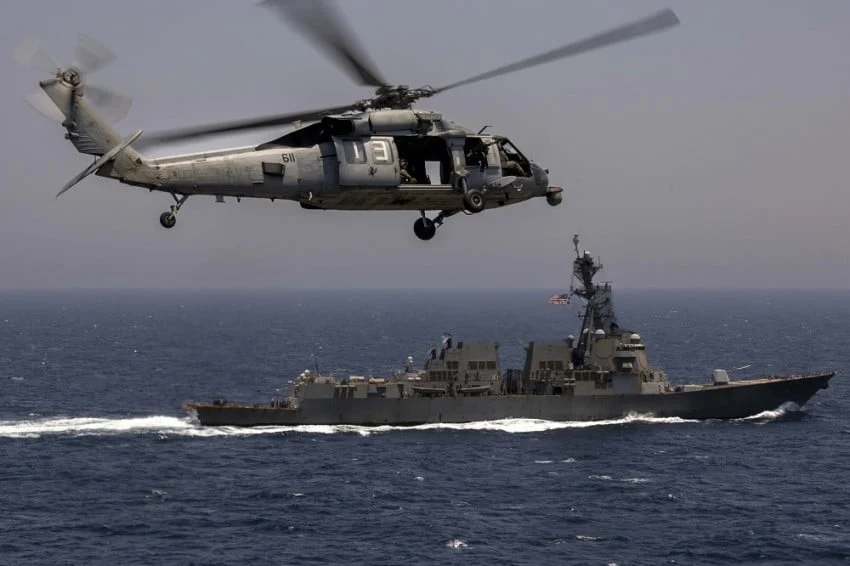
The geopolitical landscape of the Middle East has undergone a seismic shift following a series of high-stakes military engagements and maritime confrontations involving the United States and Iran. According to international relations experts and regional analysts, Washington is currently confronting a harsh series of geopolitical, military, and economic realities. Chief among these developments is a severe, potentially permanent blow to the international reputation of the United States military, driven by its inability to secure critical maritime chokepoints and project decisive power in the region.
The ramifications of these developments extend far beyond the immediate theater of conflict, impacting global energy markets, international shipping lanes, and traditional diplomatic alliances. As policymakers in Washington grapple with these evolving challenges, defense analysts and former diplomats emphasize that the strategic calculus in the Persian Gulf has been fundamentally altered, forcing the Unitedest States and its allies to navigate a new and difficult regional reality.
The Erosion of American Military Prestige
At the heart of the current crisis is a profound reassessment of American military deterrence. Mohamad Elmasry, a professor at the Doha Institute for Graduate Studies, has highlighted that the reputation of the United States armed forces has sustained severe international damage following successive escalations and tactical limitations observed during operations targeting Iran.
For decades, the projection of unmatched naval and air power served as the cornerstone of American hegemony in the Persian Gulf, reassuring allies and deterring adversaries. However, recent events have exposed vulnerabilities in this posture. Elmasry noted in interviews with international media that the perception of American invincibility has been permanently altered. Despite the mobilization of advanced military assets and high-level strategic planning, Washington has struggled to translate its formidable conventional capabilities into favorable, long-term political and strategic outcomes on the ground.
This erosion of prestige is not merely a matter of public perception; it carries tangible diplomatic consequences. Regional actors, observing the limitations of American power projection, are increasingly recalibrating their foreign policies to accommodate the reality of a resurgent Tehran. Traditional allies in the Gulf Cooperation Council (GCC) are pursuing independent diplomatic channels, recognizing that Washington may no longer be willing or able to guarantee absolute security in the face of asymmetric threats.
The Battle for the Strait of Hormuz and Maritime Traffic Realities
A primary battleground in this ongoing confrontation has been the Strait of Hormuz, a narrow and vital waterway through which a significant portion of the world’s petroleum passes. The strategic importance of the strait cannot be overstated, as it represents the world’s most critical oil transit chokepoint.
Following military escalations, political leaders in Washington asserted that international commerce and oil tanker traffic were continuing largely unimpeded through the passage, aided by targeted security measures and covert nocturnal transit operations. However, independent data analytics and maritime tracking intelligence have revealed a starkly different picture.
According to Elmasry and maritime intelligence reports, tracking data conclusively demonstrates that despite American claims, only a fraction of the customary volume of oil tankers and commercial shipping has successfully navigated the strait with any degree of regularity. Despite deploying substantial naval assets to facilitate secure passage, the United States has proven incapable of restoring maritime traffic to pre-crisis levels.
This operational stalemate highlights the limits of naval escorts in the face of sophisticated, land-based anti-ship capabilities, coastal defense systems, and asymmetric naval tactics employed by the Islamic Revolutionary Guard Corps (IRGC). The inability to ensure the unhindered flow of international commerce through the Strait of Hormuz represents a tangible setback for Washington’s declared strategic objectives in the region.
Strategic Imperatives: Why Iran Will Not Relinquish Control
To understand the current impasse, analysts point to the fundamental security doctrines guiding the leadership in Tehran. Alan Eyre, a former senior United States diplomat and researcher at the Middle East Institute, has provided critical insight into the motivations driving Iranian naval strategy in the Persian Gulf.
According to Eyre, the Iranian leadership views control over the Strait of Hormuz not merely as a tactical leverage point, but as the ultimate pillar of its national security and strategic deterrence architecture. For decades, Tehran has operated under the persistent threat of potential military action by the United States and Israel. Consequently, the ability to effectively close or severely disrupt the Strait of Hormuz serves as Iran’s primary asymmetric deterrent against external aggression.
"They view control over the selat [strait] as the only way to prevent future attacks by the US and Israel," Eyre explained. "It is not a bargaining chip that they are going to give up easily."
This perspective underscores why diplomatic overtures aimed at securing free navigation through international pressure or limited military coercion have consistently fallen short. For Tehran, relinquishing dominance over the waterway would mean stripping away its most effective shield against superior conventional military forces. Consequently, regional experts argue that Washington and its Gulf allies must prepare for a prolonged period in which Iran exercises de facto control over the strait, viewing this situation as an inescapable short-term reality.
Economic Fallout and Global Market Vulnerabilities
The inability of the United States to secure the Strait of Hormuz has triggered profound economic repercussions across the globe. Energy markets remain acutely sensitive to disruptions in the Persian Gulf, and any sustained restriction of tanker traffic reverberates immediately through international crude prices, driving up inflation and threatening fragile post-pandemic economic recovery frameworks worldwide.
The ripple effects are felt most acutely by import-dependent economies in Asia and Europe, while even energy-exporting nations in the Gulf face severe logistical hurdles and rising insurance premiums for maritime shipping. The persistent uncertainty surrounding transit security has forced multinational energy corporations to reconsider long-term capital investments in regional infrastructure, leading to a climate of cautious reticence.
Furthermore, the economic pressure resulting from compromised shipping lanes has placed immense strain on regional governments. Gulf states, recognizing the existential threat that prolonged conflict poses to their ambitious economic diversification programs—such as Saudi Vision 2030—have increasingly sought to decouple their economic security from Washington’s military strategy.
The Shift in Diplomatic Paradigms
Perhaps one of the most significant structural changes arising from the conflict is the dramatic transformation of diplomatic engagement channels in the Middle East. Historically, Washington maintained a near-monopoly on regional diplomacy, acting as the primary mediator and arbiter for security arrangements in the Persian Gulf.
However, current assessments indicate that diplomatic initiatives have largely shifted away from Washington, migrating instead toward regional capitals such as Baghdad, Doha, and Muscat. This evolution has been accelerated by the perception that the United States is increasingly either unwilling or institutionally incapable of engaging in the complex, nuanced diplomacy required to de-escalate tensions sustainably.
Regional stakeholders, weary of protracted conflicts that disproportionately threaten their domestic stability, have taken the initiative to establish direct bilateral dialogues with Tehran. These diplomatic maneuvers are designed to carve out pragmatic, localized accommodations that ensure commercial continuity and national security, bypassing the broader ideological confrontations pushed by Western powers.
As analysts like Eyre suggest, Washington may ultimately be forced to adopt a more passive diplomatic posture, accepting regional realities shaped by local powers rather than imposing solutions from afar. This transition signals the potential end of the unipolar diplomatic era in the Middle East, giving way to a multipolar regional security framework where local actors dictate the terms of engagement.
Conclusion and Future Outlook
The convergence of military limitations, unyielding strategic calculations by Tehran, escalating global economic pressures, and shifting diplomatic architectures paints a complex picture of America’s current standing in the Middle East. The realization that traditional levers of power—ranging from naval dominance to coercive economic sanctions—have failed to achieve their desired outcomes marks a watershed moment in contemporary international relations.
Moving forward, policymakers in Washington face the formidable task of reconciling strategic ambitions with the hard realities on the ground. Whether the United States can adapt its foreign policy to navigate this diminished posture without entirely abandoning its regional commitments remains one of the defining geopolitical questions of the decade. For now, the imperative for international stakeholders is to manage the immediate economic fallout, adapt to a new maritime security paradigm in the Strait of Hormuz, and recognize that the balance of power in the Middle East has entered a permanent state of transformation.
