
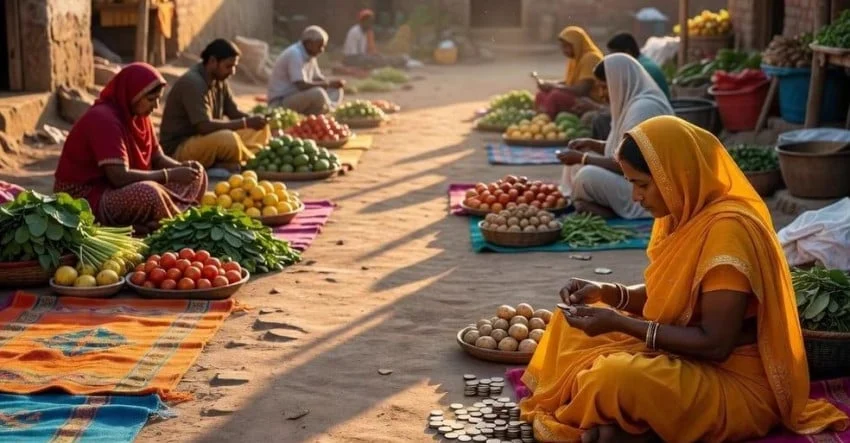
The global landscape of poverty alleviation has witnessed a seismic shift as the World Bank officially confirmed that India has successfully lifted approximately 496 million people out of poverty over the last twelve years. This historic accomplishment, detailed in the October 2026 edition of the Poverty and Equity Brief, marks one of the most significant socioeconomic transformations in modern history. By effectively channeling the dividends of rapid economic growth into the hands of its most vulnerable citizens, India has managed to slash its extreme poverty rate from 27.1% to a marginal 2.6% between 2011 and 2023.
A New Era of Economic Inclusion
The magnitude of this achievement cannot be overstated, particularly when viewed through the lens of India’s demographic trajectory. As the world’s most populous nation—having surpassed China in 2023—India faced the daunting challenge of providing infrastructure, healthcare, and financial services to a ballooning citizenry. Yet, the data suggests that India has outpaced its northern neighbor in the speed and scale of poverty reduction, challenging long-held assumptions about the necessity of authoritarian control for rapid economic development.
The World Bank’s assessment defines extreme poverty based on a daily income threshold of USD 3. By moving nearly half a billion people above this line, the Indian government has effectively integrated a massive segment of the population into the formal economy. This transition has been facilitated by a multi-pronged approach under the administration of Prime Minister Narendra Modi, focusing on digital infrastructure, direct benefit transfers, and massive public investment in basic services.
The Mechanisms of Change: A Strategic Framework
The decline in poverty did not occur in a vacuum; it was the result of deliberate policy interventions. Analysts point to several key pillars that have defined India’s socioeconomic agenda over the past decade.
First is the JAM trinity—Jan Dhan, Aadhaar, and Mobile. This digital architecture revolutionized how the government interacts with its citizens. By linking bank accounts (Jan Dhan) with biometric identification (Aadhaar) and mobile connectivity, the government created a seamless conduit for subsidies and social welfare payments. This reduced leakages, minimized corruption, and ensured that financial aid reached the intended beneficiaries directly, bypassing the traditional bureaucratic intermediaries that often siphoned off resources.
Second is the massive push for rural and urban infrastructure. The expansion of the road network, rural electrification, and the rollout of affordable housing programs, such as the Pradhan Mantri Awas Yojana, provided the essential foundation for economic mobility. By lowering the cost of doing business in rural areas and improving connectivity to urban markets, these initiatives allowed small-scale farmers and laborers to access broader economic opportunities.
Third is the focus on financial inclusion. By mandating the opening of bank accounts for unbanked populations, the government brought millions into the formal financial system. This allowed the marginalized to save money securely, access credit, and participate in the digital economy, effectively bridging the gap between subsistence living and productive engagement in the national market.
Chronology of Progress (2011–2026)
To understand how India arrived at this milestone, one must look at the timeline of its reform efforts:

- 2011–2014: The Foundation Phase: This period saw the initial conceptualization of biometric identification systems and the groundwork for the digital payment infrastructure that would later become the backbone of the Indian economy.
- 2015–2018: Scale and Integration: The government launched massive campaigns for financial inclusion (Pradhan Mantri Jan Dhan Yojana). Simultaneously, the integration of Aadhaar with public distribution systems began to curb the massive leakage of food and fuel subsidies.
- 2019–2021: Resilience Amidst Crisis: Despite the severe economic disruptions caused by the global pandemic, the government’s welfare-led approach—including free food grain distribution to over 800 million people—prevented a catastrophic slide back into poverty, maintaining the momentum of the previous years.
- 2022–2023: Consolidation and Global Recognition: India emerged as the world’s fastest-growing major economy. The culmination of these efforts was reflected in the data provided by the World Bank, confirming the unprecedented reduction in poverty figures.
- 2024–2026: Sustaining Momentum: Current efforts are focused on skill development and the "Make in India" initiative to ensure that those who have exited extreme poverty can move toward sustainable, middle-class livelihoods.
Official and Expert Perspectives
While the government has touted these numbers as a validation of its "Sabka Saath, Sabka Vikas" (Together with all, Development for all) mantra, international observers note that the challenge is now to prevent "poverty traps" for those hovering just above the USD 3 line.
Economic analysts at the World Bank and various think tanks have lauded the efficiency of the direct benefit transfer (DBT) system. "The speed at which India has implemented a social safety net of this scale is unparalleled," noted a senior economist in a recent briefing. "The focus has shifted from mere poverty alleviation to long-term wealth creation through digital inclusion."
However, critics and some social scientists emphasize that while extreme poverty has plummeted, the challenge of income inequality remains. The focus in the coming years, they argue, must shift toward increasing the quality of employment and ensuring that the newly empowered population has access to quality healthcare and education, which are the primary determinants of upward social mobility.
The Broader Global Impact
India’s success serves as a blueprint for other developing nations in the Global South. The "India Model"—which prioritizes technological intervention and digital public goods—is increasingly being studied by governments in Africa and Southeast Asia. By proving that a country of 1.4 billion people can manage its resource distribution with precision through technology, India has shifted the global discourse on development.
Furthermore, the surge in the domestic consumer base has made India a critical engine of global growth. As 496 million people gain increased purchasing power, the demand for goods, services, and digital platforms within India has skyrocketed, making it a pivotal market for multinational corporations and a stable partner in global trade.
Challenges Ahead: Beyond the Poverty Line
Despite the historic victory, the path forward is not without hurdles. The transition from extreme poverty to the lower-middle class is a precarious one. Economic shocks, such as inflation or climate-related disruptions to the agricultural sector, could threaten the stability of these households.
The government’s next phase of development is expected to prioritize:
- Human Capital Development: Strengthening the quality of primary education and vocational training to ensure the labor force is equipped for the digital economy.
- Healthcare Resilience: Scaling the Ayushman Bharat health insurance scheme to ensure that medical emergencies do not force families back into poverty.
- Sustainable Agriculture: Modernizing the agricultural sector to increase yields and protect farmers from volatile climate patterns.
- Employment Creation: Incentivizing the manufacturing sector to provide high-quality jobs for the millions entering the workforce annually.
Conclusion
The news that 496 million Indians have escaped extreme poverty is more than just a statistical milestone; it is a profound testament to the power of targeted, technology-driven governance. By leveraging the digital revolution to overcome the traditional obstacles of geography and corruption, India has effectively re-written the narrative of its own development.
As the country continues its journey toward becoming a developed economy, the lessons learned from this period—specifically regarding the importance of digital infrastructure and direct, transparent welfare delivery—will undoubtedly serve as a guiding light for other nations striving to lift their own populations out of the shadows of extreme poverty. The scale of this achievement confirms that when systemic barriers are dismantled with precision and intent, the potential for human progress is truly immense. The coming years will be crucial in determining whether this momentum can be sustained to bridge the remaining gaps in wealth and opportunity, but for now, the data stands as a definitive victory for the Indian people and their economic architects.
