
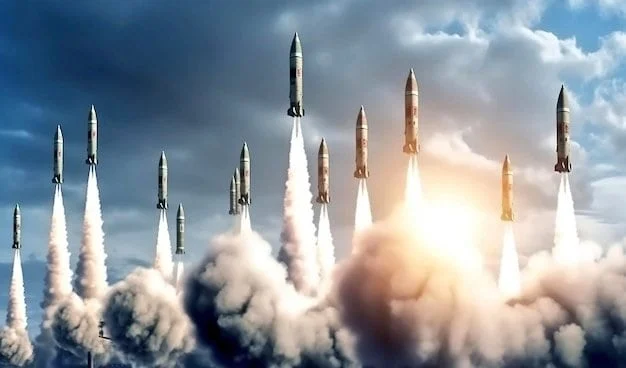
TEHERAN — In a sweeping display of military posturing and technological assertion, the Islamic Revolutionary Guard Corps (IRGC) Aerospace Force has issued a stark warning to regional adversaries and international critics alike. During a high-profile press conference held on Saturday, IRGC Aerospace Force Spokesperson Brigadier General Hossein Mohebbi announced that the elite military branch has developed and stockpiled fourteen distinct "game-changing" capabilities designed to fundamentally alter the geopolitical and tactical landscape in the event of renewed conflict.
The declaration comes amid heightened regional tensions in the Middle East, serving as both a deterrent against potential foreign aggression and a celebration of Iran’s domestic defense industrial complex. According to senior military officials, these fourteen breakthroughs represent a synthesis of indigenous research, technological adaptation, and strategic endurance honed through decades of international sanctions and asymmetric warfare.
Strategic Warnings and the Threat of Unprecedented Escalation
Addressing journalists in Teheran, Brigadier General Mohebbi articulated a clear red line regarding potential military escalations against the Islamic Republic. He warned that if hostile nations—an indirect reference to regional adversaries and Western powers—attempt to launch a third wave of unprovoked military aggression against Iran, the IRGC Aerospace Force will unleash a suite of previously undisclosed tactical assets.
"We possess surprises that can completely transform the mapping of any prospective battlefield," Mohebbi stated during his address. He emphasized that the operational deployment of these assets would leave international military observers and adversaries utterly astonished. While details regarding the precise operational mechanics of these capabilities remain classified, military analysts note that the rhetoric underscores Teheran’s shift from a defensive posture to an assertive doctrine of deterrence-by-denial.
The fourteen strategic advancements highlighted by the IRGC spokesperson encompass a wide spectrum of military disciplines, ranging from advanced rocketry and autonomous systems to logistical resilience and domestic technological self-sufficiency.
From Importer to Exporter: The Evolution of Iran’s Defense Sector
A central pillar of Mohebbi’s briefing focused on the structural transformation of Iran’s military-industrial complex over the past four decades. Historically dependent on foreign arms imports—dating back to the pre-1979 era under the Pahlavi dynasty and subsequently hampered by comprehensive arms embargoes following the Islamic Revolution—Iran has aggressively pursued a policy of military autarky, known locally as the "Resistance Economy" model applied to defense.
Mohebbi highlighted the first major milestone of this evolution: the complete transition from a consumer of foreign military hardware to a prominent exporter of advanced defense technology. By fostering domestic knowledge production and reverse-engineering complex foreign systems, Iranian engineers have successfully localized global defense manufacturing expertise.
As a primary case study, the IRGC spokesperson pointed to the Shahed-136 loitering munition, commonly referred to in international security discourse as a "suicide drone." The delta-wing UAV has become a focal point of modern military analysis due to its low cost, long operational range, and disruptive impact on asymmetric and conventional battlefields alike. Mohebbi asserted that the design principles of the Shahed series have been studied, replicated, and adapted by defense developers worldwide, including within the United defense apparatus, albeit under different designations and nomenclature.
"We no longer rely on external powers for our defense needs," Mohebbi declared. "There is no longer any operational necessity to import weaponry from foreign states, to invite foreign military advisors to train our personnel in the utilization of complex systems, or to procure spare parts from international suppliers to maintain our combat readiness."
Chronology of Iran’s Aerospace and Missile Development
To understand the weight of the IRGC’s recent assertions, it is necessary to examine the historical trajectory of Iran’s aerospace sector, which began in earnest during the Iran-Iraq War (1980–1988) when the country faced severe international isolation and missile barrages from Saddam Hussein’s regime.
- The Foundation Era (1980s–1990s): Deprived of modern missile technology, Iran began reverse-engineering Soviet-era Scud missiles, laying the groundwork for the Shahid Bagheri Industrial Group and subsequent ballistic missile programs.
- The Medium-Range Milestone (2000s): Teheran successfully tested and deployed medium-range ballistic missiles, such as the Shahab series, significantly expanding its strategic reach across the Persian Gulf and the broader Middle East.
- The UAV Revolution (2010s): Recognizing the cost-effectiveness and tactical utility of unmanned aerial systems, Iran heavily invested in drone technology, culminating in the development of reconnaissance, strike, and loitering platforms like the Mohajer, Ababil, and Shahed families.
- Integrated Air Defense and Autarky (2020s): The focus shifted toward multi-layered domestic air defense networks and sophisticated anti-ballistic systems, alongside the formal integration of space-launch capabilities.
Showcase of Indigenous Hardware
During the conference, the IRGC spokesperson enumerated several flagship military hardware systems that symbolize Iran’s current defense independence. Among these are:
- The Arman Anti-Ballistic Missile System: A tactical defense system designed to intercept short- and medium-range ballistic threats with high mobility and rapid deployment times.
- The 3rd Khordad Air Defense System: A medium-range, mobile surface-to-air missile system renowned for its tracking capabilities, famously credited with downing a United States RQ-4 Global Hawk surveillance drone over the Strait of Hormuz in 2019.
- The Shahed-357 UAV: An advanced reconnaissance and strike drone representing the latest iterations of Iran’s prolific unmanned aerial vehicle fleet.
The inclusion of these systems in export portfolios indicates that Teheran is not only equipping its own armed forces—including the regular Islamic Republic of Iran Army (Artesh) and the IRGC—but is also positioning itself as a commercial defense vendor in international niche markets.
Geopolitical Implications and International Reactions
The announcement by the IRGC Aerospace Force arrives at a critical juncture in international diplomacy. With negotiations concerning Iran’s nuclear program remaining stalled, and ongoing proxy conflicts active across the region involving allied groups in Lebanon, Yemen, Syria, and Iraq, military signaling from Teheran is closely monitored by Western and regional intelligence agencies.
Military analysts suggest that by quantifying its advancements into "fourteen surprises," the IRGC is engaging in strategic communications aimed at raising the projected cost of any potential military intervention by the United States, Israel, or allied coalitions. The emphasis on operational continuity—specifically the ability to maintain aerospace operations even amidst heavy aerial bombardment—directly addresses vulnerabilities exposed in past asymmetrical engagements.
However, international watchdogs and Western governments view these developments with profound concern. The proliferation of Iranian drone and missile technology to non-state actors and foreign governments—such as reported transfers to Russia for use in the conflict in Ukraine—has triggered successive rounds of multilateral sanctions targeting Iran’s aviation and defense supply chains. Critics argue that Iran’s self-reliance in military manufacturing undermines regional stability by fueling arms races and empowering militant networks.
Conclusion and Future Outlook
As the IRGC Aerospace Force continues to integrate artificial intelligence, hypersonic research, and advanced electronic warfare capabilities into its inventory, the declaration of these fourteen operational surprises signals that Teheran’s military leadership is confident in its domestic deterrence architecture.
Whether these touted breakthroughs will be demonstrated solely as a psychological deterrent or tested under actual combat conditions remains one of the most critical security variables in the Middle East. For now, the leadership in Teheran has made it unequivocally clear that any future military miscalculation by its adversaries will be met with a technological response designed to redefine the nature of modern warfare in the region.
