
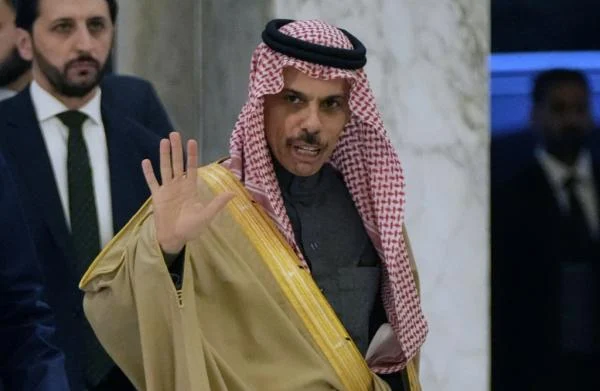
In a resolute display of geopolitical positioning, Saudi Arabia’s Minister of Foreign Affairs, Prince Faisal bin Farhan Al Saud, issued a stern warning regarding the sovereignty and territorial integrity of the Kingdom. Speaking at the BRICS Summit held in New Delhi, India, on September 13, 2026, the Prince articulated that Riyadh would no longer countenance external threats, signaling a shift toward a more aggressive defensive posture as the Middle East faces a precarious escalation of proxy conflicts. The Minister’s address underscored a long-standing concern for the Kingdom: the vulnerability of its critical infrastructure to non-state actors operating with state-sponsored support.
The declaration comes at a time when the Kingdom is reeling from a series of high-profile security breaches, most notably a sophisticated drone strike on September 10, 2026, which crippled a strategic oil pipeline. This event has not only disrupted energy markets but has also served as a catalyst for a re-evaluation of Saudi defensive strategies. Prince Faisal’s comments, broadcast by the state-run Al Ekhbariya channel, were clear: "The security of the Kingdom cannot be compromised." He further cautioned that the ongoing escalation of hostilities in the region carries the inherent risk of expanding the scope of conflict, potentially dragging other nations into a wider regional confrontation.

A Chronology of Escalating Tensions
The current security climate is the result of a long-simmering series of provocations that have tested the regional security architecture. Since early 2026, the border between Saudi Arabia and Yemen has witnessed a marked increase in Houthi activity. Despite intermittent attempts at ceasefire negotiations, the frequency of projectile and drone incursions into Saudi territory has intensified.
The timeline of the recent crisis can be traced back to early September:
- September 1–5, 2026: Increased surveillance reports suggest heightened drone activity near the Saudi-Yemeni border, with intercepted signals pointing toward advanced Iranian-made components.
- September 10, 2026: A critical strike targets the East-West Pipeline system. This is a significant escalation as the strike originated not from the southern border but from the direction of Iraq, suggesting a multi-front threat capability.
- September 11, 2026: The Saudi Ministry of Energy officially confirms the temporary suspension of operations on the pipeline to contain fires and prevent further ecological damage.
- September 13, 2026: Prince Faisal addresses the BRICS Summit in New Delhi, framing the security of the Kingdom as an international concern rather than a localized dispute.
The Strategic Significance of the East-West Pipeline
The attack on the East-West Pipeline is particularly alarming to global energy analysts due to the infrastructure’s vital role in international commerce. The pipeline, which traverses the breadth of the Arabian Peninsula, serves as a bypass for the Strait of Hormuz. Currently, a significant portion of the world’s crude oil passes through the Strait, a narrow waterway that has long been considered a strategic chokepoint vulnerable to Iranian naval interdiction.

By facilitating the transport of oil from the eastern oil fields to the Red Sea port of Yanbu, the East-West Pipeline provides Saudi Arabia with the ability to export its resources while mitigating the risks posed by tensions in the Persian Gulf. The damage to this system not only creates logistical nightmares for the Saudi energy sector but also signals to global markets that the security of energy supplies is increasingly fragile. The economic implications are immediate: uncertainty regarding the stability of Saudi output often triggers price volatility in global Brent crude futures, which in turn affects inflationary pressures across the globe.
Proxy Warfare and the Role of External Actors
The mention of "proxy groups" by Saudi officials is a direct reference to the complex network of non-state actors aligned with Iran. Analysts have long pointed to the sophisticated nature of the weaponry used in recent attacks, which includes loitering munitions, cruise missiles, and advanced drone technology. The involvement of actors from Iraq suggests a shift in the theater of conflict, expanding the perimeter that Saudi air defense systems must monitor.
The Houthi movement in Yemen remains the most prominent threat on the southern flank. While the United States has frequently expressed willingness to support Saudi defense efforts, this support has historically been tempered by diplomatic considerations, human rights concerns, and the complexities of U.S.-Iran negotiations. The recent rhetoric from Riyadh indicates that the Kingdom may be moving toward a more unilateral defensive strategy, relying less on the reactive support of Western allies and more on a proactive, intelligence-led deterrence model.

International Reactions and Diplomatic Implications
The international community has reacted with varying degrees of alarm to the security situation. The Muslim World League (MWL) issued a strong condemnation of the attack on the pipeline, characterizing it as a "terrorist act" aimed at global economic stability. Similar condemnations have echoed through various diplomatic channels, emphasizing that the disruption of energy infrastructure is a violation of international norms.
However, the silence or measured responses from certain regional players suggest that the geopolitical divide remains deep. The presence of Prince Faisal at the BRICS Summit provided a platform to rally support among emerging economies, many of which are heavily dependent on Saudi energy exports. By positioning the security of Saudi Arabia within the context of the BRICS agenda, Riyadh is effectively signaling that it views the protection of its oil infrastructure as a collective responsibility of the major trading powers.
Analysis: The Future of Gulf Security
The strategic implications of this new "zero tolerance" policy are profound. If Saudi Arabia moves to retaliate against the sources of these attacks—whether in Yemen, Iraq, or beyond—the risk of a broader regional war increases exponentially. Military analysts argue that the Kingdom is likely to focus on three key areas:
- Air Defense Modernization: Continued investment in Patriot missile systems, THAAD (Terminal High Altitude Area Defense), and the development of local drone-jamming capabilities.
- Intelligence Cooperation: Enhancing regional intelligence-sharing networks to detect and preempt cross-border incursions before they manifest as kinetic strikes.
- Diversification of Infrastructure: The development of redundant pipeline systems and increased reliance on subsea storage and transportation technologies to reduce the impact of single-point failures.
The political discourse in Riyadh has shifted from defensive posturing to a more assertive stance, suggesting that the Kingdom no longer believes that diplomatic pressure alone will deter these groups. The challenge for the Saudi leadership is to maintain this firm stance without triggering a full-scale regional conflagration that would further destabilize an already fragile global economy.
Conclusion: A Critical Juncture
As the situation unfolds, the international community remains on high alert. The declaration from Prince Faisal bin Farhan is more than a diplomatic soundbite; it is a policy shift that marks the end of a period of restraint. Whether this leads to a period of heightened military engagement or a forced diplomatic recalibration by hostile actors remains to be seen.
The global energy sector, already under pressure from post-pandemic recovery and environmental transitions, is now faced with the stark reality of geopolitical insecurity. As the Kingdom moves to repair its damaged pipeline and bolster its defenses, the world will be watching to see if this "zero tolerance" approach serves as a deterrent for peace or a spark for further conflict. For now, the Kingdom has made its position clear: it will defend its territory and its infrastructure by any means necessary, ensuring that the cost of attacking Saudi Arabia is significantly higher than any potential strategic gain for its adversaries. The coming months will be a test of both the resilience of the Saudi state and the efficacy of its new security doctrine in a volatile and increasingly unpredictable regional landscape.
