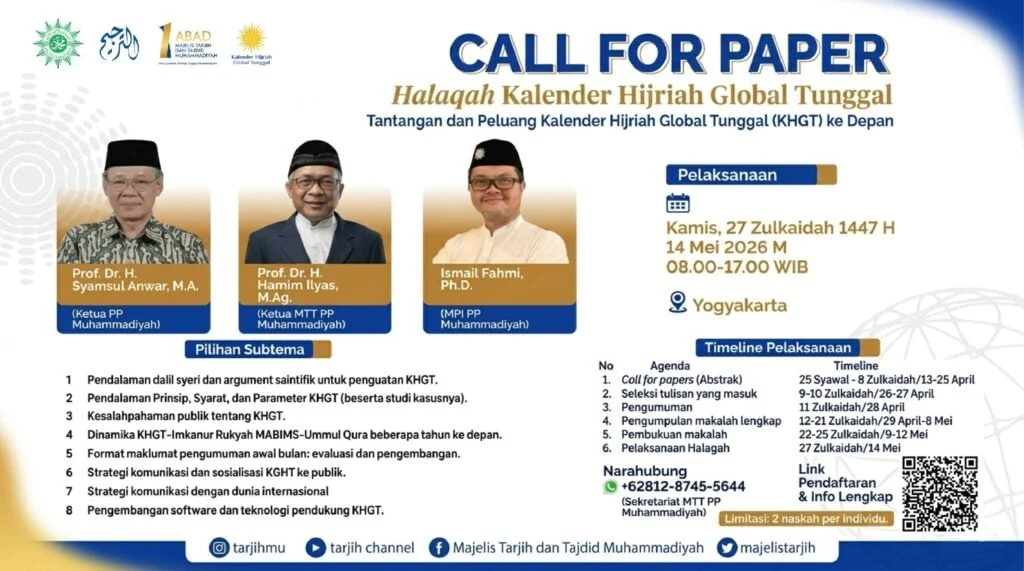
The Pimpinan Pusat (PP) Muhammadiyah has officially released its calendar for the upcoming Islamic year 1448 Hijriah, utilizing the Kalender Hijriah Global Tunggal (KHGT), or the Global Unified Hijri Calendar. According to this standardized calculation, the first day of Ramadan 1448 H is set to fall on Monday, February 8, 2027. This announcement provides a definitive planning horizon for the millions of Muhammadiyah followers across Indonesia who rely on the organization’s methodical approach to astronomical calculation, even as the broader Indonesian populace awaits the traditional government-led confirmation process.
The Methodology Behind the KHGT
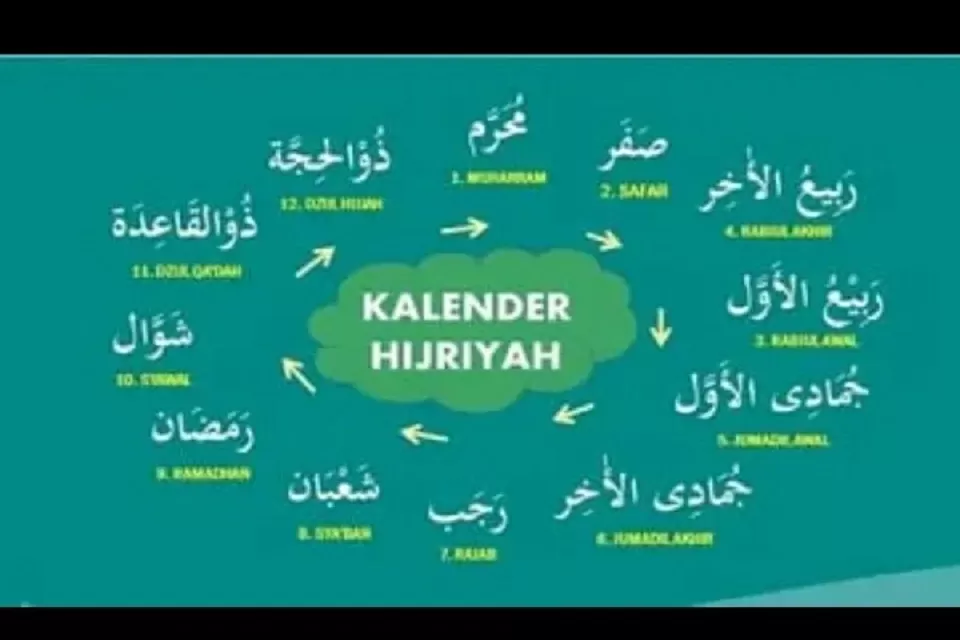
The decision to adopt the Kalender Hijriah Global Tunggal (KHGT) represents a significant shift in how Islamic dates are determined. Historically, the determination of the lunar month relied heavily on localized sightings of the crescent moon (rukyatul hilal), which often resulted in regional discrepancies in the start of fasting months. The KHGT system, championed by Muhammadiyah, seeks to eliminate these geographical variations by applying a unified, calculation-based (hisab) approach that transcends local horizons.
By utilizing high-precision astronomical data, the KHGT aims to establish a singular, globally consistent calendar for the Islamic world. This method allows for the determination of dates years in advance, providing organizational certainty for religious institutions, educational centers, and individual practitioners. For the year 1448 H, the calendar indicates that Ramadan will span 29 days, with the final day of fasting occurring on March 8, 2027. Consequently, the first night of Tarawih prayers is expected to commence on the evening of Sunday, February 7, 2027.
Chronology of Key Dates for Ramadan 1448 H
Based on the official KHGT projections, the timeline for the holy month is clearly delineated. This advanced scheduling is intended to assist in long-term logistics, from religious programming to community resource management.
- Beginning of Ramadan: 1 Ramadan 1448 H, Monday, February 8, 2027.
- First Tarawih Prayer: Evening of Sunday, February 7, 2027.
- Nuzulul Quran: 17 Ramadan 1448 H, Wednesday, February 24, 2027.
- Final Day of Ramadan: 29 Ramadan 1448 H, Monday, March 8, 2027.
- Eid al-Fitr (1 Syawal 1448 H): Tuesday, March 9, 2027.
The calculation of Nuzulul Quran—the commemoration of the revelation of the Quran—on February 24, 2027, serves as a mid-point marker for the month of reflection and spiritual devotion. The early designation of Eid al-Fitr for March 9, 2027, also provides a significant lead time for public planning, travel, and social coordination.
Government Procedures and the Role of the Sidang Isbat
While Muhammadiyah has finalized its schedule, the Indonesian government, through the Ministry of Religious Affairs (Kementerian Agama), maintains a separate administrative process for the determination of the start of Ramadan. In Indonesia, the government typically employs the "Sidang Isbat"—a formal plenary session involving representatives from various Islamic organizations, scholars, and government officials—to confirm the commencement of the month.
The government’s procedure combines scientific calculation (hisab) with the visual confirmation of the moon (rukyatul hilal) at multiple observation points across the Indonesian archipelago. Because this process is contingent upon actual physical observations made closer to the date, the Ministry of Religious Affairs does not typically issue a definitive calendar for Ramadan years in advance. Consequently, there remains a possibility of a calendar divergence between the Muhammadiyah schedule and the official government-sanctioned start date.
This dual-track system is a recognized aspect of the Indonesian religious landscape. It reflects the diverse approaches to jurisprudence within the Islamic community, where some scholars emphasize the necessity of human observation (rukyah), while others, like those represented by Muhammadiyah’s KHGT, emphasize the mathematical certainty of the lunar cycle.
Broader Implications and Societal Harmony
The announcement of the 2027 Ramadan calendar serves as a point of reflection on the broader implications of calendar synchronization. In a nation as vast and culturally diverse as Indonesia, the harmonization of religious dates remains a matter of ongoing dialogue. The existence of the KHGT is, in part, an effort by Muhammadiyah to contribute to a more predictable and unified Islamic calendar, potentially reducing the ambiguity that often precedes the start of the holy month.
Societal implications of these announcements are multifaceted. For businesses and public service providers, having an early estimate—even if it differs slightly from the official government stance—allows for better operational preparedness. Schools, universities, and community centers can align their academic and social calendars with greater ease.
However, the Ministry of Religious Affairs continues to emphasize that for the purpose of national unity and public policy, the results of the Sidang Isbat remain the primary reference point. The Ministry routinely encourages the public to wait for the official government announcement to ensure national uniformity in the observance of fasting and the celebration of Eid al-Fitr.
Religious Context and Preparatory Practices
Beyond the technicalities of the calendar, the announcement brings into focus the spiritual preparation required for the month. Islamic tradition places significant importance on the period leading up to Ramadan. Scholarly articles and public discourse in Indonesia often highlight the necessity of spiritual and physical readiness, including the practice of ritual purification (mandi junub) and the recitation of specific prayers.
As 2027 approaches, the inclusion of resources regarding spiritual practices—such as the importance of daily supplications (doa) and maintaining social harmony during periods of religious observation—underscores the dual nature of Ramadan as both a time of intense personal worship and a time of communal responsibility. MUI (the Indonesian Ulema Council) and other religious authorities have frequently stressed that while the excitement of the holy month is vital, it should be conducted in a manner that respects the religious practices of other communities, especially in a multicultural society where dates may overlap with other regional observances.
Analytical Perspective on Lunar Calculation
The debate between hisab (calculation) and rukyah (sighting) is not unique to Indonesia but is a global topic of discussion among Islamic jurists. The KHGT’s reliance on the Global Unified Hijri Calendar is a bold step toward institutionalizing a standardized Islamic timekeeping system. Proponents argue that in the modern era, where astronomical precision is absolute, the reliance on weather-dependent physical sightings is increasingly viewed as an unnecessary source of potential division.
Critics of the unified calendar model, however, often argue that the tradition of sighting the moon is an essential, time-honored practice that connects the believer directly to the observation of the natural world, as encouraged by prophetic tradition.
As of early 2026, the status of Ramadan 1448 H remains a case study in this ongoing balance between tradition and innovation. Muhammadiyah’s proactive publishing of the 2027 calendar serves as a testament to its commitment to modernizing the application of Islamic jurisprudence through science, while the government’s adherence to the Sidang Isbat process reflects a commitment to traditional consensus and national cohesion.
Conclusion: Planning for the Future
For citizens and observers, the key takeaway is that while the date of February 8, 2027, is firmly established within the Muhammadiyah framework, the broader national consensus will be finalized through the standard governmental channels as the date draws nearer. As the year 2027 approaches, the Ministry of Religious Affairs will continue its routine of gathering observational data, ensuring that the final decision regarding the first day of fasting reflects the collective agreement of the nation’s religious leaders.
This early projection provides a valuable tool for those who rely on the KHGT for their religious and logistical planning. It also serves as a reminder of the importance of community dialogue in navigating the complexities of lunar-based religious calendars. As Indonesia moves toward 2027, the focus will remain on balancing the accuracy of astronomical calculation with the inclusive, deliberative nature of national religious decision-making. Through this synthesis, the country aims to maintain a harmonious environment where religious observance is marked by clarity, devotion, and collective unity.