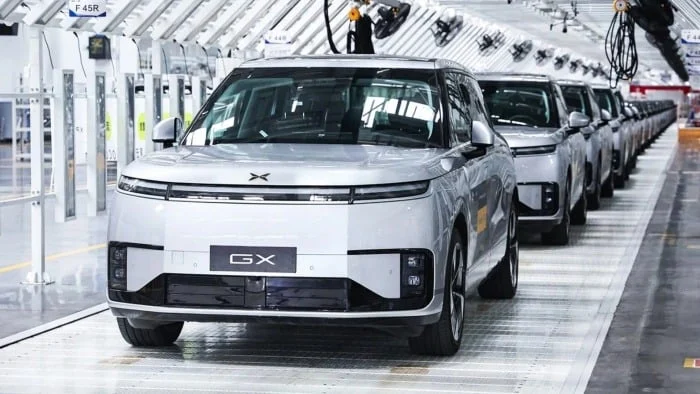
The rapid global proliferation of connected electric vehicles has brought unprecedented convenience, smart features, and digital integration to the modern driving experience. However, this transition toward software-defined mobility has simultaneously introduced profound cybersecurity risks that extend far beyond traditional mechanical failures. A recent investigative documentary broadcast by Australian media outlet ABC News has ignited an intense international debate regarding the inherent cybersecurity vulnerabilities of connected electric vehicles, placing a particular spotlight on high-tech models manufactured in China. The documentary details how cybersecurity researchers successfully penetrated the digital architecture of prominent Chinese electric vehicle brands, including BYD and Xpeng, exposing alarming capabilities ranging from remote location tracking to the active takeover of physical vehicle functions while in motion.
The investigation centers on a fundamental paradox of contemporary automotive engineering: modern vehicles are essentially computers on wheels, constantly harvesting, processing, and transmitting vast quantities of telemetric, environmental, and personal data. As legacy automakers and aggressive new market entrants alike race to integrate advanced driver-assistance systems, cloud-connected entertainment, and seamless smartphone synchronization, the attack surface for malicious actors expands exponentially. The revelations from the Australian broadcast underscore a growing realization among regulatory bodies, national security agencies, and privacy advocates that the digital infrastructure supporting modern transportation may be dangerously exposed to remote exploitation, foreign surveillance, and unauthorized manipulation.
Anatomy of the Investigation: Inside the Digital Attack Surfaces
The investigative findings presented in the ABC News documentary are rooted in rigorous technical testing and insider accounts that reveal systemic vulnerabilities within the connected ecosystems of leading Chinese automotive manufacturers. The documentary focuses heavily on two of China’s most prominent electric vehicle and smart mobility companies: BYD and Xpeng.
In the case of Xpeng, the investigation highlighted claims from an individual purporting to have internal access to the company’s operational systems. According to the report, this level of access enabled the real-time monitoring and extraction of granular data from an Xpeng G6 crossover. The harvested telemetry was not limited to broad geographical positioning; it included precise, real-time location tracking, vehicle velocity, physical seat status, and even micro-adjustments to the steering angle. The ability to monitor such intimate driving telemetry in real time raises immediate red flags concerning data sovereignty, corporate espionage, and the potential harvesting of intelligence from high-value targets.
Parallel to the Xpeng findings, the documentary featured a controlled, two-week security audit conducted by automotive cybersecurity expert Dan Hreszczuk. Tasked with evaluating the digital defenses of the BYD Shark 6 plug-in hybrid pickup truck, Hreszczuk identified critical design flaws and software vulnerabilities. Most notably, the researcher discovered a glaring authentication loophole that permitted unauthorized access to the vehicle’s backend systems completely devoid of password verification or multi-factor security barriers.
Once inside the vehicle’s network architecture, Hreszczuk demonstrated a terrifying degree of remote control. While the BYD Shark 6 was actively navigating public roadways, the researcher successfully manipulated multiple physical functions. These included remotely locking and unlocking doors, flashing exterior headlights, activating windshield wipers, and hijacking the onboard entertainment system to play unauthorized audio tracks. More alarming, however, was the breach of cabin privacy. Hreszczuk confirmed that the exploit granted unauthorized access to the vehicle’s internal microphones, allowing remote listeners to eavesdrop on private conversations occurring inside the cabin. Furthermore, the researcher demonstrated that this digital bridge could be leveraged to transmit targeted audio commands through the vehicle’s speakers, inadvertently triggering virtual assistants on connected smartphones and potentially exposing deeply personal user data, contact lists, and credentials.
Chronology of the Smart Vehicle Security Debate
The public airing of these vulnerabilities did not occur in a vacuum; it represents a critical milestone in a rapidly escalating global conversation regarding the intersection of automotive technology and geopolitical security.
The timeline of connected vehicle scrutiny began in earnest during the early stages of mass commercialization for Internet of Vehicles (IoV) technology, roughly between 2018 and 2020. During this period, automotive security researchers, most notably teams from Keen Security Lab of Tencent, repeatedly demonstrated proof-of-concept hacks against global brands like Tesla, BMW, and Mercedes-Benz, proving that physical control systems could be accessed remotely via cellular networks or infotainment systems.
By 2021 and 2022, as Chinese electric vehicle manufacturers began aggressively expanding their footprints beyond domestic borders into Europe, Southeast Asia, Australia, and Latin America, cybersecurity analysts shifted their focus toward the distinct regulatory and data-governance frameworks governing these imports. Unlike traditional internal combustion engine vehicles, which operated largely on closed, localized electrical loops, modern Chinese EVs rely heavily on cloud infrastructure tied directly to domestic servers in China, subject to stringent local data security laws that often conflict with Western privacy standards.
In 2023, government bodies in the United States, the European Union, and Australia began initiating formal inquiries into the connected vehicle supply chain. Regulators expressed mounting unease over the massive accumulation of geospatial, acoustic, and visual data collected by cameras and sensors mounted on foreign-built vehicles traversing sensitive infrastructure, military installations, and government districts.
The culmination of these mounting tensions arrived with the recent ABC News investigation and the controlled penetration testing of the BYD Shark 6 and Xpeng G6. By providing tangible, visual proof of remote exploitation—ranging from active control of vehicle wipers and lights to cabin audio interception—the documentary transformed abstract theoretical risks into concrete, digestible evidence for policymakers and the general public, accelerating calls for immediate regulatory intervention.
Supporting Data and the Scale of Automotive Telemetry
To fully grasp the implications of these security breaches, one must examine the staggering volume of data generated, processed, and transmitted by a single connected electric vehicle on a daily basis. Industry analysts and automotive researchers estimate that a modern connected car generates between 25 gigabytes to several terabytes of data every single day of operation.
This data harvest encompasses a vast spectrum of operational and personal metrics:
- Geospatial Data: Real-time GPS coordinates, frequently visited locations, home and work addresses, parking patterns, and historical route mapping.
- Environmental Perception: High-definition video feeds from external surround-view cameras, ultrasonic sensor data, and LiDAR point clouds that map physical infrastructure, street layouts, and pedestrian movements.
- Biometric and Cabin Metrics: Cabin camera feeds designed to monitor driver fatigue, seat occupancy weights, microphone recordings for voice recognition, climate preferences, and connected smartphone contact lists.
- Vehicle Telemetry: Battery health, charging habits, tire pressure, braking frequency, acceleration profiles, and mechanical diagnostic codes transmitted directly to manufacturer cloud servers for over-the-air (OTA) updates and predictive maintenance.
When multiplied by millions of vehicles on the road, this aggregate data reservoir represents an intelligence asset of immense value. For government officials, defense personnel, corporate executives, and ordinary citizens alike, the invisible continuous transmission of this information creates an unprecedented surveillance footprint that can be exploited if backend security is compromised.
Official Responses, Industry Pushback, and Manufacturer Statements
In the wake of the documentary’s broadcast, representatives from the targeted automotive manufacturers, as well as industry associations, issued comprehensive responses addressing the allegations, defending their engineering standards, and outlining remedial measures.
Spokespersons for BYD vehemently defended the safety and cybersecurity integrity of their vehicles, emphasizing that the company adheres strictly to international automotive cybersecurity standards, including the rigorous ISO/SAE 21434 framework. BYD representatives noted that the scenario demonstrated by the security researcher relied on highly specialized, simulated conditions and did not represent an active, widespread vulnerability exploitable by malicious external hackers in standard real-world operating environments. Furthermore, BYD stressed that consumer data privacy remains a foundational pillar of their global deployment strategy, with data storage architectures strictly partitioned to comply with regional privacy regulations such as the European Union’s General Data Protection Regulation (GDPR) and Australian privacy principles.
Similarly, representatives from Xpeng issued formal clarifications regarding the claims made concerning their vehicle data systems. Xpeng maintained that access to internal diagnostic or telemetric streams requires multi-layered authorization protocols and that internal systems are continuously monitored for unauthorized access attempts. The company asserted that the operational integrity of customer accounts and vehicle networks is protected by advanced end-to-end encryption protocols designed to thwart man-in-the-middle attacks and unauthorized remote intrusion.
Despite these assurances, independent cybersecurity coalitions and automotive watchdogs have called upon both manufacturers to open their source code and firmware architectures to third-party independent audits. Industry experts argue that voluntary corporate compliance is no longer sufficient in an era where software vulnerabilities can be weaponized at scale, demanding a standardized, government-backed certification process for all connected vehicles entering domestic markets.
Broader Impact and Geopolitical Implications
The revelations brought to light by the Australian investigation extend far beyond the technical mechanics of software bugs or authentication loopholes; they strike at the heart of modern geopolitical competition, international trade, and national security policy.
As Chinese electric vehicle manufacturers successfully capture significant market share across global jurisdictions—driven by aggressive pricing, advanced battery technology, and sophisticated infotainment ecosystems—Western governments are increasingly viewing these vehicles through a security lens rather than purely an economic one. The fear of foreign state-sponsored espionage, remote immobilization capabilities, and the clandestine harvesting of sensitive infrastructure data has transformed automotive imports into a matter of high-level national security.
In the United States, the Department of Commerce has already initiated formal rule-making procedures to investigate the national security risks posed by connected vehicle hardware and software originating from countries of concern, specifically naming China and Russia. Regulators are actively weighing sweeping restrictions or outright bans on specific vehicle connectivity components, cellular modems, and automated driving systems that could theoretically allow foreign actors to disable vehicle fleets en masse or siphon critical domestic intelligence.
Similar policy debates are currently active within the European Union and the Australian Parliament, where lawmakers are balancing the imperative of accelerating green energy transitions and carbon-reduction targets against the stark realities of digital vulnerability. Imposing stringent cybersecurity mandates, localized data residency requirements, and mandatory third-party security certifications will inevitably increase production and compliance costs, potentially slowing the rapid adoption of affordable electric mobility. However, policymakers argue that these friction points are a necessary trade-off to safeguard critical national infrastructure against asymmetric cyber warfare.
Conclusion and Future Outlook
The security vulnerabilities exposed in vehicles such as the BYD Shark 6 and Xpeng G6 serve as a stark wake-up call for the global automotive industry. As cars evolve from mechanical machines powered by internal combustion engines into rolling data centers connected to global cellular networks, the traditional paradigms of automotive safety must expand to encompass rigorous digital defense.
Ensuring the future of sustainable, connected transportation will require unprecedented levels of transparency, cooperation, and regulatory oversight. Automakers must prioritize robust, end-to-end encryption, multi-factor authentication, and rapid over-the-air patch deployment as core safety features just as vital as airbags and seatbelts. Concurrently, governments must establish clear, enforceable cybersecurity standards that protect consumer privacy and national infrastructure without devolving into protectionist trade barriers. Ultimately, the transition to electric mobility must not come at the expense of digital sovereignty, ensuring that the vehicles of tomorrow remain secure, private, and firmly under the control of the drivers behind the wheel.