
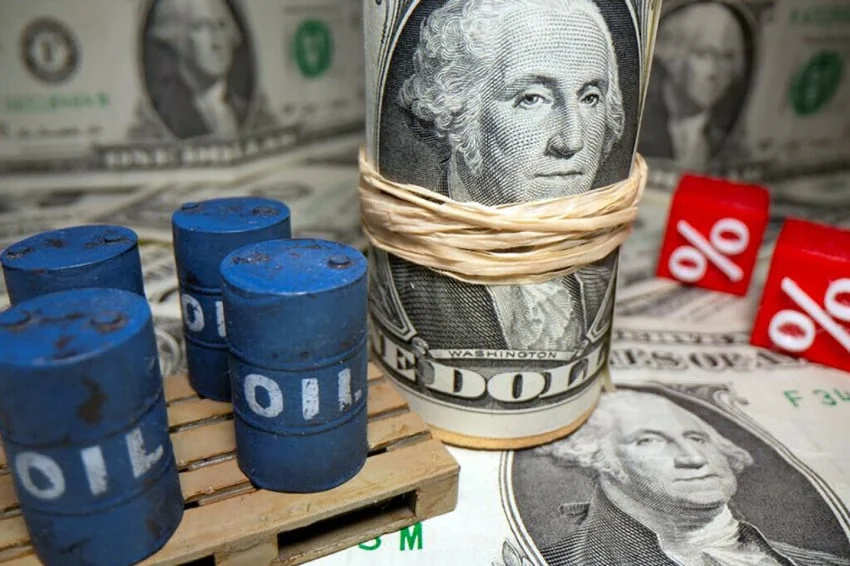
NEW YORK – The global financial markets are bracing for potential volatility as Goldman Sachs, a titan of Wall Street banking, has issued a stark warning regarding the future price of Brent crude oil. The investment bank projects that benchmark Brent crude could surge dramatically, potentially surpassing $120 per barrel by the fourth quarter of 2026, should disruptions to shipping traffic in the vital Strait of Hormuz persist without clear resolution. This projection underscores the heightened sensitivity of energy markets to escalating geopolitical conflicts in the Middle East.
The specter of a significant oil price shock has re-emerged with renewed intensity throughout the current month. This escalation is largely attributed to the rekindled military confrontations between the United States and Iran, coupled with persistent threats from the Houthi militia in Yemen. The Houthi’s stated intention to blockade oil shipments from Saudi Arabia via the Red Sea route has further exacerbated concerns within the energy sector. The Red Sea, historically a critical alternative artery for channeling Persian Gulf crude oil affected by regional conflicts to global consumers, now faces an uncertain future.
A Deepening Crisis in the Persian Gulf and Red Sea Corridors
The current geopolitical climate in the Middle East is a complex tapestry woven with long-standing rivalries and recent flashpoints. The Strait of Hormuz, a narrow waterway connecting the Persian Gulf to the open sea, is a critical chokepoint for global oil transit. Approximately 30% of the world’s seaborne crude oil passes through this strategic passage. Any significant disruption here, whether due to military action, naval blockades, or accidents, has immediate and far-reaching implications for global energy supply and prices.
Simultaneously, the Red Sea has become a focal point of concern due to the actions of the Houthi rebels. Aligned with Iran, the Houthis have repeatedly targeted commercial shipping, including oil tankers, in the Red Sea and the Bab el-Mandeb strait, a gateway to the Suez Canal. These attacks, often carried out with drones and missiles, have forced many shipping companies to reroute their vessels, adding significant transit time and costs. The threat of a comprehensive blockade, while potentially difficult to fully enforce, looms large over Saudi Arabia’s oil export capabilities, which have historically relied on efficient access through the Red Sea.
Goldman Sachs’ Dual Scenario: A Tale of De-escalation vs. Escalation
In a research report dated July 20th, a team of analysts at Goldman Sachs, led by Daan Struyven, detailed their projections, highlighting the stark divergence in potential outcomes. The report indicates that the current escalation in the Middle East has already led to a significant reduction in estimated Persian Gulf oil flow, falling below 45% of pre-conflict levels.
However, the alarming $120 per barrel figure is not presented as the bank’s primary base case scenario. Goldman Sachs maintains that a de-escalation of regional tensions could lead to a more moderate price trajectory.
"The conflict in the Middle East and the reduction in estimated Persian Gulf oil flow to below 45% of pre-war levels have driven oil prices higher. While our base case scenario places Brent at $80 per barrel in Q4 and $75 next year, assuming de-escalation, the risks to this projection are heavily tilted to the upside," the report states, emphasizing the precarious balance of the current market.
The "base case" scenario anticipates a gradual easing of geopolitical tensions, allowing for the resumption of more stable oil flows. In this scenario, the market would absorb existing supply disruptions without a sustained price surge. However, the "upside risk" scenario, which forms the basis for the $120 forecast, assumes the continuation or intensification of current disruptions. This could manifest as further naval blockades, increased military activity in critical shipping lanes, or a broader regional conflict.
Depleting Global Inventories and the Shadow of China’s Demand
Adding another layer of complexity to the market’s vulnerability is the state of global oil inventories. Goldman Sachs noted that a significant draw in global oil stocks during the second quarter has rendered the energy market more susceptible to supply shocks. Lower inventories mean that any disruption to supply has a more immediate and pronounced impact on available crude oil, leading to price spikes.
Historically, periods of low inventory have often preceded periods of higher oil prices, as the market struggles to meet demand with limited readily available supply. The current drawdown suggests that the buffer against unexpected supply interruptions is thinner than usual.
However, two key factors could potentially temper an extreme price surge, even in the face of escalating tensions. Firstly, there is the noticeable slowdown in China’s oil imports. As the world’s second-largest economy and a major consumer of crude oil, any significant reduction in Chinese demand can exert downward pressure on global prices. Recent data indicates a cooling in China’s economic recovery, which has translated into lower crude oil import volumes. This reduced demand from a key consumer can act as a counterweight to supply-side pressures.
Secondly, the concept of demand elasticity plays a crucial role. As oil prices begin to climb to levels that become prohibitive for consumers and industries, there is a natural tendency for demand to contract. Consumers may reduce discretionary travel, businesses might scale back operations that are heavily reliant on fuel, and governments could implement measures to curb consumption. This behavioral response, while often a lagging indicator, can help to stabilize prices by reducing overall demand when supply is constrained and prices are high.
Historical Context: The Volatility of Oil Markets and Geopolitics
The relationship between geopolitical instability in the Middle East and global oil prices is well-documented throughout history. Since the oil crises of the 1970s, events such as the Iranian Revolution, the Iran-Iraq War, the Gulf War, and more recent conflicts have consistently demonstrated the oil market’s sensitivity to regional turmoil.
- The 1973 Oil Crisis: Triggered by the Yom Kippur War, OPEC imposed an oil embargo against nations supporting Israel, leading to a quadrupling of oil prices and significant economic disruption globally.
- The Iranian Revolution (1979): The overthrow of the Shah and the subsequent disruption to Iranian oil production caused a second major oil shock, with prices doubling.
- The Iran-Iraq War (1980-1988): This protracted conflict frequently impacted oil production and shipping in the Persian Gulf, leading to price volatility.
- The Gulf War (1990-1991): Iraq’s invasion of Kuwait and the subsequent international military response led to temporary supply disruptions and a spike in oil prices, although the market recovered relatively quickly due to swift counter-measures and the release of strategic reserves.
- Post-9/11 Era: While not directly linked to a Middle Eastern conflict, the increased global focus on terrorism and security, particularly in oil-producing regions, has contributed to a general sense of risk premium in oil prices.
The current situation echoes these historical patterns, with the potential for a confluence of factors – supply disruptions, geopolitical escalations, and existing inventory levels – to create a perfect storm for oil prices.
Reactions and Implications for the Global Economy
While specific official statements directly addressing Goldman Sachs’ projection are not yet widespread, the report is likely to be closely scrutinized by energy policymakers, central banks, and market participants worldwide.
Potential Implications:
- Inflationary Pressures: A sustained surge in oil prices above $120 per barrel would undoubtedly fuel global inflation. Energy costs are a primary component of consumer price indices, impacting everything from transportation to heating and the production of many goods. This could complicate efforts by central banks to control inflation and potentially lead to higher interest rates.
- Economic Growth Slowdown: Higher energy costs act as a drag on economic growth. Businesses face increased operating expenses, and consumers have less disposable income for other goods and services. This could lead to a slowdown in global economic activity, particularly in energy-importing nations.
- Shifting Energy Policies: A prolonged period of high oil prices could accelerate the transition towards renewable energy sources and greater energy efficiency. Governments and corporations might feel increased pressure to invest in alternative fuels and technologies to reduce their reliance on volatile fossil fuel markets.
- Geopolitical Leverage: For oil-producing nations, higher prices can translate into increased revenue and geopolitical leverage. Conversely, energy-dependent nations could face significant economic and political challenges.
- Financial Market Volatility: The prospect of such a significant price swing is likely to increase volatility across financial markets, affecting equity, bond, and currency prices.
The coming quarters will be critical in determining whether the more optimistic de-escalation scenario prevails or if the world braces for a more turbulent energy landscape as predicted by Goldman Sachs. The interplay between geopolitical developments, supply dynamics, and global demand will be closely watched as the world navigates this complex and potentially high-stakes energy environment.
