
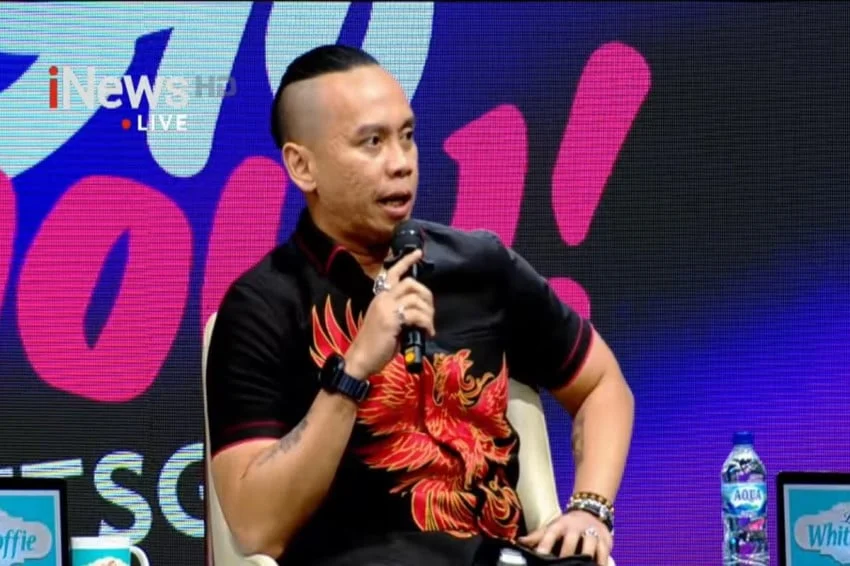
JAKARTA – The legal representative for the Indonesian Christian Youth Movement (GAMKI), Stein Siahaan, has clarified that a report filed against former Vice President Jusuf Kalla (JK) is not intended to punish the statesman. Instead, Siahaan stated that the action aims to channel and address the social media discourse surrounding Kalla’s remarks into a formal legal process.
"Our intention here is not to punish Mr. JK. We are merely seeking to have the public discourse that has occurred on social media addressed through legal channels," Siahaan explained during an appearance on the iNews program "Rakyat Bersuara" (The People Speak) on Tuesday, May 12, 2026.
The report was lodged with the Polda Metro Jaya (Greater Jakarta Metropolitan Police) by the Executive Board of GAMKI, in conjunction with other Christian organizations and civil society groups. The controversy stems from remarks made by Jusuf Kalla regarding "martyrdom" during a lecture at the Gadjah Mada University (UGM) Mosque, which subsequently went viral and sparked widespread debate on social media platforms.
Siahaan emphasized the importance of respecting the ongoing legal proceedings, urging all parties to refrain from escalating the issue through further social media polemics. He warned that unchecked online discussions could lead to a larger, more significant horizontal conflict within society. "Let us respect the legal process rather than engaging in polemics on social media, which could lead to a larger horizontal conflict. We are placing this within the legal process," Siahaan asserted.
He further articulated that if the legal process ultimately finds Jusuf Kalla not guilty, it would serve as a definitive confirmation that he did not commit any wrongdoing as alleged. "If, indeed, the legal process later declares Mr. JK not guilty, then it is firm that he is not guilty," he concluded.
Background of the Report and Social Media Outcry
The report against Jusuf Kalla by GAMKI and allied organizations centers on statements made during a lecture that have been interpreted by some as potentially inciting or problematic. While the exact phrasing and context of Kalla’s remarks have been a subject of intense online discussion, the core of the complaint appears to revolve around the implications of his words in a public forum.
The rapid spread of the lecture’s content via social media platforms amplified the issue, transforming it from a localized discussion into a national talking point. This rapid dissemination, coupled with varying interpretations and reactions, created a significant "kegaduhan" (commotion or disturbance) online, as described by Siahaan. This is the very situation GAMKI seeks to address through formal legal channels.

Chronology of Events (Inferred)
While a precise timeline of all events is not detailed in the provided information, the general sequence of events can be inferred:
- Undated Event: Jusuf Kalla delivers a lecture at the UGM Mosque, during which he makes remarks concerning "martyrdom."
- Undated Post-Lecture: Portions of the lecture, likely focusing on the controversial statements, are shared and disseminated across various social media platforms.
- Viral Spread: The content gains significant traction online, sparking widespread discussion, debate, and varying interpretations among the public.
- May 12, 2026: Stein Siahaan, representing GAMKI, appears on iNews program "Rakyat Bersuara" to explain the organization’s stance on the report filed against Jusuf Kalla.
- Prior to May 12, 2026: GAMKI, along with other Christian and community organizations, formally lodges a report against Jusuf Kalla at Polda Metro Jaya.
Supporting Data and Legal Context
The legal action taken by GAMKI falls under Indonesian law, likely pertaining to defamation, hate speech, or potentially inciting unrest, depending on the specific charges pursued. The Indonesian Penal Code (KUHP) and the Information and Electronic Transactions Law (UU ITE) are common legal frameworks used in such cases.
Relevant Legal Provisions (Illustrative – specific charges not stated):
- Defamation: Articles related to defamation could be invoked if Kalla’s remarks are perceived as damaging to the reputation of individuals or groups.
- Hate Speech: Provisions within UU ITE or the KUHP might be applicable if the remarks are deemed to incite hatred or discrimination based on religion, ethnicity, or other protected characteristics.
- Incitement: Laws concerning incitement to public disorder or violence could also be relevant, though typically require a higher threshold of demonstrable intent and impact.
The decision to file a report with the police signifies a desire to engage the formal justice system. This process typically involves an investigation by law enforcement, the gathering of evidence, potential questioning of witnesses and the accused, and ultimately, a decision on whether to proceed with prosecution.
Broader Implications and Societal Impact
The case highlights a recurring tension in Indonesia between freedom of speech and the need to maintain public order and inter-religious harmony. The widespread use of social media as a platform for disseminating information and opinions has amplified the impact of public figures’ statements, often leading to rapid and intense public reactions.
Analysis of Implications:
- Role of Social Media: The incident underscores the potent influence of social media in shaping public discourse and potentially escalating societal divisions. The ease with which content can go viral necessitates a careful approach to public communication by prominent figures.
- Legal Recourse vs. Public Dialogue: GAMKI’s stance represents a deliberate choice to utilize legal avenues to address what they perceive as harmful online discourse. This contrasts with purely public or social media-based responses, aiming for a more structured and definitive resolution.
- Inter-Group Relations: The involvement of multiple Christian organizations suggests a concern for the potential impact of Kalla’s remarks on inter-religious relations. The legal process, in this context, is seen as a way to clarify the situation and prevent further polarization.
- Precedent for Future Cases: The outcome of this report could set a precedent for how similar situations involving public figures and religiously sensitive statements are handled in Indonesia. It raises questions about accountability, the interpretation of religious discourse in public, and the boundaries of free expression.
- Importance of Due Process: Siahaan’s emphasis on respecting the legal process is crucial. It signals a commitment to due process and the principle that individuals should be judged through established legal mechanisms rather than through public outcry or social media consensus.
The legal proceedings, when initiated, will likely involve examining the exact context of Kalla’s statements, the intent behind them, and their actual impact on the public. The legal framework will then be applied to determine whether any violations have occurred. The decision to pursue legal action, as articulated by GAMKI’s lawyer, is aimed at bringing clarity and resolution to a situation that has become a significant point of contention in the public sphere, ultimately seeking to prevent further societal fragmentation.
