
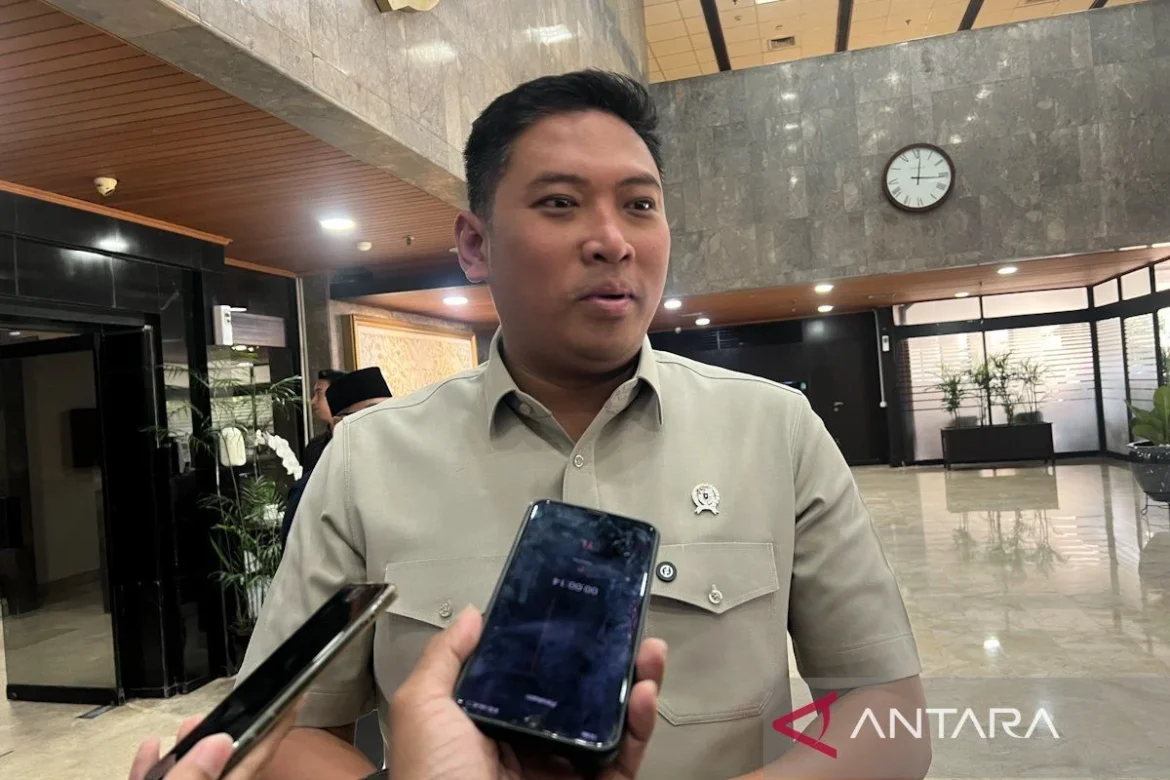
Jakarta, Indonesia – The Indonesian Ministry of Agriculture (Kementan) has reaffirmed its unwavering commitment to maximizing government budgets to uplift farmer welfare and achieve sustainable food self-sufficiency through a series of strategic programs. This pledge was made by Vice Minister of Agriculture Sudaryono during a pivotal Working Meeting with Commission IV of the House of Representatives (DPR RI) in Jakarta on Monday, where the Ministry’s 2025 Financial Report and 2027 Work Plan and Budget were meticulously reviewed. The meeting underscored the Ministry’s robust financial health, marked by significant revenue growth, strategic expenditure, and critically, the achievement of an Unqualified Opinion (WTP) from the Supreme Audit Agency (BPK RI) for its 2025 financial statements – a testament to its strengthened governance and accountability.
Vice Minister Sudaryono emphasized that the paramount objective is to ensure that every allocated rupiah genuinely benefits farmers, amplifies food production, bolsters national food security, and ultimately propels Indonesia towards its ambitious goal of food self-sufficiency. "The most important thing is that the managed budget truly provides benefits for farmers, increases food production, strengthens food security, and supports the achievement of food self-sufficiency," Sudaryono stated, highlighting the results-oriented approach driving the Ministry’s financial strategy. This focus on tangible outcomes is central to Kementan’s mandate, aiming to transform agricultural potential into sustained prosperity for millions of Indonesian farmers and secure the nation’s food future.
Strategic Imperatives and Budgetary Allocations for Agricultural Advancement
Indonesia, as an archipelago nation with a vast agricultural sector, faces the perennial challenge of ensuring food security for its rapidly growing population. The Ministry of Agriculture plays a critical role in addressing this challenge by designing and implementing programs that span from upstream production to downstream distribution. These initiatives typically include enhancing irrigation infrastructure, distributing high-quality seeds and fertilizers, providing agricultural extension services, promoting modern farming techniques, and supporting post-harvest processing to minimize waste and add value. The budget allocated to the Ministry is therefore a vital instrument for national development and stability.
The discussion during the DPR RI Commission IV meeting provided a platform for both oversight and strategic alignment. Commission IV, responsible for agriculture, forestry, fisheries, and food, rigorously examines the Ministry’s past performance and future plans to ensure alignment with national development goals and prudent use of public funds. The review of the 2025 Financial Report offered insights into the effectiveness of prior spending, while the 2027 Work Plan and Budget outlined the strategic direction and resource allocation for future initiatives aimed at fortifying the agricultural sector. This cyclical process of planning, execution, and evaluation is fundamental to democratic governance and accountability.
Robust Financial Health: A Deep Dive into Kementan’s 2025 Performance
The 2025 Financial Report presented by the Ministry painted a picture of significant financial improvement and strengthened fiscal management. The report detailed a remarkable increase in the Ministry’s revenue, which reached Rp501 billion. This figure represents a substantial 43.79 percent surge compared to the previous year, indicating enhanced internal revenue generation capabilities and more efficient financial operations.
A primary driver of this impressive revenue growth was the increased sales of Foot-and-Mouth Disease (PMK) vaccines. PMK poses a severe threat to livestock populations, leading to significant economic losses for farmers and impacting the national meat and dairy supply. The Ministry’s successful efforts in vaccine production and distribution not only protected valuable livestock assets but also generated substantial revenue, showcasing a proactive approach to animal health management with tangible economic benefits. Beyond vaccine sales, the revenue increase also stemmed from the efficient recovery of expenditures from previous budget years, signaling improved financial reconciliation and accountability practices within the Ministry.
Parallel to its revenue growth, the Ministry of Agriculture demonstrated substantial expenditure, reaching Rp25.09 trillion. This significant sum was strategically deployed to accelerate various programs crucial for agricultural development. These programs encompass a wide array of initiatives, including:
- Infrastructure Development: Investment in irrigation systems, rural roads, and agricultural processing facilities to improve efficiency and market access for farmers.
- Technology Adoption: Promotion and subsidization of modern farming technologies, such as precision agriculture tools, improved seed varieties, and sustainable cultivation practices.
- Farmer Empowerment: Training programs, extension services, and access to capital for smallholder farmers to enhance productivity and entrepreneurial skills.
- Commodity Enhancement: Targeted programs to boost the production of staple foods like rice, corn, and soybeans, as well as high-value crops and livestock.
- Disease Prevention and Control: Beyond PMK, ongoing efforts to prevent and manage other animal and plant diseases that could jeopardize food supply chains.
The robust financial position of the Ministry was further solidified by its asset base. As of December 31, 2025, total assets were recorded at an impressive Rp86.16 trillion. Correspondingly, the Ministry’s equity reached Rp83.39 trillion, marking a healthy 5.9 percent increase compared to the preceding year. This strong asset and equity position signifies the Ministry’s enhanced capacity to invest in long-term agricultural development projects, absorb financial shocks, and maintain operational stability. It underscores a well-managed balance sheet that supports its ambitious mandates.
The Gold Standard in Financial Governance: Consecutive WTP Opinions
A cornerstone of the Ministry’s positive report was the reaffirmation of its Unqualified Opinion (Wajar Tanpa Pengecualian – WTP) from the Supreme Audit Agency (BPK RI) on its 2025 Financial Report. The WTP opinion is the highest audit rating an institution can receive, indicating that its financial statements are presented fairly in all material respects, in accordance with applicable accounting standards. It is a powerful indicator of transparency, accountability, and sound financial management.
Vice Minister Sudaryono emphasized that achieving this WTP opinion, particularly for consecutive years, is not merely an administrative feat but a profound indicator of the Ministry’s commitment to clean, transparent, and results-oriented governance. "The success in once again achieving the WTP opinion also serves as an indicator of the increasing quality of the Ministry’s financial management after previously obtaining a WTP opinion in 2025," Sudaryono noted, highlighting a sustained trajectory of improvement. This consecutive achievement suggests that the Ministry has not only rectified past financial shortcomings but has also institutionalized robust internal controls and reporting mechanisms.
He further elaborated that maintaining the WTP opinion is a direct result of the diligent efforts of all personnel across the Ministry of Agriculture, ensuring that every state budget allocation is utilized precisely for its intended purpose: to strengthen the national agricultural sector. "The WTP predicate is not just an administrative achievement, but proof that the Ministry of Agriculture’s financial governance is getting better," he asserted, underscoring the deep-seated cultural shift towards greater financial integrity within the institution.
DPR RI’s Endorsement and Broader Implications
The Ministry’s strong financial performance and the WTP achievement garnered significant appreciation from members of DPR RI Commission IV. Ketut Suhendra, a member of Commission IV, lauded the Ministry’s consistency in upholding the WTP opinion. He attributed this success to the collective hard work of Kementan’s entire team in fortifying its financial management systems and internal oversight, thereby maintaining the high quality of its governmental governance. Such parliamentary recognition is crucial, as it validates the Ministry’s efforts in the eyes of elected representatives and, by extension, the public.
Echoing this sentiment, Muhammad Habibur Rochman, another member of Commission IV, highlighted that Kementan’s success was evident not only in the WTP opinion but also in its improved state revenue performance. "The Ministry of Agriculture’s revenue increased by 43.79 percent, or Rp501 billion. This is an achievement that deserves appreciation, especially as Kementan once again received the WTP predicate from the Supreme Audit Agency for the 2025 Fiscal Year Financial Report," Rochman remarked. This dual recognition of both increased revenue and impeccable financial reporting reinforces the narrative of a Ministry that is both fiscally responsible and operationally effective.
The broader implications of Kementan’s sustained WTP opinion and robust financial health are far-reaching. Firstly, it enhances public trust in government institutions. When a ministry responsible for a vital sector like agriculture demonstrates exemplary financial stewardship, it reassures citizens that their tax money is being used wisely and ethically. This trust is foundational for effective governance and citizen engagement in development programs.
Secondly, it signals to international partners, investors, and financial institutions that Indonesia’s agricultural sector is managed with high standards of accountability and transparency. This can facilitate access to international funding, technical assistance, and partnerships crucial for technology transfer and market access, further bolstering the sector’s growth potential.
Thirdly, and perhaps most importantly, sound financial management directly translates into more effective program implementation on the ground. When funds are managed transparently and efficiently, there is less waste and greater impact. This means more farmers receiving timely support, more effective infrastructure projects, better disease control, and ultimately, a more productive and resilient agricultural sector. The ability to efficiently deploy the Rp25.09 trillion budget for strategic programs is amplified by the integrity of its financial oversight.
Connecting the Dots: Integrated Strategy for a Resilient Agricultural Sector
The Ministry of Agriculture’s achievements in financial management are inextricably linked to its overarching mission of achieving national food self-sufficiency and improving farmer welfare. Without robust financial governance, even the most well-intentioned programs can falter due to inefficiencies, mismanagement, or corruption. The consistent WTP opinion provides a strong foundation for Kementan to pursue its strategic goals with confidence and credibility.
Indonesia continues to face significant challenges in its agricultural sector, including the impacts of climate change, limited land availability for expansion, an aging farming population, and complex supply chain logistics. In this context, every rupiah of the government budget must be utilized with maximum efficiency and impact. The Ministry’s commitment to optimizing budget utilization for strategic programs, coupled with its proven financial accountability, positions it well to address these challenges head-on. Initiatives like accelerated irrigation development, as previously highlighted by Vice Minister Sudaryono, and efforts to reduce reliance on food imports are direct beneficiaries of this improved financial stewardship.
The strategic programs funded by the Ministry’s budget aim to address these multifaceted issues. For instance, investments in climate-resilient agriculture, such as drought-resistant crop varieties and efficient water management systems, are crucial for mitigating the impacts of climate change. Programs supporting young farmers and promoting agricultural education are vital for rejuvenating the farming workforce. Meanwhile, strengthening domestic production of key commodities reduces import dependency, thereby enhancing national food sovereignty and economic stability.
Conclusion: A Blueprint for Sustainable Agricultural Prosperity
The Indonesian Ministry of Agriculture’s consistent achievement of an Unqualified Opinion from the BPK, alongside its impressive financial performance, marks a significant milestone in its journey towards fostering a robust, sustainable, and self-sufficient agricultural sector. Under the leadership of Vice Minister Sudaryono, the Ministry has demonstrated a clear commitment to leveraging government resources effectively and transparently, ensuring that every strategic program contributes meaningfully to farmer welfare and national food security.
This exemplary financial stewardship, validated by independent audit, serves as a powerful testament to the Ministry’s dedication to good governance. It instills confidence not only among parliamentary bodies like DPR RI Commission IV but also among the farming communities it serves and the broader Indonesian public. As the nation continues its pursuit of food self-sufficiency and agricultural resilience, the strong financial foundation built by Kementan provides a critical blueprint for achieving sustainable prosperity for its farmers and securing the food future for all Indonesians. The sustained momentum in both financial performance and programmatic execution is poised to drive the country closer to its vision of a truly independent and thriving agricultural landscape.
