
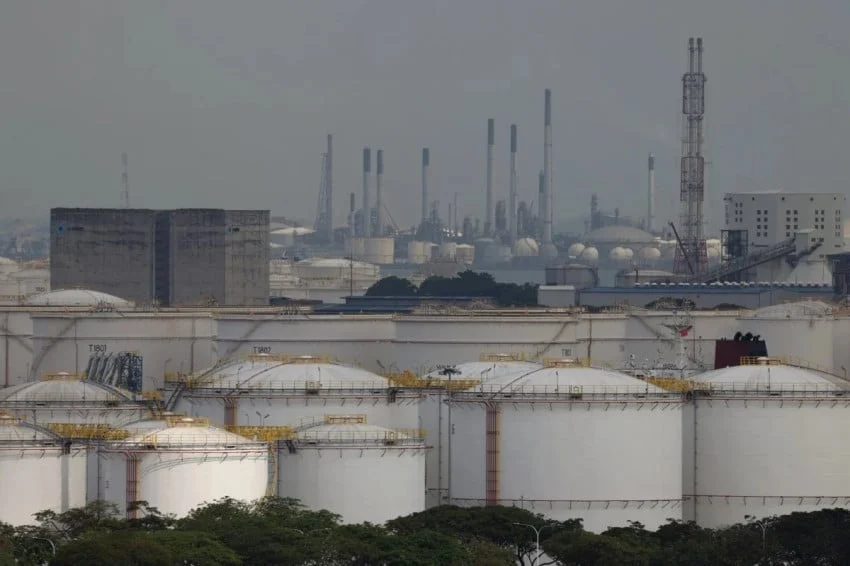
Singapore’s onshore inventory of refined oil products has experienced a notable upward trajectory, climbing to 42.64 million barrels during the week ending September 16, 2026. This figure marks the highest inventory level recorded in the global trading hub in nearly four months, driven by shifting supply and demand dynamics across the Asia-Pacific region. According to official trade data released by Enterprise Singapore and cited by Reuters, the surge was heavily influenced by rising stocks of light distillates—specifically gasoline and naphtha—alongside incremental gains in middle distillates such as diesel and gasoil.
Within this broader regional trading ecosystem, Indonesia has reinforced its position as a critical consumer of refined fuels, serving as the largest export destination for Singaporean gasoline during the period. The developments underscore ongoing structural shifts in Asian energy markets, where fluctuating domestic production capacities, changing refinery margins, and evolving international trade routes continue to shape weekly inventory balances in Southeast Asia’s primary oil storage and pricing center.
Main Facts and Weekly Inventory Breakdown
The latest data from Enterprise Singapore highlights a significant expansion in total mainland oil product stockpiles, which rose from 40.47 million barrels recorded in the preceding week to the current level of 42.64 million barrels. This multi-month high reflects a robust influx of refined petroleum products into the city-state, outstripping regional off-take and prompting a temporary accumulation of commercial reserves.
The primary driver behind the inventory accumulation was the light distillates sector. Stocks within this category, which encompasses both motor gasoline and petrochemical feedstock naphtha, climbed to 13.81 million barrels. This represents the highest volume recorded for light distillates since May 27, 2026. Conversely, middle distillates—comprising diesel and gasoil—also posted gains, rising for the second consecutive week to reach nearly 8.7 million barrels, the highest level in approximately a month.
Trade flows for gasoline during the week ending September 16 illustrated robust transactional activity. Total gasoline imports into Singapore hovered around 303,000 metric tons, translating to approximately 2.6 million barrels. On the export side, outbound shipments of gasoline reached a substantial 785,000 metric tons. Taiwan emerged as the principal supplier of gasoline to Singapore, delivering nearly 125,000 metric tons, followed closely by China, which contributed approximately 74,000 metric tons.
On the distribution front, Indonesia dominated as the primary buyer, absorbing approximately 362,000 metric tons of gasoline from Singaporean terminals. Australia followed as the second-largest destination, taking in roughly 132,000 metric tons. Meanwhile, the naphtha market saw total imports reach about 162,000 metric tons, equivalent to roughly 1.5 million barrels. Kuwait anchored this supply stream as the largest external contributor, sending nearly 48,000 metric tons, supplemented by Trinidad and Tobago with approximately 31,000 metric tons. Notably, Singapore’s outbound naphtha shipments totaled around 13,900 metric tons, with the entirety of this volume destined exclusively for Indonesia.
Chronology and Background Context of the Event
The build-up in Singapore’s oil product inventories does not occur in a vacuum; it is the culmination of seasonal demand adjustments, refinery maintenance schedules, and broader macroeconomic shifts affecting the energy complex throughout 2026.
Earlier in the year, global petroleum trade routes experienced acute disruptions and realignments. As highlighted by broader industry tracking, shifting trade flows forced Asian economies to occasionally diversify procurement sources, looking further afield—including toward the Americas—to secure critical energy supplies amid regional tightening. However, by mid-September 2026, localized surplus conditions began to manifest within the Southeast Asian trading hub.
Throughout the second and third quarters of 2026, light distillate margins experienced periods of volatility. In late May, light distillate inventories had hovered at lower thresholds before a steady recovery in refinery throughput across several key exporting nations in North and West Asia began to feed product into the spot market. By early September, import volumes flowing into Singapore began to consistently outpace outward arbitrage movements to Western markets or regional demand centers, culminating in the sharp inventory spike registered in the week ending September 16.
Concurrently, the middle distillates market exhibited its own unique timeline. For two consecutive weeks leading up to mid-September, diesel and gasoil inventories expanded steadily to touch nearly 8.7 million barrels. This recovery in middle distillate stocks occurred despite a sharp contraction in net exports of diesel and gasoil, which plummeted by 61% week-on-week, juxtaposed against a nearly threefold increase in incoming shipments. This statistical anomaly points to a temporary cooling in regional industrial demand for gasoil, allowing physical barrels to pool within commercial storage tanks across Singaporean terminals.
Supporting Data and Trade Matrix Analysis
A granular examination of the trade data provided by Enterprise Singapore reveals the intricate web of inter-Asian and trans-global energy interdependencies that dictate weekly inventory fluctuations in the Lion City.
The table of movements for the week ending September 16, 2026, outlines the following key metrics:
- Total Onshore Oil Product Inventories: 42.64 million barrels (up from 40.47 million barrels the previous week).
- Light Distillates (Gasoline and Naphtha): 13.81 million barrels (highest since May 27, 2026).
- Middle Distillates (Diesel and Gasoil): Nearly 8.7 million barrels (highest in nearly one month).
- Gasoline Imports: Approximately 303,000 metric tons (~2.6 million barrels).
- Gasoline Exports: Approximately 785,000 metric tons.
- Major Gasoline Suppliers to Singapore: Taiwan (~125,000 metric tons), China (~74,000 metric tons).
- Major Gasoline Destinations from Singapore: Indonesia (~362,000 metric tons), Australia (~132,000 metric tons).
- Naphtha Imports: Approximately 162,000 metric tons (~1.5 million barrels).
- Major Naphtha Suppliers to Singapore: Kuwait (~48,000 metric tons), Trinidad and Tobago (~31,000 metric tons).
- Naphtha Exports: Approximately 13,900 metric tons (100% destined for Indonesia).
- Middle Distillates Trade Dynamics: Net exports of diesel and gasoil dropped by 61% week-on-week, while import volumes nearly tripled.
This extensive data set illustrates how Singapore functions less as a standalone consumer market and more as an elaborate redistribution hub. Refined products are funneled into its coastal terminals from diverse origins spanning the Middle East, the Caribbean, and Northeast Asia, only to be re-exported to rapidly growing domestic economies in Southeast Asia and Oceania, with Indonesia acting as the anchor outlet.
Official Responses and Industry Perspectives
While regulatory bodies such as Enterprise Singapore strictly provide the quantitative ledger without injecting speculative commentary, energy market analysts and commercial trading desks have offered structured interpretations of the data.
Industry analysts point out that the four-month high in inventory levels reflects a temporary mismatch between floating and onshore supply availability and immediate end-user consumption. A prominent energy commodities strategist based in Singapore noted that the strong inflow of gasoline from Northeast Asian refiners—specifically Taiwan and China—collided with a brief consolidation phase in regional demand.
"The influx of light distillates into Singaporean storage is indicative of competitive export pricing originating from North Asian refineries seeking to clear domestic surpluses," an independent oil market consultant remarked. "When regional refining margins compress or domestic uptake in producers like China softens, excess product naturally gravitates toward Singapore’s extensive commercial storage capacity. The fact that Indonesia absorbed over half a million combined tons of gasoline and naphtha highlights how critical Southeast Asian emerging markets remain in absorbing these regional imbalances."
Regarding the middle distillates sector, logistics coordinators within major trading houses suggest that the threefold surge in diesel imports, paired with a 61% drop in net exports, points toward strategic inventory building by major trading houses. Companies are occasionally incentivized to hold barrels in land-based tanks when contango market structures or localized prompt-versus-forward price spreads favor deferred physical delivery over immediate spot clearing.
Broader Impact and Economic Implications
The accumulation of oil product inventories in Singapore carries several critical implications for the broader Asian energy landscape, affecting pricing benchmarks, refining margins, and macroeconomic stability in importing nations.
First, the four-month high in total product stocks introduces a mild bearish sentiment to prompt refining margins (cracking margins) for light distillates in Asia. When commercial hubs like Singapore accumulate surplus gasoline and naphtha, spot premiums typically face downward pressure as prompt sellers compete for available buyers. Refineries across the region may be forced to monitor their operating rates closely to prevent oversupply conditions from eroding profitability further into the fourth quarter of 2026.
Second, the heavy reliance of Indonesia on Singaporean refined product exports underscores the structural deficit in domestic Indonesian refining capacity relative to its surging national consumption. As Southeast Asia’s largest economy continues to expand its industrial output and consumer mobility, its dependence on imported gasoline and petrochemical feedstocks remains a vital pillar of bilateral trade with Singapore. The steady flow of 362,000 tons of gasoline and 13,900 tons of naphtha directly to Indonesian ports demonstrates that supply security in the archipelago remains tightly bound to the operational efficiency and inventory depth of Singaporean trading infrastructure.
Third, the contraction in middle distillate net exports alongside surging diesel imports signals a cautious approach among regional industrial consumers. Diesel and gasoil are quintessential economic barometers, powering heavy transport, manufacturing, agriculture, and construction sectors. A slowdown in net export velocity coupled with an accumulation of middle distillate stocks to an 8.7-million-barrel peak suggests that industrial off-take in certain secondary markets may be experiencing a seasonal plateau or a temporary pause in heavy logistical activity.
Looking ahead, energy economists expect that market participants will closely watch whether the current inventory build represents a transient blip or the beginning of an extended surplus cycle. If regional refiners maintain high operational run rates despite softening spot demand, Singaporean storage levels could test higher resistance levels in the weeks ahead, prompting potential adjustments in crude oil procurement strategies and refinery utilization schedules across the wider Asia-Pacific region.
