

Indonesia currently stands as the nation with the largest Muslim population in the world, a demographic reality that is the result of over a millennium of complex historical integration. The arrival and spread of Islam across the archipelago did not merely introduce a new theological framework; it fundamentally restructured the social, economic, political, and linguistic foundations of the region. While the era of the great Islamic Sultanates may have passed into history, their legacy remains the cornerstone of modern Indonesian identity, manifesting in everything from the national language to the architectural skyline and the rhythms of daily life.
The process of Islamization in Indonesia was notably distinct from the military conquests seen in other parts of the world. In the Nusantara archipelago, the faith spread through a peaceful "penetration pacifique," characterized by trade, intermarriage, educational initiatives, and a sophisticated process of cultural acculturation. Historical evidence suggests that Islamic influence was present as early as the 7th century CE, evidenced by the existence of Muslim merchant settlements in Barus, on the western coast of Sumatra. However, it was not until the 13th century that Islam became a dominant political force with the rise of the Samudera Pasai Sultanate.
A Chronological Overview of Islamic Expansion
The timeline of Islamic influence in Indonesia can be categorized into four distinct phases. The first phase, spanning the 7th to the 10th centuries, involved the arrival of individual traders from Arabia, Persia, and India. These merchants utilized the monsoon winds to navigate the Indian Ocean, establishing small enclaves in strategic coastal ports. During this period, Islam remained a religion of the merchant class, existing alongside the dominant Hindu-Buddhist kingdoms like Srivijaya.

The second phase, from the 13th to the 15th centuries, marked the institutionalization of the faith. The conversion of local rulers, such as Sultan Malik al-Saleh of Samudera Pasai, transformed Islam from a foreign merchant’s religion into a state ideology. This period saw the rise of Malacca as a premier Islamic trade hub, which acted as a catalyst for the further spread of the faith to the northern coast of Java and the eastern islands.
The third phase occurred during the 16th and 17th centuries, often referred to as the "Golden Age" of the Sultanates. Kingdoms such as Aceh, Demak, Mataram, and Gowa-Tallo expanded their influence, creating a sophisticated network of Islamic governance and law. It was during this time that the Walisongo (the Nine Saints) played a pivotal role in Javanese Islamization, using local arts and traditions to convey religious messages.
The final phase is the modern era, beginning in the late 19th century and continuing today. This period is characterized by the rise of modern Islamic organizations and educational reforms, bridging the gap between traditional Islamic values and the requirements of a modern nation-state.
Economic Transformation and the Rise of Maritime Hubs
The spread of Islam was inextricably linked to the maritime trade routes of the Indian Ocean. Unlike the agrarian-focused inland kingdoms of the Hindu-Buddhist era, Islamic states in the archipelago were predominantly maritime powers. This shift transformed the economic landscape of the region, placing a premium on port cities and international diplomacy.
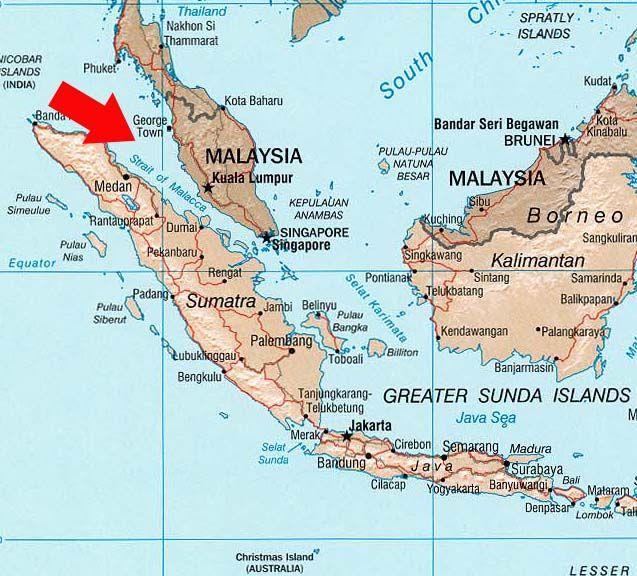
The Strait of Malacca became the most strategic waterway in the world, connecting the markets of China and Japan with those of Europe and the Middle East. The influence of Islamic trade ethics introduced concepts of contracts, weights, and measures that standardized commerce across the islands. Today, the economic legacy of this era is visible in the continued importance of cities like Batam, Medan, and Makassar. These locations remain vital nodes in global trade, following a geographical logic established by Muslim merchants over 500 years ago.
The "Bazaar" culture, which remains a staple of Indonesian economic life, also traces its roots to this period. The integration of the archipelago into the global "Dar al-Islam" (Abode of Islam) trade network allowed local products, particularly spices like cloves and nutmeg, to reach as far as the Mediterranean, fueling the global economy of the Middle Ages and the early modern period.
Linguistic Evolution and the Birth of a National Language
One of the most profound impacts of Islam on Indonesia is linguistic. The Malay language, which served as the lingua franca for traders in the archipelago, became the primary vehicle for Islamic proselytization. Because the Quran and Islamic scholarship were written in Arabic, a significant amount of Arabic vocabulary was absorbed into Malay.
Words related to law (hukum), justice (adil), time (saat/waktu), and knowledge (ilmu) are all derived from Arabic. This linguistic blending facilitated communication between the diverse ethnic groups of the archipelago, eventually providing the foundation for the modern Indonesian language (Bahasa Indonesia).
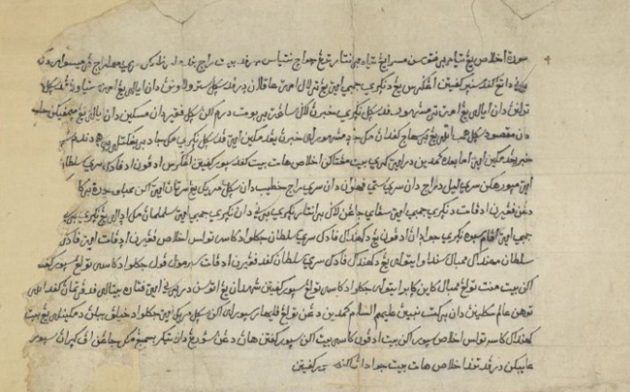
Furthermore, the introduction of the "Jawi" script—an adaptation of the Arabic alphabet for the Malay language—allowed for a flourishing of literacy. Before the widespread adoption of the Latin alphabet during the colonial era, Jawi was the standard script for official correspondence, religious texts, and literature across the Malay world. Even today, the "Pegon" script (Arabic script used for Javanese or Sundanese) continues to be taught in traditional religious circles, preserving a unique literary heritage.
The Educational Foundation: From Pesantren to Modern Madrasah
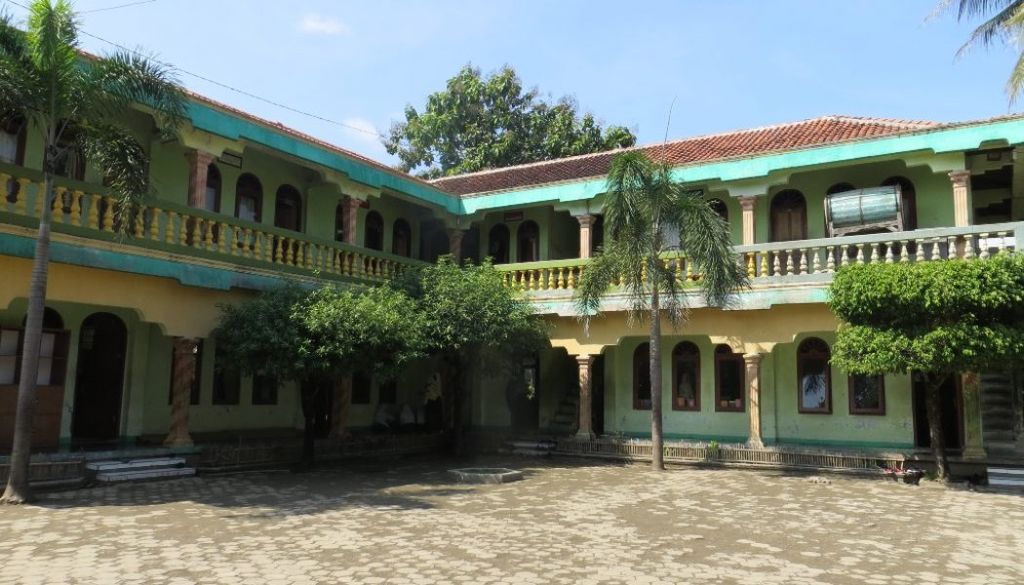
Islamic influence revolutionized the Indonesian educational system through the establishment of the Pesantren. The Pesantren is a traditional boarding school where students (santri) live and study under the guidance of a religious scholar (kyai). One of the oldest examples is the Al-Kahfi Somalangu Pesantren in Kebumen, Central Java, which has been a center of learning for centuries.
The Pesantren system was revolutionary because it democratized education. Unlike the court-centered education of the earlier era, which was often reserved for the nobility, Pesantrens were open to the common people. This created a highly literate and socially conscious class of citizens.
According to data from the Indonesian Ministry of Religious Affairs, there are currently over 30,000 Pesantrens across the country, educating millions of students. These institutions have evolved to include modern sciences and vocational training, but they remain the guardians of Indonesia’s moral and religious character. The transition from these traditional schools to modern Islamic universities (UIN) represents the continued relevance of Islamic thought in Indonesia’s intellectual development.
Architectural Acculturation and the Arts
The physical landscape of Indonesia bears the mark of Islamic acculturation, particularly in its religious architecture. When Islam first arrived, the builders did not simply replicate Middle Eastern styles. Instead, they blended Islamic requirements with existing Hindu-Buddhist and indigenous architectural forms.
The Great Mosque of Demak is a quintessential example. Instead of a dome, which was common in the Middle East, it features a tiered roof known as a meru, reminiscent of ancient Javanese temples. Similarly, the Menara Kudus Mosque features a minaret that closely resembles a Hindu candi (temple). This architectural synthesis allowed the new faith to feel familiar to the local population, easing the process of conversion.
In the realm of art, the Islamic prohibition on depicting sentient beings led to a magnificent flourishing of abstract and floral designs. Wood carving and batik patterns were enriched with complex geometric shapes and stylized calligraphy. The Wayang Kulit (shadow puppet) theater, originally a Hindu-Buddhist medium, was famously adapted by Sunan Kalijaga to tell Islamic stories, proving that the faith could thrive through cultural adaptation rather than erasure.
Literature and the Synthesis of History and Myth
Islamic literature in the archipelago is categorized into several distinct forms, each serving a specific social or religious purpose:

- Hikayat: Prosaic tales that often combine historical events with legendary elements. Examples include the Hikayat Raja-raja Pasai, which serves as both a royal genealogy and a religious chronicle.
- Babad: Historical accounts from Java and Madura that blend factual history with local mythology, such as the Babad Tanah Jawi.
- Suluk: Mystical texts focused on Sufism and the path to spiritual enlightenment. These were essential in integrating Islamic mysticism with Javanese spirituality.
- Syair: Formal poetry consisting of four-line stanzas, often used for didactic or romantic themes.
This literary tradition ensured that Islamic values were woven into the very fabric of local folklore and history, making the religion inseparable from the regional identity.
The Javanese-Islamic Calendar: A Masterpiece of Integration
Perhaps the most sophisticated example of Islamic influence is the creation of the Javanese calendar. In 1633, Sultan Agung of the Mataram Sultanate realized that the lunar-based Islamic Hijri calendar and the solar-based Hindu-Javanese Saka calendar were out of sync, causing confusion in administrative and agricultural cycles.
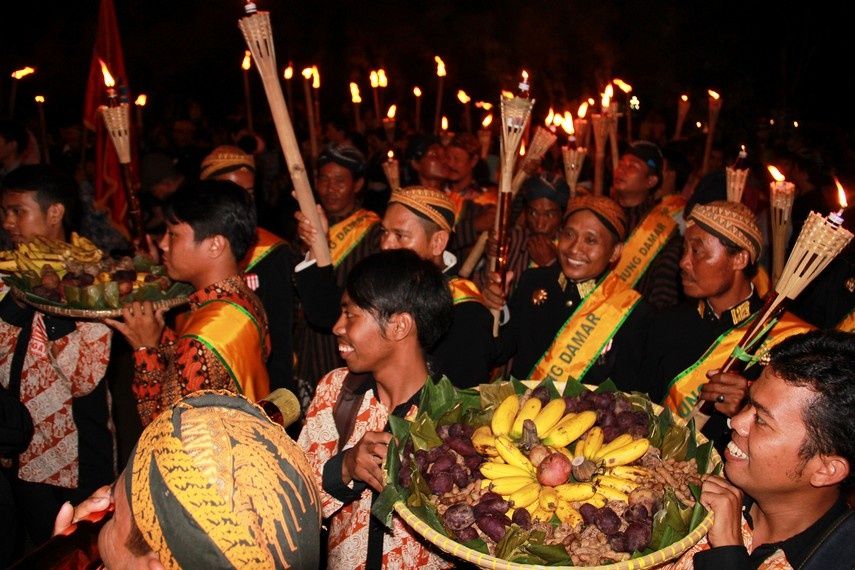
He issued a decree to merge the two systems, creating a unique hybrid. The new calendar kept the Saka year numbering but adopted the lunar system of the Hijri calendar. It also merged the five-day Javanese market week (Legi, Pahing, Pon, Wage, Kliwon) with the seven-day Islamic week. This calendar is still used today to determine traditional holidays and ceremonies, such as the Satu Suro (New Year) celebrations, which draw thousands of participants in cities like Yogyakarta and Surakarta.
Broader Implications and Modern National Identity
The influence of Islam in Indonesia has created a unique "civilizational synthesis." Unlike many other regions where the arrival of a new religion led to the total displacement of the old, Indonesia managed to retain its indigenous and Hindu-Buddhist roots while becoming a predominantly Muslim society.
Experts suggest that this history of acculturation is what makes Indonesian Islam notably moderate and pluralistic. The "Pancasila" ideology, which serves as the foundation of the Indonesian state, reflects this balance by recognizing "Belief in the One and Only God" as its first principle while protecting the rights of all religious minorities.
In a globalized world, Indonesia’s Islamic heritage provides it with a dual identity: as a leader in the Muslim world and as a vibrant, multicultural democracy in Southeast Asia. The economic networks, educational structures, and linguistic bonds formed during the era of the Sultanates continue to provide the social capital that holds the diverse nation together. As Indonesia moves toward the mid-21st century, the legacy of Islamic influence remains not just a relic of the past, but a living, breathing component of its future trajectory.
