

The mid-semester assessment, or Penilaian Tengah Semester (PTS), serves as a critical academic checkpoint for Grade 12 students in the Social Sciences (IPS) stream. As students navigate the final year of high school, these assessments are not merely tests of memory but essential tools for evaluating mastery of complex concepts in mathematics, economics, geography, history, and sociology. With the 2026 academic calendar approaching, students must shift from passive reading to active problem-solving to ensure readiness for both the midterm and subsequent university entrance examinations.
The Strategic Importance of Mid-Semester Evaluations
Academic performance in Grade 12 is highly correlated with university admission success, particularly for students utilizing the "Rapor" or school-record-based admission pathways. The midterm assessment provides a data-driven snapshot of a student’s grasp of the curriculum. In the Indonesian educational context, subjects like mathematics (specifically three-dimensional geometry) and economics (accounting systems) require procedural fluency, whereas geography and history demand analytical synthesis of structural and temporal data.
Mastering Three-Dimensional Geometry and Spatial Projections
One of the most challenging topics in the Grade 12 mathematics curriculum is the study of three-dimensional space, or Dimensi Tiga. This unit requires students to visualize objects such as cubes and tetrahedrons and perform geometric projections.

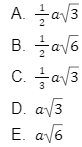
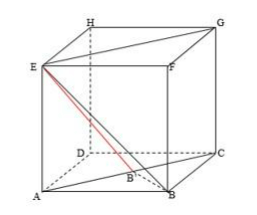
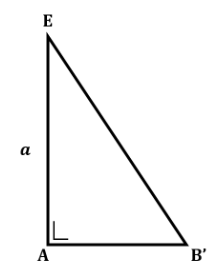
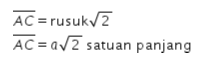
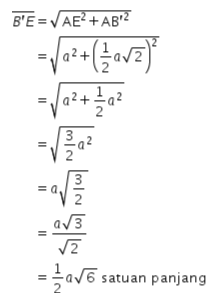
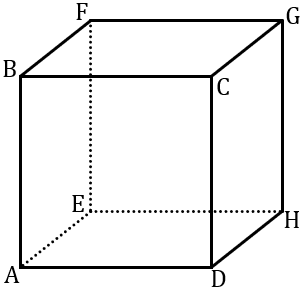
In a standard problem involving a cube (ABCD.EFGH) with edge length a, calculating the projection of a line segment onto a plane requires a solid understanding of the Pythagorean theorem and the properties of perpendicularity. For instance, determining the projection of diagonal line BE onto the plane ACGE involves identifying the midpoint of a corresponding segment to form a right-angled triangle. Mastery of these spatial relationships is not only vital for the exam but serves as a foundation for structural engineering and architectural principles.

Economics: Systems of Information and Accounting Integrity
The economics syllabus for Grade 12 focuses heavily on accounting as a system of information. This includes the fundamental accounting equation: Assets = Liabilities + Equity. Understanding this equation is the bedrock of financial literacy in the corporate world.
Current curriculum standards emphasize the distinction between internal and external users of accounting information. Internal users—such as managers and owners—rely on these records to drive operational efficiency and strategic growth. In contrast, external users, such as creditors and tax authorities, rely on the accuracy of these statements for regulatory and investment decisions. The debate between Continental and Anglo-Saxon accounting systems remains a focal point, as students must identify how different historical methodologies influence modern financial reporting standards.

Geography: Spatial Planning and Regional Development
The study of Geography at the Grade 12 level has evolved to encompass complex regional planning and the interaction between rural and urban centers. The concept of a "Nodal Region" (Wilayah Fungsional) is essential here. Unlike a formal region, which is defined by homogeneous characteristics, a nodal region is defined by the flow of people, goods, and services moving toward a central hub.

Planning for disaster-prone areas—such as the regions surrounding Mount Sinabung—requires a sophisticated understanding of land-use zoning. The division of land into hazard zones A, B, and C is a direct application of geographic risk management. Furthermore, the application of the "Breaking Point Theory" (Teori Titik Henti) allows urban planners to determine the ideal location for public facilities, such as hospitals or schools, positioned between two cities based on their relative population sizes and distances. This mathematical approach to urban sociology highlights the intersection of geography and social policy.
Historical Context: Post-Independence Sovereignty and Disintegration
In the History curriculum, Grade 12 students examine the precarious years following the 1945 Proclamation. This era was marked by severe internal threats, including the Republic of Maluku Selatan (RMS) rebellion and the DI/TII movement led by S.M. Kartosuwiryo.

The strategy employed by the Indonesian government to suppress these uprisings—most notably the "Pagar Betis" (fence of legs) operation—demonstrates the mobilization of both military forces and the civilian populace to restore national order. Diplomatic efforts, such as the Conference on the Round Table (KMB) and the international recognition provided by nations like Egypt, India, and Australia, underscore the importance of external validation in the consolidation of a newly formed state. Figures such as Sultan Syarif Kasim II, who donated millions of guilders to the cause, illustrate the personal sacrifices that sustained the Republic during its infancy.

Sociology: The Dynamics of Social Change and Globalization
Sociological studies in Grade 12 explore the mechanics of social change, distinguishing between planned and unplanned shifts. The emergence of the "cosplay" subculture in Indonesia is a prime example of external cultural influence driving social change, while the resistance to modernization in isolated communities, such as the Kampung Naga, serves as a case study for factors that inhibit social evolution.
Globalization, meanwhile, is presented as a double-edged sword. While it facilitates the rapid exchange of music, technology, and art, it also forces communities to adapt to new labor demands. For example, the introduction of mechanized farming tools in rural villages increases production efficiency but simultaneously creates structural unemployment for traditional laborers. This highlights the necessity for government intervention in workforce retraining and the importance of maintaining a social safety net during periods of rapid technological transition.

Strategies for Midterm Preparation
To excel in the upcoming 2026 assessments, students should adopt a multi-faceted preparation strategy:

- Chronological Mapping: For History and Geography, create timelines and spatial maps. Understanding the "when" and "where" is the first step toward understanding the "why."
- Procedural Practice: In Mathematics and Accounting, rote memorization is ineffective. Students should engage in "active recall" by solving problems without referencing the answer key until the final step.
- Synthesizing Concepts: Look for intersections between subjects. For example, the economics of regional development (Geography) directly impacts the implementation of government policies (History/Politics).
- Data Analysis: Practice interpreting charts, tables, and maps. Many exam questions in Geography and Economics now focus on data literacy rather than simple definition-matching.
- Simulated Testing: Utilize mock exams (tryouts) to build mental stamina. Testing conditions should mimic the actual exam environment to minimize anxiety on the day of the assessment.
The Broader Implications of Social Sciences
The Social Sciences are not merely academic subjects; they are the frameworks through which we interpret the modern world. The ability to calculate spatial projections (Mathematics), understand the flow of capital (Economics), manage land use (Geography), appreciate the sacrifices of the past (History), and analyze the forces shaping society (Sociology) prepares students to be informed, active participants in the global community.
As the 2026 midterm approaches, remember that these tests measure more than just the ability to regurgitate facts. They measure the ability to apply logic, evidence, and historical consciousness to real-world scenarios. By grounding study efforts in these core principles, students will find that the path to academic success is not only manageable but deeply rewarding.

Preparation for these assessments is a marathon, not a sprint. By engaging with the source material critically and consistently applying the methods outlined above, Grade 12 students can enter their midterm assessments with the confidence that comes from thorough, disciplined preparation. The objective of this education is to foster the analytical skills necessary for the challenges of higher education and beyond.
