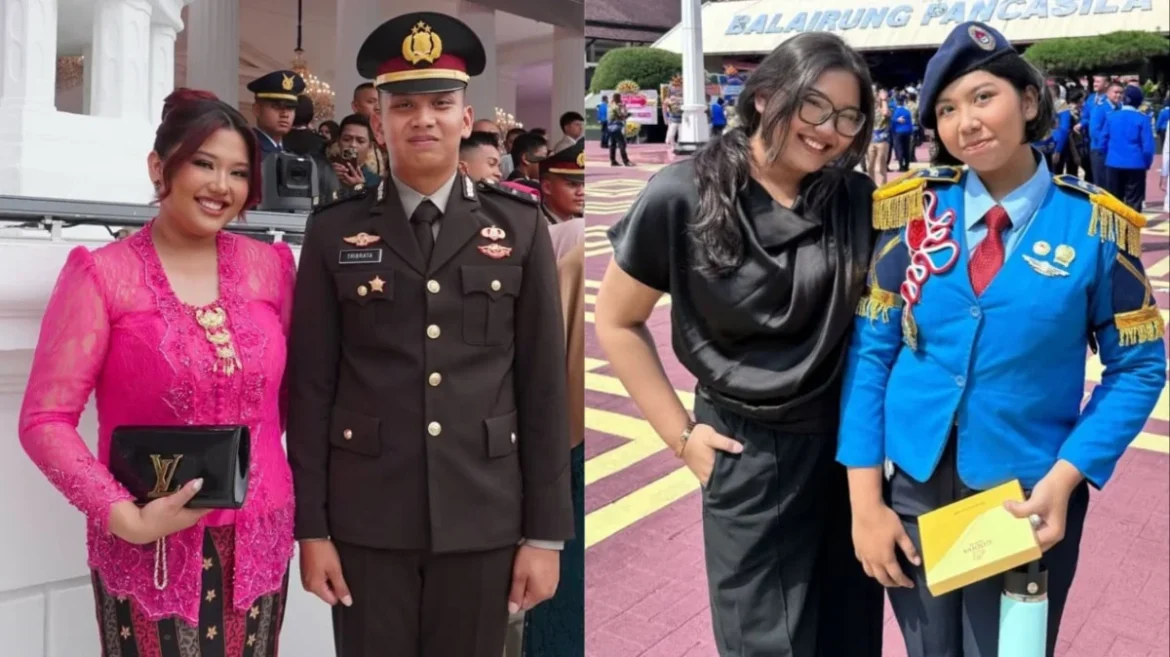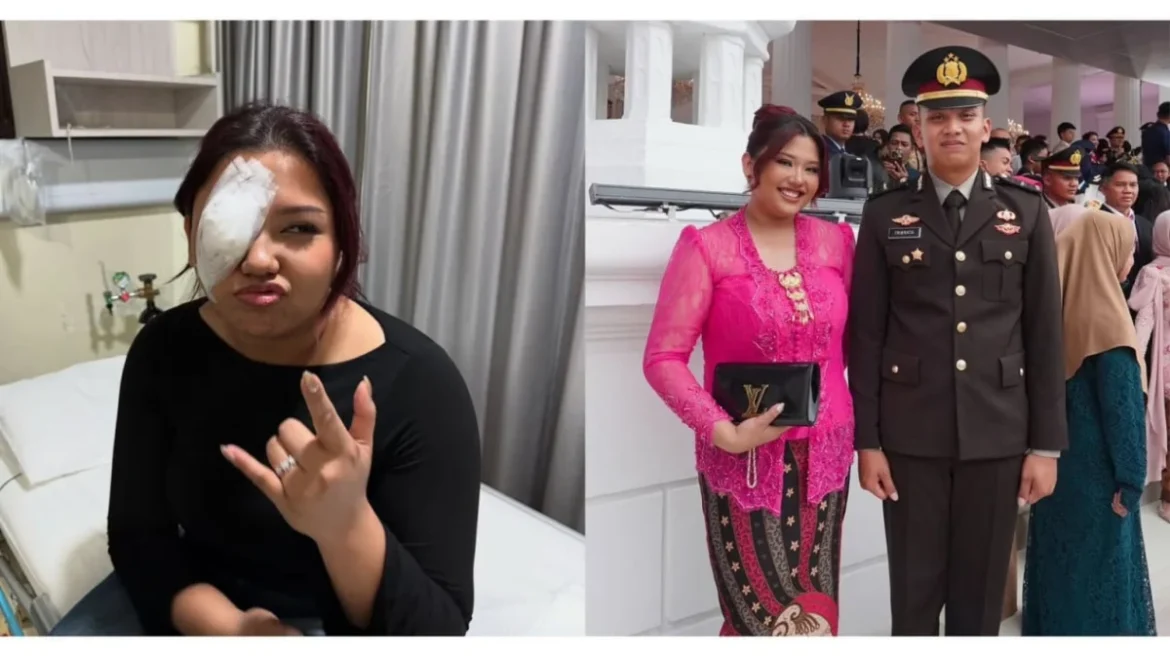
Friday, July 24, 2026, marked a momentous day for the Sambo family as Tribrata Putra officially commenced his journey as a Junior Police Officer (Inspektur Polisi Dua, IPDA) with the Indonesian National Police (Polri). The solemn inauguration ceremony, a culmination of years of rigorous training at the Police Academy (Akademi Kepolisian – Akpol), saw Tribrata Putra join the ranks of newly commissioned officers. However, beyond the customary pride and celebration, public attention was also drawn to his older sister, Trisha Eungelica, whose unwavering presence at the ceremony revealed a lesser-known personal challenge: a significant eye injury sustained just days prior. Despite her condition not being fully recuperated, Trisha chose to stand by her brother, underscoring the profound bond and support within the family. Her attendance, a testament to her resilience, became a poignant subplot to an otherwise joyous occasion, raising questions among onlookers about the circumstances of her injury.
The inauguration of a new batch of IPDAs is a cornerstone event in the Indonesian security apparatus, signifying the infusion of fresh talent and leadership into Polri. These officers, having successfully navigated a demanding curriculum that encompasses academic rigor, physical endurance, and ethical training, are prepared to uphold law and order across the archipelago. For Tribrata Putra, this ceremony represented not merely a personal achievement but also a significant milestone for his family, symbolizing dedication and commitment to public service. The Akpol program, typically a four-year residential course, molds cadets into disciplined and capable leaders, equipping them with the necessary skills for various roles within the police force, from general investigations to specialized units. Graduating as an IPDA is the initial step in a long and distinguished career, paving the way for future promotions and greater responsibilities within the hierarchical structure of Polri. The event was, therefore, imbued with national importance and personal triumph.
A Sister’s Unwavering Presence Amidst Personal Ordeal
Trisha Eungelica’s appearance at the graduation ceremony was met with admiration, particularly once the details of her recent health setback became public. Her visible effort to participate in such a crucial family event, despite personal discomfort, resonated deeply. Many attending the event or following news reports were initially unaware of the extent of her injury, only later learning through her personal disclosures that she had been grappling with a painful eye condition. Her commitment to celebrating her brother’s achievement, even with a partially recovered eye, highlighted the strength of familial ties and the importance of shared moments of triumph. This public display of support provided a humanizing glimpse into the lives of individuals often in the public eye, reminding everyone of the personal sacrifices made for family.
The Unforeseen Incident: A Playground Mishap
The chronology of Trisha’s eye injury began unexpectedly, far from any high-stakes environment, during what should have been a routine day of recreation. According to her account shared on social media, the incident occurred while she was accompanying her youngest sibling at a local playground. Playgrounds, designed as safe spaces for children’s enjoyment and development, are generally considered low-risk environments. However, even in such settings, unforeseen accidents can occur. Trisha recounted that while in the children’s play area, her right eye was inadvertently struck by a large sponge ball. These balls, often lightweight and designed for soft impact, are common fixtures in indoor playgrounds and play zones, intended to minimize injury during active play.
Despite its soft composition, the size and velocity of the sponge ball, combined with the delicate nature of the human eye, proved sufficient to cause harm. Trisha described the impact as surprisingly forceful, resulting in immediate and intense pain. The most alarming symptom she experienced shortly after the collision was the inability to open her affected eye. This sudden impairment, coupled with the discomfort, naturally triggered a sense of panic. Recognizing the potential severity of an eye injury and the critical importance of prompt medical intervention, Trisha wasted no time in seeking professional help. Her quick decision to consult medical experts was crucial in preventing further complications and initiating the healing process without delay.
Seeking Immediate Medical Attention and Diagnosis
Upon experiencing the debilitating symptoms, Trisha immediately sought specialized medical care. Her swift action is consistent with advice from ophthalmologists, who stress that any direct trauma to the eye, especially one resulting in pain, blurred vision, or an inability to open the eye, warrants urgent evaluation. Delaying treatment for eye injuries can lead to more serious, long-term complications, including permanent vision impairment.
During her examination, medical professionals confirmed that Trisha’s right eyeball had sustained a significant laceration. Specifically, the doctor diagnosed her with a corneal abrasion, a common but often painful injury where the clear, protective outer layer of the eye (the cornea) is scratched. The cornea is highly sensitive, and even a minor abrasion can cause considerable discomfort, light sensitivity, tearing, and the sensation of a foreign object in the eye. The doctor, identified by Trisha as Dr. Marsha, Sp.M (a specialist in ophthalmology), played a crucial role not only in diagnosing the injury but also in managing Trisha’s initial anxiety. Trisha specifically lauded Dr. Marsha for her calming demeanor, which helped alleviate her panic despite her inability to open her eye—a terrifying experience for anyone. This immediate and expert care was instrumental in setting the course for her recovery.
The Road to Recovery and Medical Management
Following the diagnosis, Trisha embarked on a focused recovery regimen under strict medical guidance. Treatment for corneal abrasions typically involves preventing infection, reducing pain, and promoting healing. This often includes the use of antibiotic eye drops or ointments to ward off bacterial infections, pain-relieving drops, and sometimes a patch or bandage contact lens to protect the eye during the healing process. Patients are also advised to avoid rubbing the eye and to limit activities that could strain it.
Trisha’s recovery, though progressive, required patience and adherence to these medical instructions. Initially, the injury necessitated the use of a protective covering or bandage over her right eye. This period of obscured vision and discomfort undoubtedly posed challenges to her daily routine. However, driven by the desire to fully support her brother on his significant day, Trisha remained committed to her recovery. Slowly, but surely, her condition improved. The pain subsided, the inflammation reduced, and critically, her vision began to stabilize. The timely removal of the eye bandage, just before Tribrata Putra’s inauguration, was a pivotal moment, allowing her to attend the ceremony without overt visual impairment, albeit still in the process of full healing. This partial recovery allowed her to witness her brother’s momentous achievement firsthand, a testament to her determination.
Social Media as a Narrative Platform and Public Awareness
Trisha Eungelica leveraged her social media platforms, particularly Instagram, to share her experience with her followers. In an era where public figures often use these channels to connect directly with their audience, Trisha’s candid revelation provided a transparent account of her ordeal. Her posts, which included updates on her treatment and progress, served multiple purposes. Firstly, they offered a personal narrative, allowing her followers to empathize with her situation and understand the circumstances behind her attendance at the inauguration. Secondly, by acknowledging the role of Dr. Marsha, Trisha implicitly highlighted the importance of professional medical care for eye injuries. Her gratitude towards her doctor ("shoutout to dr marsha, Sp.M yg super baik n bikin w gak panik padahal jantungku dah mo copot gara2 gabisa melek") underscored the psychological comfort and reassurance that competent medical professionals provide during moments of distress.
Furthermore, Trisha’s story, disseminated through her social media, inadvertently raised public awareness about playground safety. While sponge balls are generally considered safe, her experience serves as a reminder that even seemingly innocuous play equipment can pose risks if used improperly or if children are not adequately supervised. This incident prompts a broader discussion among parents and caregivers about vigilance in recreational settings and the immediate steps to take in the event of an injury.
The Symbolism of Family Support in Public Service
Trisha Eungelica’s dedication to being present at her brother’s inauguration, despite her recent injury, carries significant symbolic weight. In professions like the police force, where individuals often face immense challenges, long hours, and potential risks, the unwavering support of family is invaluable. Family members often share in the sacrifices, anxieties, and triumphs associated with such a demanding career path. Trisha’s presence, even under duress, visually communicated this deep familial commitment. It conveyed a message of solidarity and pride that transcends personal discomfort, reinforcing the idea that behind every public servant is a network of personal support.
For Tribrata Putra, having his sister, particularly after her personal struggle, attend his commissioning ceremony would undoubtedly have been a source of immense encouragement and pride. It underscored the shared journey and the collective celebration of his achievement. This kind of visible family support is often a powerful morale booster for new recruits, providing a foundation of emotional strength as they embark on their challenging careers in public service.
Broader Implications: Safety Awareness and Human Resilience
Trisha Eungelica’s experience, while personal, carries broader implications for public awareness. It serves as a stark reminder that accidents can happen anywhere, even in seemingly safe environments like playgrounds. The incident highlights the need for constant vigilance, especially when supervising children in play areas, and the importance of ensuring that play equipment is used appropriately. Educational campaigns often emphasize immediate first aid for eye injuries and the critical necessity of professional medical consultation to prevent long-term damage.
Beyond safety, Trisha’s story is also a testament to human resilience and the power of dedication. Her determination to overcome personal pain and discomfort to support a loved one on a pivotal day speaks volumes about her character. It humanizes public figures, reminding the public that they, too, face personal challenges and make personal sacrifices. Her ability to navigate a painful recovery while maintaining focus on her brother’s milestone demonstrates a commendable spirit of perseverance.
In conclusion, the inauguration of Tribrata Putra Sambo as an IPDA in the Indonesian National Police was a landmark event, not only for him but also for his family. Trisha Eungelica’s presence, marked by her recent eye injury and subsequent recovery, added a layer of profound personal narrative to the public celebration. Her journey from a sudden playground mishap and a painful diagnosis to her determined attendance at the ceremony underscored themes of family solidarity, personal resilience, and the critical importance of swift medical attention for injuries. As Tribrata Putra embarks on his career in public service, the memory of his sister’s unwavering support, despite her own challenges, will undoubtedly serve as a powerful source of inspiration and a reminder of the strong bonds that underpin personal and professional success.