
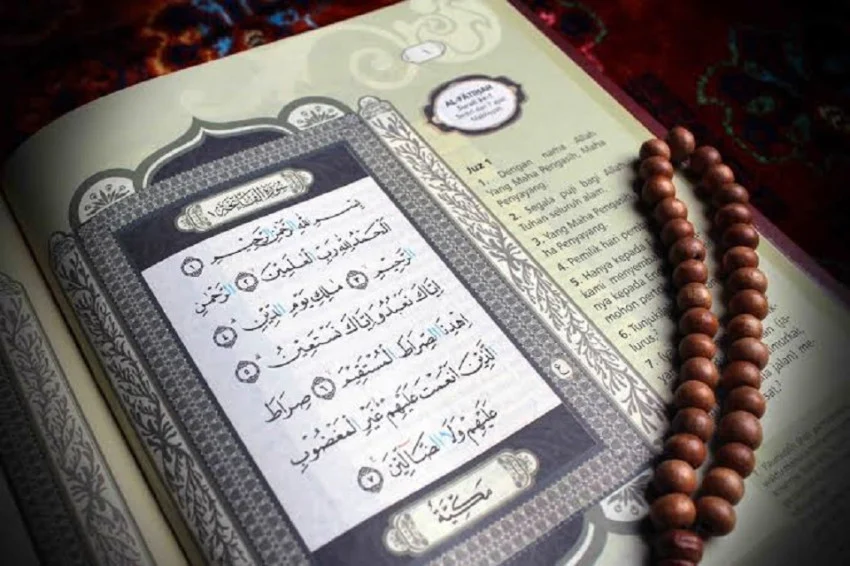
Surat Al Fatihah, the opening chapter of the Quran, occupies a position of unparalleled importance within Islamic theology, serving not only as the inaugural text of the holy book but also as the fundamental pillar of daily Islamic worship. Often referred to as "Ummul Kitab" (the Mother of the Book) or "Ummul Qur’an" (the Mother of the Quran), these seven verses are considered a complete summary of the entire Quranic message. Islamic scholars, including the renowned Imam Ibn Kathir, Jalaluddin Al Mahally, and Jalaluddin As-Suyuthi, have long asserted that the profound meanings of the 114 chapters of the Quran are distilled into the brief yet comprehensive verses of Al Fatihah. As a Makkiyah surah—revealed during the Prophet Muhammad’s period in Mecca—it focuses on the foundational aspects of faith, the majesty of the Creator, and the essential relationship between the servant and the Divine.
The structural and thematic importance of Surat Al Fatihah is underscored by its mandatory recitation in the five daily prayers. For a practicing Muslim, the surah is recited at least 17 times a day during the obligatory (fard) prayers, and many more times during voluntary (sunnah) prayers. This constant repetition serves as a spiritual anchor, reinforcing the concepts of monotheism, divine mercy, and the inevitability of the Day of Judgment. According to classical exegetical works, such as the Tafsir Ibn Kathir and Tafsir al-Jalalayn, the surah serves two primary functions: "targib" (encouragement or persuasion toward righteousness) and "tarhib" (warning or deterrence against deviation). By balancing these two themes, the surah provides a roadmap for the believer to navigate the complexities of worldly life while remaining focused on the ultimate goal of divine pleasure.
Historical and Exegetical Foundations
The interpretation of Surat Al Fatihah has been a central focus of Islamic scholarship for over a millennium. The source material for understanding these verses often draws from the "Tafsir al-Qur’an al-Azim" by Ibn Kathir (d. 1373 CE) and the "Tafsir al-Jalalayn," a collaborative work by Jalaluddin al-Mahalli (d. 1459 CE) and his student Jalaluddin as-Suyuti (d. 1505 CE). These scholars emphasize that Al Fatihah is not merely a preface but the "Induk" or the core from which all other Quranic sciences emerge.
One of the most significant points of scholarly discussion involves the very first verse of the surah: the Basmalah ("Bismillahirrahmaniraahim" – In the name of Allah, the Most Gracious, the Most Merciful). There is a long-standing historical and jurisprudential debate regarding whether the Basmalah is an integral part of Surat Al Fatihah or a separate introductory phrase used to mark the beginning of various chapters. The source text notes that according to a narration by Abu Daud from Ibnu Abbas, the Prophet Muhammad did not initially know the definitive separation between surahs until the Basmalah was revealed.
This distinction carries heavy weight in Islamic jurisprudence (fiqh). Scholars like Imam Shafi’i argued that the Basmalah is indeed the first verse of Al Fatihah, necessitating its audible recitation during prayer. Conversely, other schools of thought, such as the Hanafi and Maliki traditions, often view it as a blessed opening that may be recited silently. Regardless of the legal nuance, the inclusion of the Basmalah sets the tone for the entire Quran, establishing that the message is one of mercy and grace.
The Chronology of Revelation and Context
Surat Al Fatihah is classified as Makkiyah, meaning it was revealed during the early years of the Prophet Muhammad’s mission in Mecca. This period was characterized by the establishment of "Tawhid" (the Oneness of God) in a society dominated by polytheism. The chronology of its revelation is vital because it established the primary identity of the nascent Muslim community. Before the complex legal codes of the Medinan period were revealed, the Meccan revelations focused on the soul, the nature of God, and the concept of accountability.
The surah’s second verse, "Al-hamdu lillahi Rabbil-‘alamin" (All praise is due to Allah, Lord of all the worlds), immediately establishes the hierarchy of existence. In their tafsir, Ibn Kathir and the Jalalayn scholars explain that "Hamd" (praise) is a specific type of gratitude that belongs exclusively to the Creator. Unlike "Shukr" (thanks), which is often a reaction to a specific favor, "Hamd" is an acknowledgement of Allah’s inherent perfection and His role as the Sustainer (Rabb) of every realm of existence—the seen and the unseen, the physical and the spiritual.
Deep Dive into the Themes of Targib and Tarhib
The duality of "targib" and "tarhib" mentioned in the source material is essential for understanding the psychological impact of Al Fatihah on the believer.
- Targib (Anjuran/Encouragement): The surah opens with names of mercy—Ar-Rahman and Ar-Rahim. This encourages the believer to seek proximity to Allah through good deeds (amal shaleh), knowing that the Creator is inherently compassionate. This "targib" element fosters hope and motivates the individual to follow the "Sirat al-Mustaqim" (the Straight Path).
- Tarhib (Peringatan/Warning): The mention of "Maliki Yawm ad-Din" (Master of the Day of Judgment) introduces the "tarhib" aspect. It serves as a solemn reminder that human life is not without consequence. Every action will be weighed, and there will be a day of ultimate accountability. This balance ensures that the believer neither despairs of God’s mercy nor becomes complacent in their moral responsibilities.
According to the interpretations of Al Mahally and As-Suyuthi, the reference to the Day of Judgment is strategically placed to encourage humility. By acknowledging that Allah is the King of the Day of Recompense, the servant is prompted to lower themselves in supplication, recognizing their total dependence on Divine grace for salvation.
Statistical and Linguistic Insights
Linguistically, Surat Al Fatihah is a masterpiece of Arabic brevity. It consists of approximately 25 to 29 words (depending on the counting method of specific particles) and roughly 139 to 143 letters. Despite this brevity, it covers the three main categories of Quranic themes:
- Theology (Tawhid): Contained in the first three verses.
- Worship and Law (Ibadah): Contained in the fourth verse ("You alone we worship and You alone we ask for help").
- History and Guidance (Manhaj): Contained in the final three verses, which discuss the paths taken by those who preceded us.
Supporting data from various Hadith (prophetic traditions) further elevates the status of the surah. In a "Hadith Qudsi" (a revelation from God phrased in the Prophet’s words), it is stated that Allah has divided the prayer (Al Fatihah) into two halves between Himself and His servant. When the servant says, "All praise is due to Allah," Allah responds, "My servant has praised Me." This interactive element of the surah transforms the prayer from a ritual into a direct dialogue with the Divine.
Broader Impact and Global Significance
The influence of Surat Al Fatihah extends far beyond the prayer mat. It is a cultural and spiritual touchstone for over 1.8 billion Muslims worldwide. It is recited at births, at the bedside of the dying, during marriage ceremonies, and as a means of seeking healing (Ash-Shifa). The universal nature of its message—praising the Creator and seeking guidance—allows it to resonate across different cultures and languages, even though it is traditionally recited in its original Arabic.
From a sociological perspective, the surah promotes a sense of global community (Ummah). Whether in Jakarta, Cairo, or New York, every Muslim recites the same seven verses in the same language, facing the same direction. This creates a powerful sense of unity and shared purpose. Furthermore, the final verse’s plea to be guided away from "the path of those who have earned [Your] anger or of those who are astray" serves as a daily ethical recalibration, urging the individual to seek knowledge and avoid the pitfalls of ignorance and arrogance.
Scholarly Reactions and Modern Analysis
In contemporary Islamic discourse, Surat Al Fatihah is often cited as a model for interfaith understanding and personal development. Modern scholars point out that the surah does not begin with a call to a specific tribe or nation, but with "Rabbil-‘alamin" (Lord of all the worlds). This inclusivity highlights the universal sovereignty of God.
Critics and academics who study the Quran as literature often remark on the "symmetrical" structure of the surah. It begins with the praise of God and ends with the needs of man. The middle verse, "Iyyaka na’budu wa iyyaka nasta’in" (You alone we worship and You alone we ask for help), acts as the bridge—the point where the Divine and the human meet in a covenant of worship and assistance.
The analysis provided by Imam Ibn Kathir and the Jalalayn remains the gold standard for understanding these depths. Their work ensures that the "Induk Al-Quran" is not merely memorized but understood as a profound philosophical statement on the nature of existence. By combining "targib" and "tarhib," the surah creates a resilient spiritual framework that addresses both the emotional and intellectual needs of the human soul.
In conclusion, Surat Al Fatihah is much more than an introduction; it is the heartbeat of the Islamic faith. Through its seven verses, it provides a comprehensive worldview that balances praise with petition, mercy with justice, and the individual with the Creator. As the "Mother of the Book," it continues to offer fresh insights to every generation of believers and scholars, remaining the most recited and perhaps the most influential piece of literature in the history of the Islamic world.
