
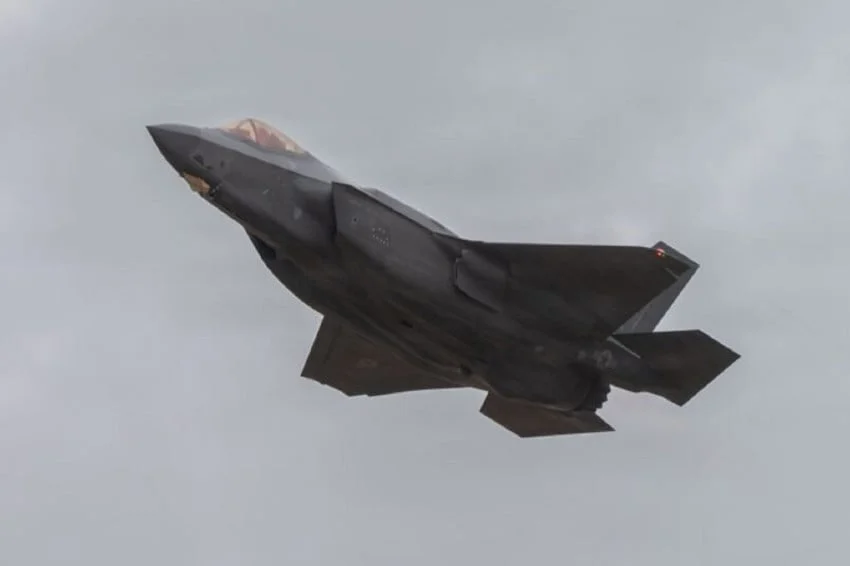
WASHINGTON — The United States government has formally approved the proposed foreign military sale of 48 Lockheed Martin F-35 Lightning II stealth fighter jets to the Kingdom of Saudi Arabia, a landmark defense agreement valued at approximately $24.3 billion. The decision, announced by the US administration on Thursday, marks a significant geopolitical development in the Middle East, reflecting shifting security alignments despite lingering deep-seated concerns within the American intelligence community regarding potential technology leakage to the People’s Republic of China.
The massive defense package encompasses not only the 48 advanced fifth-generation combat aircraft and their associated Pratt & Whitney F135 engines, but also comprehensive logistics support, maintenance infrastructure, advanced radar systems, pilot training programs, and sophisticated weaponry. While the deal represents a major milestone in bilateral defense cooperation between Washington and Riyadh, it has immediately ignited intense debate among lawmakers, regional analysts, and defense strategists over security protocols, regional power balances, and the pervasive technological rivalry between the United States and China.
Background Context of the Saudi Pursuit of the F-35
For years, the government in Riyadh has sought to acquire the F-35 Joint Strike Fighter to modernize the Royal Saudi Air Force (RSAF) and maintain a qualitative military edge in an increasingly volatile region. The Kingdom’s pursuit of the stealth platform gained renewed urgency following recent escalations in regional conflicts, particularly the shadow war and subsequent direct confrontations involving Iran, its regional proxies, and Israel.
Historically, the acquisition of advanced American military hardware by Arab Gulf states has faced stringent regulatory and political hurdles in Washington, primarily driven by the long-standing US policy requirement to maintain Israel’s Qualitative Military Edge (QME) in the Middle East. Israel remains the sole operator of the F-35 in the region, utilizing the platform—locally designated as the "Adir"—to project power and counter advanced anti-access/area-denial (A2/AD) networks. Although previous diplomatic efforts, including discussions surrounding the normalization of ties between Riyadh and Jerusalem, had briefly raised expectations for an eventual F-35 transfer, Israeli officials consistently voiced apprehension regarding the potential erosion of their strategic advantage.
The breaking of this longstanding barrier under the current defense framework underscores Washington’s calculation that integrating Saudi Arabia more closely into a unified regional air defense architecture outweighs the immediate diplomatic friction. However, the path to finalizing the contract remains subject to legislative oversight, as the US Congress retains the authority to review and potentially block foreign military sales through a joint resolution of disapproval.
The Intelligence Community Dilemma: The China Factor
The most contentious aspect surrounding the multi-billion-dollar transaction centers on the grave warnings issued by the US intelligence community. National security analysts and counterintelligence officials in Washington have repeatedly expressed acute anxiety that the presence of advanced fifth-generation stealth technology on Saudi soil could expose highly classified source code, sensor data, and manufacturing blueprints to Chinese intelligence operatives.
Over the past decade, Saudi Arabia and China have dramatically expanded their economic, technological, and diplomatic partnerships. Beijing has emerged as Riyadh’s primary trading partner, heavily investing in the Kingdom’s Vision 2030 infrastructure projects, telecommunications, and energy sectors. Chinese telecommunications giants, notably Huawei, have established a significant footprint in Saudi digital infrastructure, raising profound concerns among American defense planners regarding data security and network vulnerability.
The F-35 is widely regarded as a flying supercomputer, heavily reliant on the ODIN (Operational Data Integrated Network) logistics and maintenance system, which continuously communicates vast quantities of diagnostic and telemetry data back to the United States. US intelligence agencies fear that close commercial and intelligence-sharing channels between Riyadh and Beijing could inadvertently grant Chinese state-sponsored hackers or intelligence assets backdoor access to sensitive military networks. To mitigate these risks, the Pentagon is expected to mandate unprecedented physical and digital security protocols, restricting access to the aircraft to vetted American and Saudi personnel while employing stringent telemetry monitoring to prevent unauthorized data extraction.
Strategic Rationale and Official Department of State Justifications
In its formal notification to Capitol Hill, the US Department of State emphasized that the proposed sale aligns directly with American foreign policy objectives and national security interests by empowering a key regional partner to defend its sovereignty against escalating external threats.
"The proposed sale will improve Saudi Arabia’s capability to meet current and future threats by bolstering its territorial defense capabilities while significantly enhancing interoperability with United States Armed Forces," the State Department declared in an official statement released Friday. "Furthermore, the acquisition will expand the Kingdom’s operational fleet, modernizing its air-to-air and air-to-ground combat capabilities to ensure regional stability."
Defense analysts note that integrating the F-35 into the Royal Saudi Air Force will transform the Kingdom’s military posture, transitioning its operational doctrine toward networked, fifth-generation warfare. The stealth aircraft’s advanced sensor fusion, electronic warfare suites, and low-observable cross-section will enable Saudi forces to conduct precision strikes and gather real-time intelligence deep within contested airspace without detection by conventional radar systems.
Chronology of the Agreement and Congressional Review Process
The announcement on Thursday represents the culmination of prolonged, highly classified diplomatic and military negotiations. The formal timeline of the agreement involves several critical phases:
- Initial Inquiries (Late 2010s–Early 2020s): Riyadh informally expresses persistent interest in procuring the F-35, prompted by regional security dynamics and the acquisition of the platform by neighboring and allied nations.
- Diplomatic Openings (2020–2024): Regional normalization talks bring defense procurement discussions to the forefront, though Israeli security reservations and US technological safeguards stall definitive commitments.
- Escalated Regional Tensions (2024–2025): Outbreak of wider conflicts involving Iran, proxy groups, and Israel dramatically accelerates Washington and Riyadh’s mutual need for synchronized air defense capabilities.
- Formal Administration Approval (Thursday): The US Treasury and Department of State officially clear the $24.3 billion sale of 48 F-35 units and associated logistics packages.
- Congressional Notification (Friday): The State Department formally notifies Capitol Hill of the impending transaction, initiating the statutory review window during which lawmakers can examine the terms of the sale.
- Future Deliveries (Pending): Washington has yet to establish a definitive delivery schedule, reflecting the complex manufacturing backlog at Lockheed Martin and the extensive security infrastructure that must be built prior to the aircraft’s arrival in Saudi Arabia.
Economic Scope and Defense Industry Impact
Valued at $24.3 billion, the agreement stands as one of the largest foreign military sales transactions in recent years. The financial magnitude of the contract provides a substantial boost to the American defense industrial base, securing long-term manufacturing lines at Lockheed Martin facilities in Fort Worth, Texas, alongside key subsystem suppliers across multiple states.
The package extends far beyond the physical airframes. It includes comprehensive provisions for pilot training, simulator installation, cryptographic equipment, maintenance support services, and spare parts. Because the F-35 requires specialized hangar facilities with climate-controlled environments and advanced anti-tampering security systems, the deal will likely generate billions of dollars in ancillary construction and engineering contracts for both US and international firms operating within the Kingdom.
Geopolitical Implications and Broader Regional Impact
The introduction of the F-35 to Saudi Arabia is poised to alter the strategic calculus of the Middle East fundamentally. By arming Riyadh with advanced stealth capabilities, the United States is effectively anchoring the Kingdom more deeply into the Western security architecture, signaling a long-term commitment to deterring Iranian aggression and stabilizing energy corridors.
However, the transaction also carries inherent geopolitical risks. Regional adversaries, particularly Iran, are likely to view the deployment of fifth-generation stealth fighters on their doorstep as a direct escalation, potentially prompting asymmetric responses or accelerated investments in advanced air defense systems, such as Russian- or domestic-origin surface-to-air missile batteries. Furthermore, neighboring states without access to such technology may recalibrate their own defense postures, amplifying regional arms races.
Domestically within the United States, the transaction will face rigorous scrutiny from members of Congress concerned about human rights records, regional conflicts, and the aforementioned technological security risks regarding China. While opposition is anticipated from lawmakers seeking to place restrictive conditions on the sale or halt it entirely, the executive branch’s framing of the deal as vital for countering shared adversaries and supporting domestic manufacturing jobs provides a strong legislative foundation. Ultimately, the successful delivery of the world’s most advanced combat aircraft to Riyadh will depend on the implementation of ironclad security guarantees designed to safeguard American military dominance and prevent sensitive technological secrets from falling into unauthorized hands.
