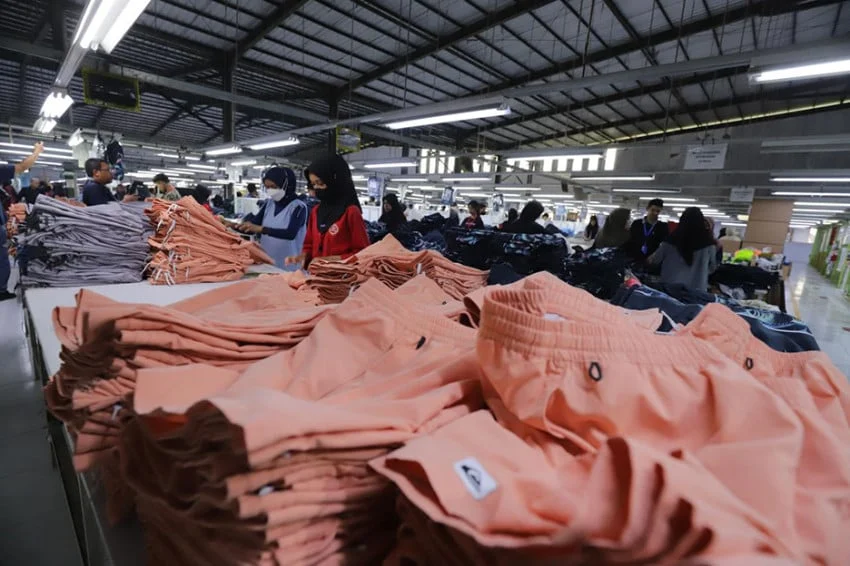
The economic trajectory of the Prabowo Subianto-Gibran Rakabuming Raka administration has increasingly centered on attracting robust foreign and domestic investment while prioritizing large-scale job creation. As global geopolitical tensions and fluctuating commodity prices continue to challenge emerging markets, Indonesia’s strategic pivot toward industrialization and human capital development has garnered significant attention from academic and financial observers. Professor Telisa Falianty, a prominent economist from the University of Indonesia, recently underscored the efficacy of the current administration’s macroeconomic management, noting that despite external pressures, Indonesia maintains a resilient fiscal posture.
Macroeconomic Resilience in a Volatile Global Climate
Current indicators suggest that Indonesia’s economy remains on a stable growth path. Data from the Central Statistics Agency (BPS) and fiscal reports confirm that the nation’s Gross Domestic Product (GDP) growth has consistently remained above the 5% threshold—a figure that places Indonesia among the top performers in the G20. Inflation, often a point of contention for developing economies, has been effectively tethered within the target range of approximately 3%. Furthermore, the Open Unemployment Rate (TPT) has seen a downward trajectory, reaching 4.65%, reflecting a strengthening labor market.
Prof. Telisa Falianty, speaking during a televised policy dialogue in Jakarta on Thursday, September 24, 2026, highlighted that the government’s interventionist approach to social welfare and fiscal stability has been crucial. By opting to maintain electricity tariffs and stabilizing social security contributions (BPJS Kesehatan), the administration has shielded the purchasing power of the middle and lower-income classes. This strategic restraint in pricing, while placing a burden on the state budget, is viewed as a necessary sacrifice to prevent inflationary spikes that could otherwise derail post-pandemic recovery efforts.
The Strategic Shift Toward Investment-Led Growth
The administration’s "Investment First" doctrine is not merely a policy preference but a structural necessity. Faced with the "middle-income trap," the government has prioritized the downstreaming of natural resources—a policy legacy that continues to draw significant capital inflow into the manufacturing and processing sectors. By pivoting from raw material exports to value-added manufacturing, the government aims to create high-skilled employment opportunities that can absorb the growing workforce.
However, attracting investment is only half the battle. The administration’s focus has expanded to include the simplification of regulatory frameworks, such as the continued implementation of the Job Creation Law (Omnibus Law) reforms. These reforms are intended to reduce bureaucratic friction, which has historically been a barrier to foreign direct investment (FDI). The goal is to move beyond mere capital accumulation toward the integration of Indonesian industries into global supply chains, particularly in the automotive, battery, and digital technology sectors.
Chronology of Economic Policy Evolution (2024–2026)
To understand the current economic landscape, one must look at the progression of policy shifts since the administration took office:
- Q4 2024: The administration officially prioritized fiscal discipline, setting strict deficit targets to maintain market confidence amid global interest rate hikes.
- Q1 2025: Launch of the "Industrial Downstreaming Expansion" initiative, targeting critical minerals and agricultural processing.
- Q3 2025: Significant tax reforms and incentives were introduced to encourage private sector participation in infrastructure development, shifting the burden away from the state budget.
- Q1 2026: Implementation of comprehensive apprenticeship programs, aimed at bridging the gap between academic education and industry requirements.
- Q3 2026: Current assessment phase, where focus shifts toward sustaining growth while managing the social impact of fiscal consolidation.
Microeconomic Impact and the Middle-Class Burden
While macroeconomic indicators remain positive, the microeconomic reality presents a more nuanced picture. The middle class, which has served as the backbone of Indonesian consumption, has faced significant pressure due to the rising costs of living and stagnant wage growth in certain sectors. In a recent reflection on the 81st anniversary of Indonesia’s independence, concerns were raised regarding the "burden-heavy" nature of the middle class, which often falls into a category that is ineligible for social assistance but vulnerable to economic volatility.
Prof. Telisa emphasized that the government must bridge the gap between national-level policy and local-level execution. "The success of these policies depends on the effectiveness of implementation in the regions," she noted. She specifically highlighted the urgent need for local governments to harmonize their investment permits with central government directives to ensure that job creation initiatives—such as the widely popular vocational apprenticeship programs—are not only accessible but also transparent and well-communicated to the public.
Challenges in Workforce Development
The high demand for apprenticeship programs serves as a clear signal of the demographic reality in Indonesia: a youthful, ambitious population that is actively seeking integration into the formal economy. However, the challenge remains in the "skills mismatch." While the government has focused on creating jobs, the quality and technical relevance of these jobs are critical.
The administration’s reliance on media and local government partnerships to socialize these programs is a recognition that job creation is not just a federal task. It requires a collaborative ecosystem involving private enterprises, educational institutions, and provincial authorities. Critics argue that without a more robust investment in technical vocational education and training (TVET), the long-term impact of current job creation efforts may be limited to lower-tier service sector roles rather than the high-value industrial roles required to reach developed nation status by 2045.
Fiscal Sustainability and Future Outlook
The balancing act between maintaining social stability and achieving fiscal prudence is the defining challenge of the current cabinet. By absorbing costs related to energy and social security, the government is essentially purchasing social peace to facilitate long-term structural reforms. This "cushioning" strategy has been effective in preventing civil unrest and maintaining steady consumption levels, but it requires a disciplined revenue collection strategy.
Looking ahead, the government’s focus is expected to remain on three key pillars:
- Digitalization of Governance: Reducing the cost of doing business through the automation of permit processing.
- Human Capital Development: Scaling up the vocational apprenticeship model to cover more sectors beyond manufacturing.
- Fiscal Expansion via Private Sector: Leveraging public-private partnerships (PPP) to finance large-scale projects, thereby reducing the state’s direct financial exposure.
Expert Analysis and Broader Implications
From an analytical standpoint, Indonesia’s ability to keep its economy resilient in the face of global uncertainty is commendable. However, the sustainability of this model depends on several variables: the stability of global commodity prices, the successful integration of domestic industries into global value chains, and the ability of the labor market to absorb the annual influx of new graduates.
The emphasis on investment is a long-term play. FDI provides not only capital but also the transfer of technology and management expertise. If the government can maintain its current trajectory—keeping inflation low, interest rates stable, and the business climate predictable—Indonesia is well-positioned to leverage its demographic dividend. Nevertheless, the administration must remain vigilant about the "micro" indicators. National growth figures often mask regional disparities, and if the benefits of the current economic policies do not trickle down effectively to the provinces, the risk of social friction remains.
In conclusion, the Prabowo-Gibran administration is navigating a complex transition. By prioritizing the dual pillars of investment and job creation, it has set a clear agenda for economic modernization. The feedback from experts like Prof. Telisa Falianty suggests that while the strategic direction is sound, the focus must now shift to operational excellence, rigorous monitoring of regional implementation, and a sustained effort to support the middle class. The next few years will be a test of whether these ambitious policy frameworks can translate into tangible, widespread prosperity for the Indonesian populace, cementing the country’s role as a major economic player in the Indo-Pacific region.