
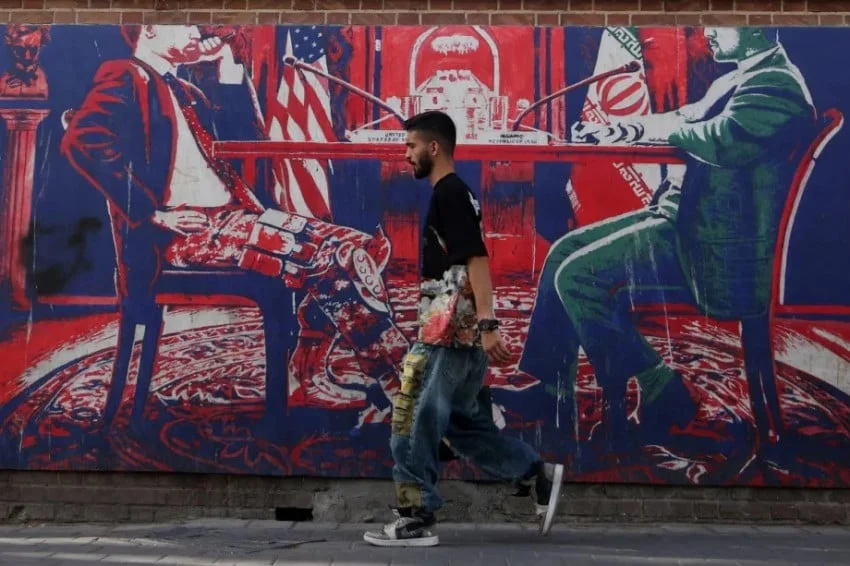
DOHA — The United States and Iran are currently engaged in a rigorous review of new diplomatic proposals aimed at de-escalating long-standing tensions and charting a potential path toward a comprehensive agreement. This development, confirmed by Qatari officials on November 3, 2026, signals a renewed, albeit cautious, momentum in the indirect negotiations that have been facilitated by the State of Qatar. As both Washington and Tehran grapple with the complexities of regional security and nuclear non-proliferation, the mediation efforts in Doha have become the primary channel for preventing a further slide into open confrontation.
Majed al-Ansari, the spokesperson for Qatar’s Ministry of Foreign Affairs, confirmed during a televised press briefing that the exchange of proposals is part of a deliberate effort to narrow the vast gulf between the two nations’ strategic objectives. “Efforts to bridge the gap between the two sides in this crisis, namely the United States and Iran, are ongoing,” Al-Ansari stated, emphasizing that both parties remain committed to the diplomatic track despite the inherent volatility of the current geopolitical environment.
The Chronology of Escalation and Diplomacy
The roots of the current impasse extend back several years, characterized by a cyclical pattern of sanctions, regional proxy conflicts, and the breakdown of formal diplomatic structures. To understand the significance of the November 2026 talks, one must look at the timeline of events that preceded this recent attempt at rapprochement:
- Mid-2024 to Early 2025: Regional tensions reached a boiling point as maritime security in the Persian Gulf deteriorated, leading to increased U.S. naval deployments and a subsequent tightening of economic sanctions on Iranian entities by Washington.
- Late 2025: The initiation of "back-channel" communications, primarily hosted in Doha, began as both nations recognized the rising cost of economic isolation and the potential for a regional conflagration that neither party was prepared to manage.
- January – May 2026: Frequent shuttle diplomacy by Qatari and Omani officials sought to establish a framework for a "de-escalation roadmap." This period saw sporadic progress, largely centered on humanitarian concessions and regional stability guarantees.
- June 2026: A period of relative calm was observed in Tehran, with reports from the ground—including observations of daily life in the capital—suggesting that the domestic population was experiencing a brief respite from the extreme rhetoric that usually dominates state media.
- November 2026: The formal acknowledgment of the review of "new proposals" marks the most significant movement in these discussions to date, indicating that the parties have moved past procedural hurdles and into substantive policy deliberation.
The Role of Qatar as a Diplomatic Conduit
Qatar has positioned itself as the indispensable broker in Middle Eastern diplomacy. By maintaining open lines of communication with both the White House and the leadership in Tehran, Doha has managed to facilitate discussions that would otherwise be impossible in a direct setting.
The Qatari strategy relies on "quiet diplomacy." Unlike public-facing summits, the Doha process is designed to minimize the domestic political fallout for the leadership in Washington and Tehran. By keeping the negotiations behind closed doors, Qatar allows both sides the space to make concessions without appearing weak to their respective hardline domestic constituencies. Al-Ansari’s statement on November 3 was notable for its brevity and focus on "creating the necessary conditions," suggesting that the current phase is focused on building a foundational trust that has been non-existent for decades.
Contextualizing the Proposals: What is at Stake?
While the specifics of the current proposals remain confidential, geopolitical analysts suggest that any agreement would likely address three core pillars:
- Nuclear Constraints: Any deal must address the expansion of Iran’s nuclear program, specifically the enrichment levels and the transparency of its monitoring sites. The International Atomic Energy Agency (IAEA) has repeatedly called for greater access, a point that remains a non-negotiable prerequisite for the U.S. and its regional allies.
- Economic Relief vs. Sanctions: Tehran’s primary incentive for returning to the table is the alleviation of the economic pressure caused by U.S.-led sanctions. The proposals likely involve a phased unfreezing of assets or a relaxation of specific energy-sector sanctions in exchange for verifiable policy shifts.
- Regional Stability: The U.S. is increasingly focused on the behavior of regional proxies. An agreement would likely include provisions—or at least an informal understanding—regarding the reduction of kinetic activity in flashpoints across the Levant and the Arabian Peninsula.
Official Responses and International Reaction
The international community has reacted to the news from Doha with a mix of cautious optimism and tempered realism. European signatories to previous nuclear-related agreements have long urged the U.S. and Iran to find a diplomatic off-ramp, citing the dangers of a nuclear-armed Iran and the economic disruption caused by ongoing regional instability.
From Washington’s perspective, the Biden administration has consistently maintained that while it prefers a diplomatic solution, "all options remain on the table" if diplomacy fails. This dual-track approach—offering a path to negotiations while simultaneously bolstering military posture in the Gulf—remains the hallmark of U.S. policy.
In Tehran, the stance is equally complex. The Iranian leadership is under significant pressure to provide economic relief to its citizens, yet the conservative elements of the regime remain deeply suspicious of U.S. intentions. The willingness to engage with the proposals in Doha suggests that the Iranian leadership views this as a strategic necessity rather than a change in ideological stance.
Analysis: Implications for Global Energy and Security
The implications of a successful breakthrough in Doha would be profound, particularly for global energy markets. The Persian Gulf remains the world’s most critical artery for hydrocarbon transit. Any de-escalation between the U.S. and Iran would significantly lower the "war risk premium" currently embedded in the price of crude oil.
Furthermore, the stabilization of U.S.-Iran relations would allow the United States to shift its strategic focus toward other emerging global threats, most notably in the Indo-Pacific. For Iran, an agreement would offer a lifeline to its struggling economy, providing the capital necessary to modernize its aging infrastructure.
However, analysts warn against expecting immediate results. The history of U.S.-Iran relations is littered with failed agreements and lost opportunities. The "gap" mentioned by Al-Ansari is not merely technical; it is rooted in decades of historical trauma and fundamentally opposing worldviews. Even if a framework for an agreement is signed, the implementation phase will be fraught with potential for derailment. Verification mechanisms, domestic political opposition in the U.S. Congress, and internal power struggles within the Iranian government all present significant hurdles.
Looking Ahead
As the world monitors the developments in Doha, the focus will remain on whether the current round of proposals can be converted into a formal agreement before the window of opportunity closes. The Qatari government, working in coordination with other regional partners, continues to facilitate the dialogue.
For now, the mere existence of active, ongoing communication is a win for regional stability. In a climate where misinformation and escalation are common, the quiet work occurring in the Qatari capital serves as a critical buffer against the unknown. Whether this current diplomatic effort leads to a historic breakthrough or ends in another stalemate remains to be seen, but for the first time in many months, there is a tangible process in place that both sides are actively participating in.
The coming weeks will be critical. Observers will be looking for signs of progress—such as the release of political prisoners, a decrease in hostile rhetoric from state-affiliated media, or a measurable slowdown in nuclear activities—that would indicate the proposals are gaining traction. Until then, the world waits for the next update from the mediators in Doha, hoping that the quiet diplomacy of November 2026 can finally break the cycle of tension that has defined the region for so long.
