
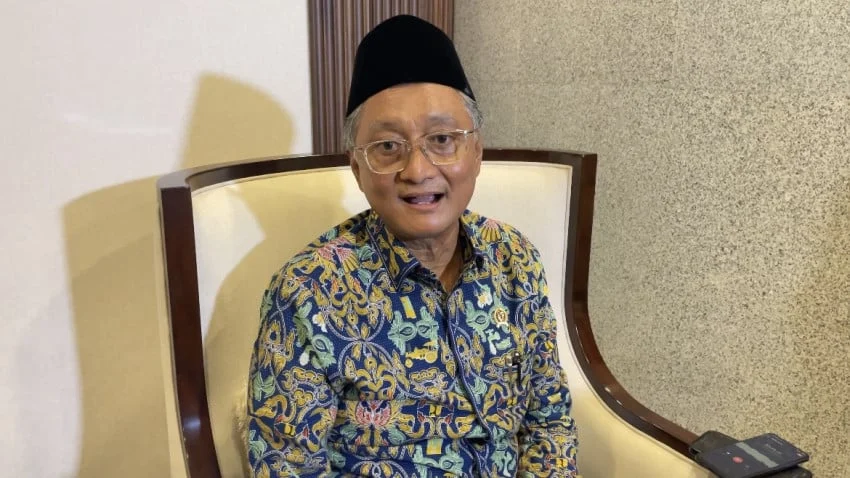
JAKARTA – Minister of Public Works (PU) Dody Hanggodo has robustly denied allegations stemming from a viral video suggesting he refused to shake hands with subordinates and has provided a detailed explanation regarding his use of a private jet for an official trip to Eastern Indonesia. The minister’s statements, made during an interview at the Ministry of Public Works office on Wednesday, July 22, 2026, aimed to quell growing public scrutiny and speculation that had intensified following the widespread dissemination of the video clips across various social media platforms. The incident underscores the increasing accountability demanded of public officials in the digital age, where every action can be captured and amplified, leading to rapid public discourse and scrutiny.
The Genesis of Public Scrutiny: Viral Video and Social Media’s Role
The controversy began to brew when short video clips featuring Minister Dody Hanggodo circulated widely on social media platforms such as TikTok, X (formerly Twitter), and Instagram. One particular segment, which quickly garnered millions of views and sparked numerous comments, purportedly showed the minister walking past individuals, some of whom appeared to be attempting to greet him with a handshake, a customary gesture of respect and camaraderie in Indonesian culture. The clip was interpreted by many as an act of indifference or even disdain towards his own staff, leading to a swift backlash from netizens who decried what they perceived as a lack of humility and accessibility from a high-ranking public servant.
The power of social media in shaping public opinion and holding officials accountable has never been more apparent in Indonesia. In a nation where social hierarchies often play a significant role in daily interactions, the act of a superior seemingly neglecting a subordinate’s greeting can carry substantial cultural weight. This incident quickly transformed into a national talking point, fueling debates about leadership conduct, public service ethics, and the expectations placed upon ministers. The Ministry of Public Works, a critical institution responsible for the nation’s infrastructure development, found itself unexpectedly at the center of a public relations challenge, highlighting the delicate balance ministers must maintain between their demanding schedules and their public image.
Minister Dody’s Defense on the Handshake Allegations
Responding directly to the perceived snub, Minister Dody Hanggodo categorically rejected the notion that he intentionally avoids shaking hands with anyone, especially his own employees. "I have never been selective in shaking hands, especially with my own staff; that’s impossible," Dody stated firmly during the interview at the Ministry of Public Works headquarters. His defense emphasized the unlikelihood of such behavior given his position and the cultural norms governing interactions within government agencies.
However, despite his strong denial, the minister did not elaborate on the specific context of the viral video. He refrained from providing a detailed explanation of the circumstances that led to the seemingly awkward interaction depicted in the footage. This omission left some questions unanswered for a public eager for clarity. While it is plausible that the video captured a fleeting moment of distraction, a misinterpretation due to camera angles, or an editing trick, the lack of a specific contextual explanation allowed the initial narrative to persist in some segments of public opinion. In a fast-paced environment, such as a ministerial visit or inspection, it is conceivable that a minister might be focused on an urgent matter, engaging in conversation, or simply moving quickly, inadvertently missing a greeting attempt. Nevertheless, the court of public opinion, heavily influenced by visual media, often requires immediate and comprehensive clarification to dispel negative impressions.
The cultural significance of the handshake (or salam) in Indonesia cannot be overstated. It is a fundamental gesture of greeting, respect, and building rapport. For a minister, seen as a direct representative of the government and a leader of thousands of civil servants, the perception of refusing a handshake from a subordinate can be particularly damaging. It can erode trust, foster resentment, and contradict the image of a leader who is humble and connected to the people he serves. Therefore, Minister Dody’s swift and unequivocal denial was a necessary step to mitigate the potential long-term damage to his personal and professional reputation.
The Private Jet Controversy: Justification and Broader Context
Parallel to the handshake controversy, Minister Dody Hanggodo also faced criticism regarding his use of a private jet for an official trip to Eastern Indonesia. Public concern over the use of luxurious transportation by government officials often stems from a desire for fiscal responsibility and an aversion to perceived extravagance, particularly in a country where economic disparities are still significant. The sight of a minister traveling in a private jet, juxtaposed with the daily struggles of many citizens, can quickly ignite public debate about resource allocation and accountability.
Minister Dody addressed this issue by clarifying that the aircraft in question does not belong to the Ministry of Public Works but is an asset of the Ministry of Transportation (Kemenhub). He explained that the use of a private jet was necessitated by the logistical challenges of reaching certain destinations in Eastern Indonesia, many of which are not adequately served by commercial flights. "The plane belongs to the Ministry of Transportation. My official travel shown in the video was to locations not served by commercial flights, which is why I had to use a private jet," he stated.
This explanation sheds light on the intricacies of official travel for high-ranking government officials in a sprawling archipelago like Indonesia. Eastern Indonesia, encompassing provinces such as Papua, West Papua, Maluku, North Maluku, Nusa Tenggara Timur, and parts of Sulawesi, is characterized by vast geographical distances, mountainous terrain, and numerous islands. Infrastructure development in these regions, including air connectivity, often lags behind the more developed western parts of the country. Consequently, direct commercial flights to many remote areas are non-existent, or require multiple, time-consuming layovers and connections.
For a minister whose schedule is often packed with critical infrastructure project inspections, policy meetings, and public engagements, time efficiency is paramount. Utilizing a private government-owned aircraft, even if perceived as luxurious, can significantly reduce travel time, allowing the minister to cover more ground, visit more sites, and make more informed decisions in a limited timeframe. The Ministry of Transportation typically manages a fleet of various aircraft types, including smaller jets and turboprops, specifically allocated for official government use across different ministries and state institutions, especially for trips to areas with limited commercial access or for urgent missions. This arrangement allows for inter-agency resource sharing, ensuring that critical government functions are not hampered by logistical constraints.
Supporting Data and Background on Official Travel
The Indonesian government maintains a protocol for official travel, particularly for ministers and high-ranking officials. While commercial flights are the primary mode of transportation for most domestic travel, exceptions are made for specific circumstances. These include:
- Remote or Underserved Areas: Destinations lacking commercial flight services or requiring prohibitively long and complex travel via commercial routes. Eastern Indonesia frequently falls into this category, where new port facilities, road networks, or dam projects might be located far from major airports.
- Security Concerns: For certain high-profile officials or sensitive missions, private air travel can offer enhanced security and control.
- Time Sensitivity: When urgent matters require immediate travel, or when a minister’s schedule demands visiting multiple distant locations within a very tight timeframe, private aviation becomes a practical necessity.
- Special Equipment or Personnel: For specific missions, private aircraft may be needed to transport specialized equipment or a larger retinue of staff than typically accommodated by commercial flights.
The costs associated with operating such government aircraft are part of the national budget allocated for ministerial operations and logistical support. While these costs are substantial, they are often justified by the need to ensure effective governance and the timely execution of national development programs. Public scrutiny on these expenditures is vital for transparency, and ministries are generally expected to adhere to strict guidelines and justification processes for using such assets.
Official Responses and Broader Implications
Beyond Minister Dody’s direct statements, other related parties would likely weigh in on such an incident. A spokesperson from the Ministry of Public Works could issue an official statement reinforcing the minister’s commitment to his staff and the nation’s infrastructure development, emphasizing the demanding nature of his role and the logistical challenges he often faces. They might also reaffirm the ministry’s dedication to transparency and accountability in all its operations.
The Ministry of Transportation, as the owner of the private jet, could also release a statement confirming the aircraft’s availability for inter-ministerial use and reiterating the specific conditions under which such assets are deployed, particularly for travel to remote regions. This would lend further credence to Minister Dody’s explanation regarding the private jet.
From a civil society perspective, organizations advocating for good governance and anti-corruption would likely reiterate calls for greater transparency in government spending and official conduct. While acknowledging the operational necessities, they would stress the importance of clear guidelines and public disclosure to prevent any perception of lavishness or misuse of state funds. These groups often serve as watchdogs, ensuring that public officials remain accountable to the citizens they serve.
In the legislative sphere, members of the relevant parliamentary commissions, such as Commission V (which oversees infrastructure, transportation, and public works), might call for a review of official travel protocols to ensure cost-efficiency and appropriate use of government assets. While generally supportive of ministerial functions, parliamentary oversight is crucial for maintaining checks and balances.
The dual controversies surrounding Minister Dody Hanggodo highlight several critical implications for governance and public trust in Indonesia. Firstly, they underscore the pervasive influence of social media in contemporary political discourse. Incidents, however minor or misinterpreted, can rapidly escalate into national debates, compelling public officials to be hyper-aware of their public image and communication strategies. The speed at which information (and misinformation) spreads requires officials to respond promptly and comprehensively.
Secondly, the incidents reinforce the enduring public demand for transparency and accountability from government officials. Citizens expect their leaders to be humble, accessible, and prudent stewards of public resources. Any perceived deviation from these expectations can lead to a significant erosion of public trust, which is vital for effective governance and the successful implementation of national policies.
Finally, these events serve as a reminder of the complex operational realities faced by ministers in a vast and diverse nation like Indonesia. Balancing the need for efficient and effective execution of duties with public expectations of humility and fiscal conservatism is a perpetual challenge. While the use of private jets might be a practical necessity for reaching remote areas and optimizing a minister’s limited time, transparent communication about such decisions and adherence to strict protocols are essential to avoid public backlash and maintain credibility. The episode with Minister Dody Hanggodo serves as a valuable case study in the ever-evolving landscape of public service in the digital age, where every action is under continuous scrutiny and accountability is paramount.
