
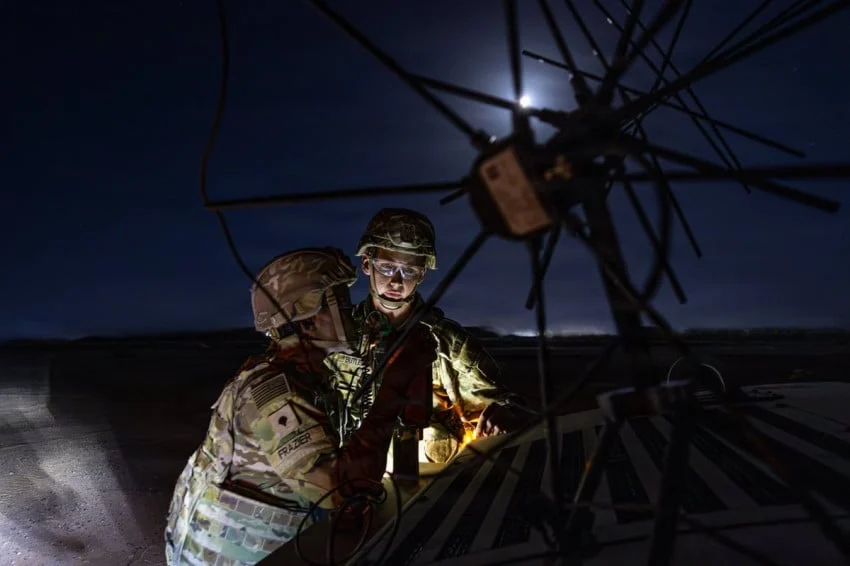
The conclusion of the 12-year mission led by the United States in Iraq marks a profound geopolitical pivot for the Middle East, signaling the end of an era defined by counter-insurgency operations and the struggle against the Islamic State (ISIS). Prime Minister Ali al-Zaidi has officially declared that Iraq has entered a new chapter of national sovereignty, characterized by the strengthening of domestic institutions and a shift toward balanced partnerships with international allies. As the last remnants of the coalition forces withdraw, the regional security architecture is undergoing a radical transformation, leaving behind a complex power vacuum that is already being contested by local and regional stakeholders.
The withdrawal comes at a time of heightened regional volatility. For over a decade, Iraq has served as a primary theater for the strategic rivalry between Washington and Tehran. With the departure of Western military assets, the focus shifts to how the Iraqi government will navigate the competing interests of its neighbors while maintaining its newly asserted sovereignty.
A Chronology of the Coalition Mission
To understand the magnitude of this withdrawal, it is necessary to examine the timeline of the coalition’s presence. The current mission, which began in 2014, was initially formed in response to the rapid territorial gains of ISIS, which seized control of large swaths of Iraqi and Syrian territory.
- 2014: The Global Coalition to Defeat ISIS is formed. US airstrikes begin, followed by the deployment of military advisors to assist the Iraqi Security Forces (ISF).
- 2017: The Iraqi government, backed by the coalition and various militias, declares the "liberation" of Mosul and the territorial defeat of ISIS.
- 2020: Tensions escalate following the US assassination of Iranian General Qasem Soleimani in Baghdad, leading to a parliamentary vote in Iraq calling for the expulsion of foreign troops.
- 2021-2023: The coalition shifts its mandate from combat operations to "advise, assist, and enable," reducing troop numbers significantly while focusing on training Iraqi forces.
- 2024: Negotiations for a definitive end to the coalition mission intensify as Baghdad seeks to redefine its security partnership with the United States.
- Late 2024/Early 2025: The official departure of the remaining coalition forces concludes the 12-year presence, transitioning security control entirely to the Iraqi state.
The Power Vacuum and the Rise of Pro-Iranian Factions
The most immediate consequence of the US withdrawal is the altered leverage of pro-Iranian factions within Iraq. For years, these groups—often organized under the umbrella of the Popular Mobilization Forces (PMF)—have viewed the US presence as an infringement on national sovereignty. With the departure of the "Great Satan," as characterized by some hardline elements, these factions are now positioned to consolidate their influence.
Ahmed Younis, a political analyst based in Baghdad, notes that the absence of Western military oversight creates a permissive environment for these groups to integrate further into the state apparatus. "It is not merely a military shift; it is a political one," Younis explained. "These groups may now seek to formalize their control over key institutions, including the judiciary and the security services, effectively dictating the state’s trajectory from within."
The data suggests that the security environment in Iraq remains precarious. Since early 2024, the escalation of regional hostilities, particularly following the outbreak of conflict in Gaza, has seen an increase in attacks against US installations. The loss of seven US service members in Iraqi territory during this period served as a grim catalyst for the accelerated withdrawal timeline, forcing Washington to weigh the costs of maintaining a presence against the risks of becoming further entangled in a regional conflict.
The Security Implications for the Iraqi State
The Iraqi government faces the daunting task of maintaining internal stability without the intelligence, surveillance, and air support provided by the coalition. The Iraqi Security Forces (ISF) have made significant strides since 2014, transitioning from a fragmented force to a more cohesive, albeit still politically divided, entity.
However, the threat of an ISIS resurgence remains a point of contention among defense experts. While the group no longer controls territory, it retains the capacity for insurgency-style attacks. The withdrawal forces Iraq to rely on its own intelligence-sharing capabilities, which remain hampered by sectarian divides and political interference.
Furthermore, the "balanced partnership" envisioned by Prime Minister al-Zaidi implies that Iraq will attempt to court investment and security cooperation from diverse international actors, including France, Germany, and potentially Gulf nations, to counterbalance the influence of Iran. Whether this diplomatic strategy can succeed against the entrenched domestic political factions remains the central question of the post-coalition era.
Official Responses and Regional Reactions
The international community has reacted with a mix of caution and resignation. Western capitals have emphasized that the withdrawal does not represent an abandonment of Iraq, but rather a shift to a bilateral security relationship focused on training and equipment sales.
Conversely, officials in Tehran have viewed the departure as a strategic victory. Iranian state media has framed the event as a failure of Western interventionism, arguing that the region is better off when "foreign" forces are removed from the security architecture. Within Iraq, the response has been polarized. While government officials celebrate the "sovereignty" milestone, Sunni and Kurdish factions have expressed private concerns that the vacuum will leave them vulnerable to encroachment by Shia-aligned factions that hold stronger ties to Tehran.
Economic and Institutional Challenges
Beyond the military dimension, the Iraqi state is grappling with deep-seated institutional challenges. The reliance on oil revenues, combined with a bloated public sector and pervasive corruption, has hindered the development of a resilient economy. The withdrawal of the coalition also coincides with a push for long-term economic reconstruction.
Prime Minister al-Zaidi’s administration is under immense pressure to deliver tangible results. If the withdrawal leads to increased stability and the influx of foreign investment, it could bolster the legitimacy of the current government. However, if the vacuum leads to internal factional fighting or a degradation of public security, the current administration risks losing its mandate to the very pro-Iranian factions it currently seeks to balance.
Analyzing the Long-Term Impact
Looking ahead, the long-term implications of this withdrawal will likely be felt in three primary areas:
- The Shift in Regional Hegemony: Iraq’s ability to act as a bridge between the Arab world and Iran will be tested. If Baghdad leans too heavily toward Tehran, it risks isolation from its Arab neighbors, particularly the GCC states, which are wary of Iranian influence.
- Internal Governance: The integration of the PMF into the state is the "elephant in the room." If these groups refuse to submit to centralized command, Iraq may find itself dealing with a "state within a state" scenario that could mirror the experiences of Lebanon with Hezbollah.
- Counter-Terrorism Sustainability: The success of the withdrawal will be measured by the ISF’s ability to contain extremist remnants. Without the "over-the-horizon" support capabilities that the US has promised, Iraq must develop its own long-range surveillance and strike capabilities to prevent a return to the 2014 security environment.
In conclusion, the withdrawal of US and coalition forces from Iraq is a watershed moment that terminates a chapter of direct military involvement in favor of an uncertain, localized future. While the rhetoric from Baghdad emphasizes a newfound sovereignty and institutional strength, the reality on the ground is far more nuanced. Iraq now stands at a crossroads, tasked with navigating the influence of powerful neighbors while attempting to build a sustainable, sovereign state. The coming months will be critical in determining whether this new era results in a stable, independent Iraq or if the country will revert to being the primary battleground for regional dominance. The world will be watching to see if the departure of foreign troops brings the peace that has been so elusive for the past decade, or if it merely resets the clock on a cycle of instability.
