
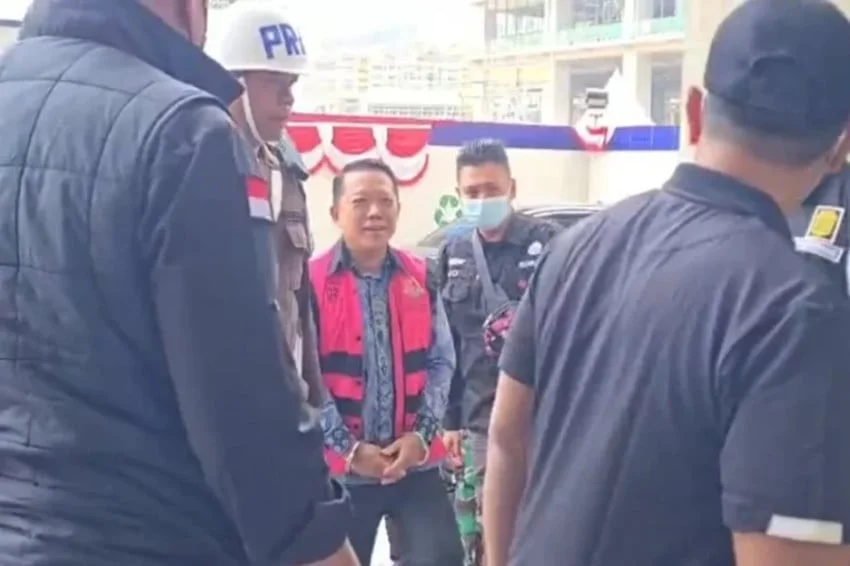
The Office of the Attorney General (Kejagung) of the Republic of Indonesia is officially scheduled to execute the Phase II transfer of the criminal case file and suspects—featuring former Junior Attorney General for Special Crimes (Jampidsus) Febrie Adriansyah—to the South Jakarta District Prosecutor Office (Kejari Jaksel). This major procedural milestone in Indonesia’s ongoing anti-corruption campaign is set to take place on Friday, September 18, 2026. The transfer represents a critical transition from the investigative phase led by the special investigative team, commonly referred to as Tim 9, to the prosecution stage, bringing the high-profile legal battle one step closer to the courtroom.
Alongside Febrie Adriansyah, investigators are scheduled to hand over two other primary suspects implicated in the sprawling corruption and money laundering scheme, identified as Don Ritto and Nurman Herin. The simultaneous handover of these individuals underscores the interconnected nature of the alleged criminal enterprise, which has sent shockwaves through the country’s legal and judicial institutions. The administrative and physical transfer of the suspects and their corresponding evidentiary documents is expected to occur during midday on Friday, marking the formal conclusion of months of exhaustive intelligence gathering, raids, asset tracing, and interrogations by the Attorney General’s Office.
Chronology and Background of the Investigation
The legal proceedings culminating in the impending Phase II transfer have evolved through a complex series of investigations that began drawing intense public scrutiny months prior. The case against Febrie Adriansyah gained significant momentum following a series of strategic investigative maneuvers executed by Tim 9, a specialized internal task force formed within the Attorney General’s Office to handle sensitive internal corruption cases with heightened autonomy and discretion.
The foundation of the current charges against the former Jampidsus was cemented when investigators uncovered massive amounts of unexplained wealth tied directly to his inner circle and residential properties. Most notably, law enforcement personnel executed a high-stakes search at a luxury residential property located in Sentul, Bogor, West Java. The raid yielded staggering physical evidence, including approximately 74 kilograms of refined gold bullion and a phenomenal cash haul totaling Rp543 billion in various denominations. This monumental discovery immediately triggered specialized asset-tracing protocols, leading investigators to expand the scope of the inquiry beyond conventional corruption charges to encompass severe allegations of Tindak Pidana Pencucian Uang (TPPU), or Money Laundering Crimes.
As the investigation deepened, Tim 9 widened its net to capture co-conspirators who allegedly facilitated the extortion schemes, asset concealment, and illicit financial flows that characterized the syndicate. The inclusion of Don Ritto and Nurman Herin in the upcoming Phase II transfer indicates that prosecutors have established a viable evidentiary chain linking these secondary suspects to the core financial transactions managed or overseen by Febrie during his tenure as one of the country’s top prosecutors.
Official Confirmation from the Attorney General’s Office
The confirmation of the impending transfer was officially delivered by the Head of the Legal Information Center (Kapuspenkum) of the Attorney General’s Office, Anang Supriatna. Speaking to members of the press during a media briefing at the Kejagung headquarters in Jakarta on Thursday, September 17, 2026, Anang verified the logistics of the upcoming procedural step.
“Yes, the transfer is scheduled for tomorrow, likely around noon,” Anang stated plainly, affirming that all necessary administrative hurdles and case dossier preparations had reached completion.
The statement brings an end to weeks of speculation regarding the timeline for the case handover. Earlier announcements from the Attorney General’s Office had indicated that the investigation into the extortion and money laundering charges against the former senior official had reached its terminal phase, clearing the path for the prosecution team to draft the formal indictments. Under Indonesian criminal procedure, the Phase II transfer requires the physical delivery of the suspects, the written case dossiers, and all physical and digital evidence from the investigators to the public prosecutors, who then have a designated window to finalize the indictment before filing the case with the Corruption Court (Tipikor).
Scale of the Evidence and Scope of the Charges
The sheer volume of evidence secured by the Attorney General’s Office in this case places it among the largest domestic corruption and asset recovery operations in recent Indonesian history. The recovery of 74 kilograms of gold—valued at hundreds of billions of rupiah at current market rates—alongside the cash hoard of Rp543 billion provides prosecutors with a robust financial trail that is exceedingly difficult for the defense to dismiss as routine or legitimate earnings.
According to preliminary legal summaries released by investigators, the charges levied against Febrie Adriansyah encompass multiple statutory violations. These include provisions under the Law on the Eradication of Corruption Crimes (Tipikor) relating to abuse of authority, extortion, and receiving unlawful gifts or gratifications while in public office. Furthermore, the application of the Money Laundering Law (TPPU) enables the state to pursue not only the primary perpetrators but also to freeze, seize, and ultimately confiscate assets suspected of originating from criminal acts, regardless of whose name appears on the property titles or bank accounts.
Legal experts have noted that the inclusion of the TPPU charge is a strategic imperative in cases involving high-ranking law enforcement and judicial officials. By targeting the laundering mechanism, prosecutors can dismantle the financial networks that allow corrupt officials to enjoy the fruits of their crimes long after leaving office. The presence of co-suspects Don Ritto and Nurman Herin suggests that the scheme relied on nominees, corporate fronts, or complex financial layering techniques designed to obscure the ultimate beneficiary of the extorted funds.
Broader Institutional Impact and Implications
The prosecution of a former Junior Attorney General for Special Crimes carries profound implications for the institutional integrity and public perception of the Indonesian justice system. Traditionally, the Jampidsus office stands at the vanguard of the nation’s legal war against corruption, tasked with prosecuting major state-loss cases, corporate fraud, and high-level white-collar crimes. Consequently, the arrest and impending trial of a former head of this very division represent an unprecedented institutional crisis and a painful test of internal accountability within the Attorney General’s Office.
Civil society organizations and anti-corruption watchdogs have closely monitored the progression of the case since its inception. While many have praised the leadership of the Attorney General’s Office for demonstrating institutional courage in investigating one of its own senior figures, others have emphasized the necessity of absolute transparency throughout the upcoming trial phase. Public trust in the judiciary and law enforcement agencies hinges on the ability of the state to conduct an open, impartial, and rigorous judicial process free from political interference or procedural shortcuts.
Furthermore, the case serves as a stark reminder of the systemic vulnerabilities plaguing law enforcement bodies, where immense regulatory power can theoretically be leveraged for personal enrichment or targeted extortion. The unfolding legal drama is expected to prompt renewed calls for comprehensive bureaucratic reforms, enhanced asset-declaration compliance, and stricter independent oversight mechanisms for prosecutors and judges alike.
Next Steps in the Judicial Process
Following the completion of the Phase II transfer at the South Jakarta District Prosecutor Office, the focal point of the legal proceedings will shift decisively toward the judiciary. The public prosecutors assigned to the case will review the final dossiers and draft the formal indictments to be submitted to the South Jakarta District Court, where the trial is expected to commence within the statutory timeframe following the transfer.
During the trial, the defense teams representing Febrie Adriansyah, Don Ritto, and Nurman Herin will have the opportunity to present counter-arguments, challenge the validity of the evidence, and cross-examine witnesses presented by the prosecution. Given the high-stakes nature of the charges and the immense value of the seized assets, legal analysts predict a protracted and fiercely contested courtroom battle, with both sides deploying veteran defense counsels and expert witnesses in forensic accounting and criminal procedure.
As Friday’s transfer approaches, all eyes remain fixed on the Attorney General’s Office in South Jakarta, where a historic chapter in Indonesia’s ongoing anti-corruption enforcement saga is poised to enter its next critical phase.
