
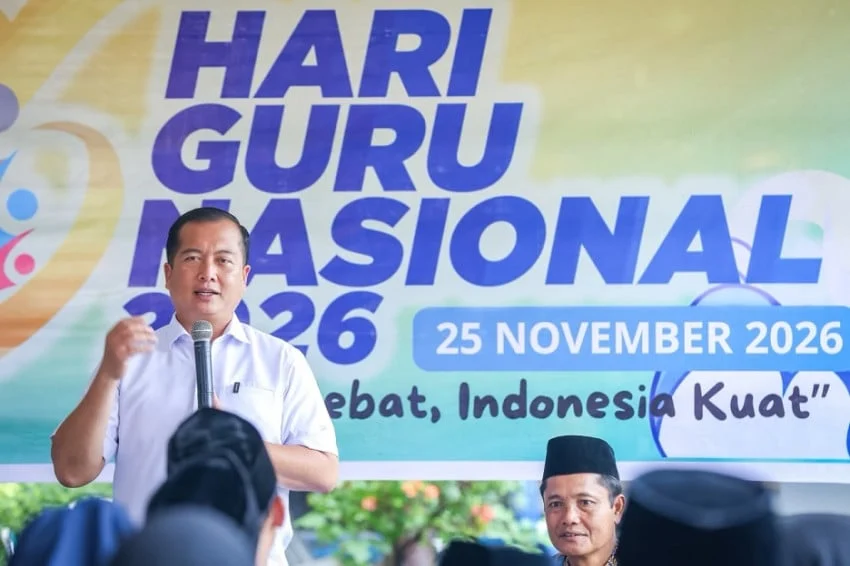
The administration of West Nusa Tenggara (NTB) has taken a decisive step toward addressing the prolonged welfare crisis faced by educators within the region. Governor Lalu Muhamad Iqbal has formally instructed the provincial government to allocate an additional monthly incentive of IDR 500,000 for part-time Government Employees with Work Agreements (PPPK) who are currently navigating a precarious financial reality. This financial buffer is designed to sustain educators through the transitional phase preceding the full integration of teacher payroll systems under the authority of the central government.
The directive highlights a stark discrepancy between the societal expectation placed upon educators as the foundational pillars of intellectual development and the abysmal economic conditions under which a segment of the teaching workforce has historically labored. Addressing stakeholders at the auditorium of the Provincial Youth and Sports Education Office (Dikpora) in Mataram, Governor Iqbal expressed profound regret over reports that certain part-time educators in the province have received monthly compensation as low as IDR 40,000.
Confronting the Reality of Teacher Poverty and Historical Context
The plight of honorarium and part-time teachers across Indonesia has long been a complex socio-economic challenge, intersecting local fiscal capacities, bureaucratic transitions, and national educational policies. For decades, regional administrations have relied heavily on non-permanent teachers to bridge structural shortages in public schools. However, budgetary constraints within local governments frequently resulted in negligible compensation packages that failed to meet basic living standards, effectively reducing dedicated professionals to conditions of extreme financial distress.
Governor Iqbal’s public stance breaks from traditional bureaucratic rhetoric by directly acknowledging institutional shortcomings and the moral hazard of underpaying educators. "How can we possibly expect students to receive a quality education if a teacher’s salary is IDR 40,000 per month? Frankly, I apologize. As a leader, I apologize. I refuse to accept that part-time PPPK teachers should fall into the category of extreme poverty," Iqbal stated during his address to dozens of recipient educators.
The decision to implement the IDR 500,000 monthly subsidy from the regional budget (APBD) serves as an emergency fiscal intervention. This stipend is intended to provide immediate relief while broader structural reforms are finalized at the national level. The regional administration has committed to maintaining this supplementary support until the administrative mechanisms for transferring teacher salaries directly to the national budget are fully operational.
The Roadmap to Full-Time Status: A Major Turning Point for NTB Educators
The announcement of regional financial aid coincides with a broader, highly anticipated structural shift in Indonesia’s civil service framework. The nationwide observance of National Teacher’s Day brought forward definitive news concerning the administrative elevation of public educators. According to recent coordination meetings held between the NTB Provincial Government and the Ministry of Basic and Secondary Education (Kemendikdasmen) in Jakarta, a significant milestone has been reached for the region’s educational workforce.
A total of 2,234 part-time PPPK teachers currently serving under the NTB provincial administration are officially scheduled for transition into full-time PPPK status. Crucially, this elevation will occur without the requirement of re-testing, streamlining a bureaucratic process that has historically caused anxiety among veteran educators. The verification phase for these 2,234 individuals has already been completed, while concurrent data collection continues for remaining part-time PPPK personnel who hold active technical teaching formations.
Chronologically, the momentum leading up to this policy shift unfolded through a precise sequence of administrative milestones:
- November 23–25, 2026: Representatives from the NTB Provincial Government participated in intensive high-level coordination meetings with the Ministry of Basic and Secondary Education in Jakarta to finalize the absorption data of regional educators.
- December 2026: The administrative processing window designated for the official conversion of part-time PPPK credentials into full-time state appointments.
- January 1, 2027: The target operational date for the formal transition, marking the moment when these educators officially assume full-time status as State Civil Apparatus (ASN) personnel under national oversight.
Fiscal Restructuring and Centralization of Teacher Compensation
The impending transition represents more than a mere change in employment classification; it marks a fundamental structural overhaul of how public education personnel are financed in Indonesia. Historically, the fiscal burden of supporting non-civil servant educators and regional contract workers fell disproportionately on municipal and provincial budgets. Disparities in regional fiscal capacity frequently led to delayed disbursements, uneven incentive structures, and persistent wage stagnation.
By shifting the remuneration of these educators to the state budget (APBN) under the direct auspices of the central government, the policy aims to establish standardized financial security for teaching personnel nationwide. Once integrated into the national system, these educators will no longer be subject to the financial volatility of local government budgets. Instead, their compensation, career progression, and statutory benefits will align with national civil service standards.
Despite national leaders previously highlighting systemic fiscal limitations concerning immediate nationwide salary adjustments—a reality candidly addressed across various administrative branches regarding budgetary elasticity—the targeted absorption of verified teaching personnel signifies a prioritized reallocation of state resources toward human capital development.
Broader Implications and Stakeholder Expectations
The convergence of regional financial intervention and national institutional reform carries profound implications for the educational landscape of West Nusa Tenggara. For years, low compensation rates forced many educators to seek secondary employment outside of school hours, potentially diluting their focus and energy dedicated to classroom instruction. The stabilization of income through both the immediate provincial subsidy and the impending federal transition is expected to restore professional dignity, reduce turnover intentions, and enhance instructional quality across provincial institutions.
Governor Iqbal underscored the reciprocal nature of this institutional investment. While acknowledging the government’s duty to provide adequate remuneration, he simultaneously appealed to the moral and professional obligations of the educators. Following the administrative briefing, the governor issued a direct appeal to the teaching corps: "If you are eventually appointed as full-time PPPK teachers, I entrust you to continue teaching our children with all your heart and with a deep sense of love."
As the December 2026 administrative deadline approaches, the NTB Provincial Government faces the ongoing task of completing the verification of remaining technical-formation educators to ensure that no qualified professional is inadvertently omitted from the transition registry. Meanwhile, the implementation of the regional IDR 500,000 monthly incentive proceeds immediately, serving as both a financial lifeline and a tangible manifestation of governmental accountability during an era of significant educational reform.
