
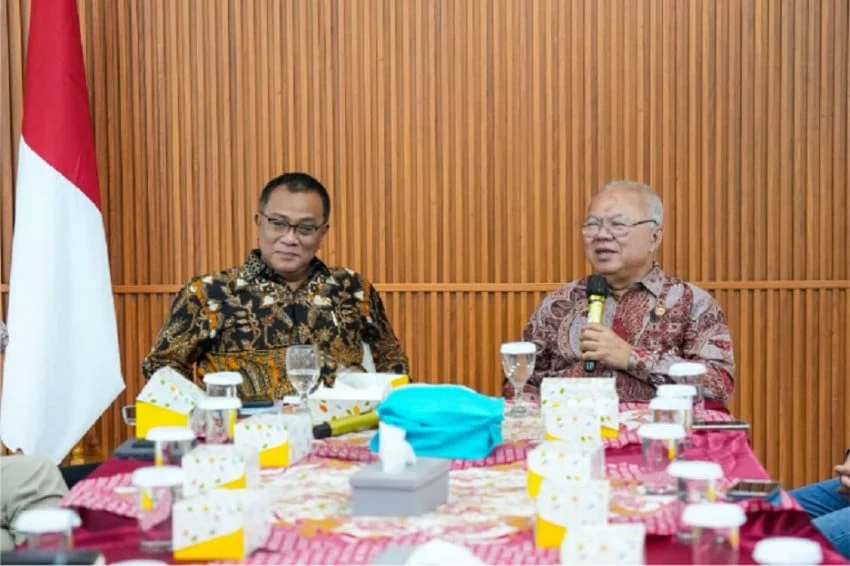
Jakarta — In a compelling call to action bridging spiritual doctrine and environmental stewardship, the Central Board of the Supreme Council for the Confucian Religion in Indonesia, known as Majelis Tinggi Agama Konghucu Indonesia (Matakin), has formally declared that environmental degradation constitutes the most severe moral transgression possible under Confucian law. This definitive stance was articulated by Matakin Central Board Chairman Budi Santoso Tanuwibowo during a high-profile diplomatic and cultural reception hosted for the Minister of Environment and Head of the Environmental Control Agency (BPLH), Moh Jumhur Hidayat.
The significant gathering took place at the Khonghucu Building within the Tepasalira Foundation complex located in Penjaringan, North Jakarta. The high-level dialogue served as a strategic platform to cement cross-sector collaboration, specifically aiming to champion the nationwide initiative known as the National Ecological Repentance Movement. By aligning state environmental policy with ancient philosophical tenets, the meeting underscored a growing national consensus in Indonesia: that ecological preservation is no longer merely a technical regulatory challenge, but a fundamental moral and spiritual imperative requiring the active mobilization of faith-based communities.
Theological Foundations of Ecological Preservation
During the formal discussions at the Tepasalira Foundation, Chairman Budi Santoso Tanuwibowo elaborated deeply on the theological underpinnings that govern the Confucian worldview regarding nature. According to Budi, traditional Confucian ethics view humanity, Earth, and Heaven as a sacred triad, where human beings bear a profound responsibility to maintain cosmic and ecological harmony.
Within this framework, acts of environmental destruction—such as illegal deforestation, unmitigated industrial pollution, and the overexploitation of natural resources—are categorized not simply as statutory infractions, but as acts of profound filial impiety. Budi emphasized that failing in one’s duty to protect the environment equates to committing a direct offense against ancestors, parents, contemporary leadership, the sovereign state, and the Earth itself. Because the Earth sustains all generations past, present, and future, damaging its capacity to support life is treated by Confucian jurisprudence as the highest order of legal and moral violation.
This philosophy translates directly into ancient practical guidelines that have governed Confucian communities for millennia. Budi highlighted historical and scriptural prohibitions within Confucianism that strictly forbid the indiscriminate felling of trees without mandatory concurrent reforestation efforts. Furthermore, traditional ethics condemn predatory harvesting practices, such as catching fish or birds using excessively fine nets that deplete juvenile populations, and hunting animals during their vulnerable breeding or resting periods. These historical mandates reflect an advanced, pre-modern understanding of ecological carrying capacity and sustainable resource management, principles that modern environmental agencies are now striving to reintegrate into contemporary Indonesian conservation policy.
Strategic Dialogue and the National Ecological Repentance Movement
The visit by Minister Moh Jumhur Hidayat to the Matakin headquarters is part of a broader, concerted outreach campaign by the Ministry of Environment and the Environmental Control Agency (BPLH) to engage religious institutions in the governance of Indonesia’s fragile ecosystems. As the world’s largest archipelagic state, Indonesia faces staggering ecological pressures, ranging from rapid deforestation and peatland degradation to severe urban pollution and the escalating threats posed by global climate change.
Government officials have increasingly recognized that regulatory enforcement and bureaucratic oversight alone are insufficient to reverse decades of environmental degradation. Consequently, the Ministry of Environment has sought to harness the moral authority, grassroots networks, and behavioral influence wielded by religious organizations. The National Ecological Repentance Movement has emerged as a flagship framework designed to unite Indonesia’s diverse faith communities—including Muslims, Protestants, Catholics, Hindus, Buddhists, and Confucians—in a shared commitment to ecological healing, conservation education, and sustainable living practices.
During the dialogue in Penjaringan, Minister Jumhur Hidayat listened intently to Matakin’s presentation on traditional Confucian conservation ethics. The minister commended Matakin for its proactive stance, noting that indigenous philosophies and traditional religious teachings offer invaluable wisdom that can guide modern public policy. The alignment between the Ministry’s strategic environmental goals and Matakin’s moral framework highlights a pivotal shift toward inclusive, value-driven environmental governance in Indonesia.
Chronology of Engagement and Institutional Collaboration
The historic meeting on Tuesday, November 3, 2026, represents the culmination of a progressive dialogue between state environmental regulators and faith-based councils in Indonesia. Over the preceding years, the Indonesian government has systematically expanded its partnerships with religious bodies, recognizing that spiritual leaders command immense trust among local populations.
- Initial Outreach Phase (2022–2024): The Ministry of Environment initiated localized dialogues with various religious councils to discuss climate change adaptation, waste management in houses of worship, and community-based tree-planting campaigns.
- Formulation of the Ecological Repentance Framework (2025): Recognizing the urgency of accelerating ecological restoration, environmental authorities conceptualized the National Ecological Repentance Movement, shifting the narrative from passive conservation to active moral restitution for environmental damage.
- The Tepasalira Foundation Summit (November 3, 2026): Minister Moh Jumhur Hidayat met formally with Matakin Chairman Budi Santoso Tanuwibowo at the Khonghucu Building in North Jakarta. This session solidified Matakin’s formal commitment to mobilizing its congregations across the archipelago to participate in nationwide reforestation and conservation programs.
- Future Implementation Roadmap (Late 2026 and Beyond): The collaboration is slated to roll out joint educational curricula for Confucian schools and community centers, focusing on sustainable consumption, waste reduction, and local habitat restoration projects.
Broader Socio-Political and Environmental Implications
The partnership between the Ministry of Environment and Matakin carries significant implications for Indonesia’s socio-political landscape and its international environmental commitments. By framing ecological stewardship as a moral obligation shared across all strata of society, the initiative reinforces the principles of Pancasila—Indonesia’s national ideology, which emphasizes national unity, social justice, and civilized humanity. Matakin has long championed Pancasila as a precious national asset that binds the nation’s diverse religious and ethnic groups together.
From a policy perspective, integrating religious communities into environmental enforcement provides several distinct advantages:
- Enhanced Grassroots Compliance: Religious leaders possess the unique capability to influence daily behavioral patterns, encouraging congregations to adopt zero-waste lifestyles, reduce single-use plastics, and engage in local tree-planting initiatives.
- Moral Accountability in Industry: By defining environmental destruction as a profound moral failure, the initiative challenges corporate entities and individuals who prioritize short-term economic gains over long-term ecological sustainability, stripping unethical exploitation of any social legitimacy.
- Strengthening Social Cohesion: Collaborative environmental campaigns foster interfaith solidarity. When diverse religious groups unite under the common banner of ecological preservation, it strengthens national unity and mitigates sectarian divides.
Analytical Perspective: Challenges and Pathways Forward
While the alliance between state agencies and religious organizations marks a progressive step forward, environmental policy analysts emphasize that moral appeals must be supported by rigorous structural enforcement. Indonesia continues to grapple with complex systemic challenges, including industrial non-compliance, complex land-use governance, and enforcement gaps in remote regions.
Experts suggest that while spiritual doctrines like those articulated by Matakin provide the necessary ethical foundation to inspire voluntary behavioral change, they must operate in tandem with stringent legal accountability, transparent corporate governance, and robust state oversight. The success of the National Ecological Repentance Movement will ultimately depend on how effectively these moral commitments are translated into measurable, on-the-ground outcomes—such as measurable reductions in carbon emissions, successful rehabilitation of degraded peatlands, and the strict prosecution of environmental crimes.
Nevertheless, the historic meeting at the Tepasalira Foundation demonstrates a vital recognition: that technological solutions and legal frameworks alone cannot heal the planet. By elevating the discourse surrounding environmental protection to the level of supreme moral and spiritual duty, leaders like Budi Santoso Tanuwibowo and Moh Jumhur Hidayat are fostering a holistic cultural paradigm shift—one that positions the preservation of the Earth as the ultimate test of human conscience, responsibility, and civic virtue in modern Indonesia.
