
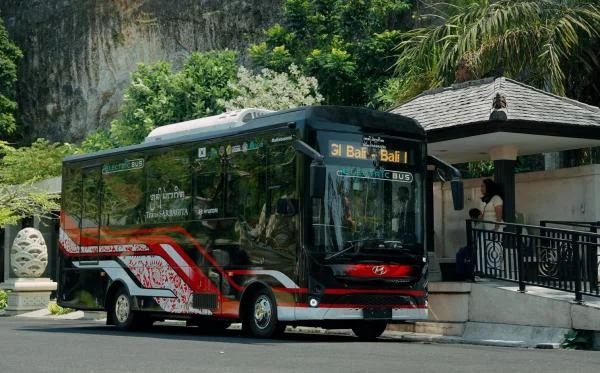
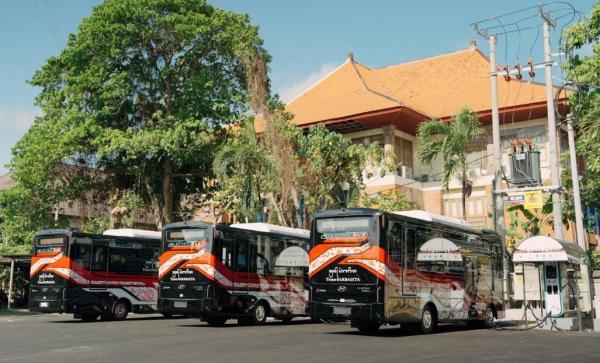
The automotive landscape in Indonesia is undergoing a significant transformation as Hyundai Motor Company, in a strategic partnership with local coachbuilder Laksana, has officially deployed 11 units of the County EV electric bus to Bali. This initiative marks a pivotal milestone in the regional government’s "Bali E-Mobility" program, designed to reduce the island’s carbon footprint and position the province as a premier destination for green tourism and sustainable infrastructure. By integrating global electric vehicle (EV) technology with local manufacturing expertise, the project serves as a blueprint for the electrification of public transit across the Indonesian archipelago.
Technical Specifications and Vehicle Capability
The County EV represents a specialized entry into the mid-sized bus segment, specifically engineered for urban and suburban transit. Each unit measures approximately 8 meters in length, offering an optimal balance between maneuverability in congested traffic and passenger capacity. Designed to accommodate up to 20 passengers, the buses are equipped with high-capacity 128 kWh lithium-ion battery packs.
According to technical data provided by Hyundai, the powertrain allows for a range exceeding 200 kilometers on a single full charge under standard operating conditions. This performance metric is critical for public transport operators, as it ensures that the vehicles can complete daily routes—including those connecting major transit hubs and tourist corridors—without the need for frequent mid-day charging cycles. The utilization of electric propulsion also eliminates tailpipe emissions, directly contributing to improved air quality in Bali’s high-traffic tourist zones.
The Synergy of Global Tech and Local Craftsmanship
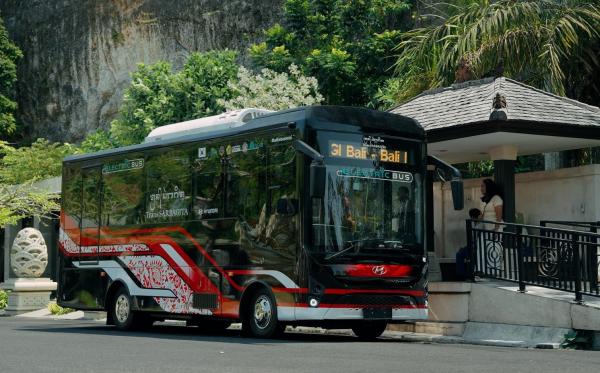
The deployment of these buses is not merely a product import but a collaborative industrial endeavor. Hyundai Motor provided the core electrification platform—including the electric motor, battery management system, and drivetrain architecture—while Laksana, a renowned Indonesian karoseri (coachbuilder), was responsible for the vehicle’s bodywork, interior configuration, and assembly.
This model of cooperation reflects a broader strategy by international automotive firms to adhere to local content requirements (TKDN) in Indonesia. By partnering with Laksana, Hyundai has ensured that the buses are tailored to the specific needs of the Indonesian market while bolstering the domestic manufacturing ecosystem. This synergy allows for easier maintenance, faster access to spare parts, and the cultivation of local engineering talent capable of servicing advanced EV systems.
Ensuring Operational Reliability: The EV Bus Field Quality Assurance Program
Recognizing that the success of public transportation hinges on reliability, Hyundai has implemented an integrated EV Bus Field Quality Assurance Program. Unlike traditional automotive deployments, where manufacturers might simply hand over the keys, this program establishes a dedicated monitoring center.
The center is tasked with real-time tracking of the fleet’s health, including battery performance, thermal management, and power consumption patterns. By analyzing data transmitted from the buses, technicians can proactively identify potential issues before they result in service disruptions. This level of oversight is essential for maintaining public trust in electric transit, as any mechanical failure in a high-profile, government-backed project could lead to skepticism regarding the viability of electric vehicles for heavy-duty public use.

Contextualizing Bali’s E-Mobility Roadmap
The arrival of these 11 buses is part of a multi-year effort by the Indonesian government to shift the transportation sector toward renewable energy. Bali has been designated as a primary testing ground for these policies, given the island’s reliance on the tourism sector and the increasing global demand for eco-friendly travel experiences.
The "Bali E-Mobility" program follows a series of policy initiatives, including tax incentives for EV owners and the construction of charging infrastructure across the island. The introduction of these buses serves as the "public-facing" component of this strategy, intended to demonstrate to citizens and visitors alike that mass transit can be both modern and environmentally responsible. The transition is also expected to lower the long-term operational costs for transit operators, as the maintenance requirements for electric drivetrains are significantly lower than those for internal combustion engine (ICE) vehicles.
Market Implications and Future Outlook
The deployment of the County EV fleet has broader implications for the Indonesian automotive market. As the country aims to become a global hub for electric vehicle production, successful pilot programs like the one in Bali provide the necessary data to scale operations to other major cities such as Jakarta, Surabaya, and Medan.
From an economic perspective, the partnership between Hyundai and Laksana signals to other international investors that the Indonesian supply chain is ready to support complex EV production. If the fleet maintains a high uptime rate over the next 12 to 24 months, it is highly likely that similar initiatives will be replicated across the country.

However, challenges remain. The long-term viability of the project will depend on the expansion of high-speed charging infrastructure and the availability of a workforce trained in high-voltage system maintenance. The success of the "Field Quality Assurance" program will be a key performance indicator (KPI) that regional governments will watch closely. If successful, the model could lead to a massive phase-out of aging diesel-powered buses, which currently account for a significant portion of urban particulate matter emissions.
Chronology of Development
The current deployment is the culmination of several years of planning:
- Initial Phase (2021-2022): The Indonesian government announces ambitious goals for EV adoption, specifically targeting public transportation in major tourist destinations.
- Partnership Formalization (2023): Hyundai and Laksana announce their collaboration to produce localized electric bus bodies on Hyundai’s chassis.
- Testing and Certification (Early 2026): Prototypes undergo rigorous road testing to ensure they can handle Bali’s specific traffic conditions and road topography.
- Official Launch (October 2026): The 11 units are officially delivered and integrated into the operational fleet for the Bali E-Mobility program.
Expert Analysis of the Transition
Industry analysts suggest that while 11 buses represent a modest start, the qualitative impact is significant. "The importance here is not just the volume of vehicles, but the proof of concept," says a transport policy analyst. "By demonstrating that an international manufacturer and a local coachbuilder can work together to maintain a fleet of this complexity, Hyundai is effectively de-risking the transition for other municipalities that are currently hesitant to invest in electric infrastructure."
Furthermore, the integration of these buses into the public transport system allows for better collection of passenger data, which can then be used to optimize routes, frequencies, and ticket pricing. As the infrastructure grows, the secondary benefits—such as reduced noise pollution and improved public health outcomes—will become more apparent.
Looking Ahead: Towards a Greener Horizon
The path toward a fully electrified public transport system in Indonesia is long, yet the deployment of these buses provides a concrete step forward. Hyundai’s commitment to the Field Quality Assurance Program underscores a shift toward "total lifecycle management," a philosophy that is becoming increasingly important in the automotive industry as vehicles become more like mobile computing platforms than simple mechanical machines.
As these 11 buses begin their service, the eyes of the domestic transport industry will be on their performance. If they successfully navigate the daily demands of Bali’s transit routes, they will pave the way for a much larger, nationwide transition, signaling that Indonesia is prepared to lead in the regional shift toward a cleaner, more efficient, and sustainable future. The collaborative nature of this project serves as a reminder that the transition to electric mobility is not merely a technological challenge, but one that requires deep industrial integration and long-term commitment to operational quality.


