
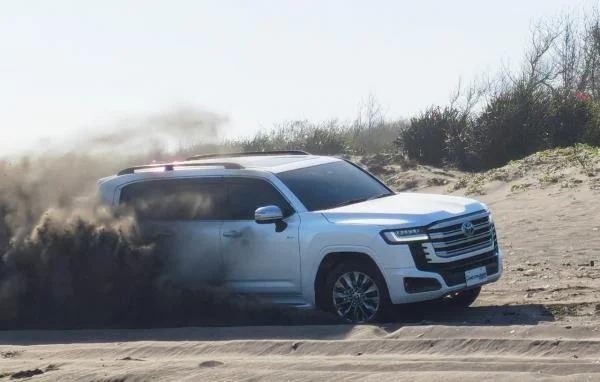
The iconic silhouette of the Toyota Land Cruiser returned to the spotlight on Monday, September 14, 2026, as automotive journalists gathered in the unique landscape of Gumuk Pasir, Yogyakarta. The event, titled "Toyota Journalist Test Drive: Drive & Joy Beyond The Road 2026," served as a rigorous proving ground for the latest iterations of Toyota’s flagship SUV lineage: the Land Cruiser 300 Hybrid EV and the highly anticipated All-New Land Cruiser FJ. By placing these luxury behemoths in the shifting, treacherous sands of Yogyakarta’s coastal dunes, Toyota sought to reinforce the brand’s enduring commitment to go-anywhere capability, even as it transitions toward a hybridized future.
Testing Luxury in Harsh Environments
The challenge of navigating sand dunes is fundamentally different from standard off-road trekking. Unlike gravel or mud, sand possesses a high degree of fluidity; as a vehicle moves, the ground gives way, creating high rolling resistance and a constant risk of digging in. For the test, participants engaged in both Taxi Drive sessions—allowing them to experience the vehicle’s composure as passengers under professional guidance—and direct Test Drive sessions.
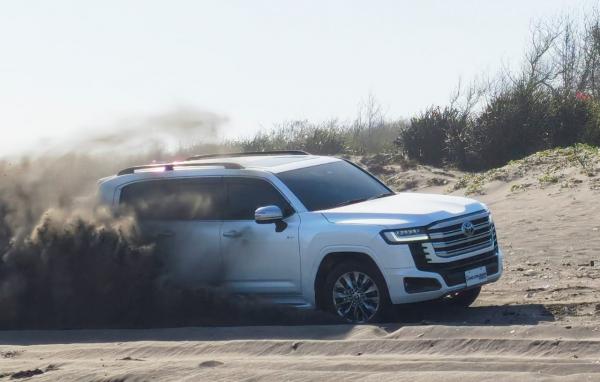
The Land Cruiser 300 Hybrid EV, with a market valuation reaching approximately Rp2.7 billion, represents a delicate balance between high-end luxury and mechanical durability. During the test, the vehicle’s sophisticated all-wheel-drive system and advanced traction control were put to the test. Despite the heavy curb weight characteristic of a full-size SUV, the hybrid powertrain provided instantaneous torque delivery, which proved essential for maintaining momentum across the undulating, loose-surface terrain. The ability of the electronic systems to modulate power to individual wheels prevented the vehicle from becoming bogged down in the softest sections of the course.
The Legacy of the Land Cruiser Lineage
The Land Cruiser is not merely a vehicle model; it is a storied nameplate that has defined the global SUV segment since the mid-20th century. Its reputation is built on decades of reliability in some of the most unforgiving environments on Earth—from the harsh Australian Outback to the high-altitude passes of the Andes.
This legacy has been cemented through consistent participation in international motorsports, most notably the Rally Dakar. The Rally Dakar is widely considered the ultimate test of endurance, where mechanical failure is common and the terrain is unpredictable. The Land Cruiser’s consistent performance in this event—often competing in production-based classes—has served as a vital marketing and engineering validation tool for Toyota. Each iteration of the Land Cruiser, including the 300 series, incorporates lessons learned from the dust and rocks of the desert. The presence of the All-New Land Cruiser FJ at the Yogyakarta event serves as a nod to this history, evoking the utilitarian roots of the original FJ series while integrating the modern comforts expected by contemporary consumers.

Strategic Diversification: VX-R and GR-S Variants
Toyota’s approach to the Land Cruiser 300 Hybrid EV reflects a strategic bifurcation of the product line to satisfy different customer profiles. The vehicle is offered in two primary configurations:
- The VX-R Hybrid EV: This trim is designed for the discerning owner who prioritizes interior refinement, acoustic insulation, and premium amenities. It serves as the flagship for long-distance touring and executive transit, ensuring that the driver and passengers remain isolated from the rigors of the road.
- The GR-S (GAZOO Racing Sport) Hybrid EV: This variant leans into Toyota’s motorsport DNA. With suspension tuning optimized for agility and a aesthetic package that signals performance, the GR-S is aimed at enthusiasts who seek a more dynamic driving experience. The inclusion of GR-S branding on the Land Cruiser line is a direct acknowledgment of the success of the GAZOO Racing division in improving the handling and durability of Toyota’s production vehicles.
Chronology of the 2026 Drive & Joy Initiative
The "Drive & Joy Beyond The Road 2026" event is part of a broader, year-long campaign by Toyota to showcase its electrified vehicle (EV) roadmap. Since the beginning of the year, the company has emphasized that electrification does not necessarily equate to a loss of off-road capability.
- August 2026: Toyota highlighted the endurance of the Land Cruiser platform at the GIIAS (Gaikindo Indonesia International Auto Show) 2026, where figures like off-road racer Julian Johan shared insights into the mechanical requirements for competing in the Rally Dakar, effectively bridging the gap between showroom models and racing prototypes.
- September 2026: The Yogyakarta test drive served as the practical application of this narrative. By inviting the press to the Gumuk Pasir dunes, the company aimed to dispel consumer anxieties regarding the performance of hybrid systems in extreme temperatures and high-load, low-speed environments.
Technical Implications and Market Positioning
The decision to introduce hybrid technology into the Land Cruiser 300 series is a calculated response to tightening global emissions regulations. Traditionally, Land Cruisers relied on high-displacement V8 or V6 engines. The shift to a hybrid powertrain allows Toyota to maintain the high-torque characteristics required for towing and off-roading while simultaneously improving fuel efficiency and reducing carbon footprints.

From a market perspective, the Land Cruiser occupies a unique space. It sits above mass-market SUVs but is often viewed as more rugged and "authentic" than many luxury European SUVs. The price point of Rp2.7 billion positions it as a direct competitor to high-end luxury SUVs from brands like Land Rover and Mercedes-Benz. However, the Land Cruiser’s competitive advantage remains its "go-anywhere" reliability—a factor that Toyota continues to emphasize through rigorous testing events like the one in Yogyakarta.
Industry Analysis: The Evolution of Off-Roading
As the automotive industry pivots toward electrification, the "off-road" segment faces a unique set of challenges. Battery weight and the vulnerability of electrical components to water and extreme heat are significant hurdles. The successful deployment of the Land Cruiser 300 Hybrid EV in the Yogyakarta dunes suggests that Toyota has effectively managed these risks. By utilizing a hybrid system, the vehicle maintains the traditional combustion engine’s reliability for long-range travel while using the electric motor to bolster low-end torque, which is beneficial when climbing steep, loose dunes.
Furthermore, the introduction of the All-New Land Cruiser FJ signals a desire to recapture the "purist" market. While the 300 series continues to evolve into a high-tech luxury vessel, the FJ branding suggests a return to a more modular, utilitarian design that may appeal to younger, adventure-focused demographics who prioritize customization and ruggedness over digital luxury.

Conclusion: Future Outlook
The Yogyakarta test drive was more than a press event; it was a statement of intent. Toyota is signaling to the global automotive market that the era of the internal combustion engine is not ending in a whimper, but rather transitioning into a new, more efficient, and more capable phase. The Land Cruiser 300 Hybrid EV represents the intersection of tradition and innovation. As the brand continues to develop its "Beyond The Road" strategy, the focus will likely remain on maintaining the "King of the Road" status of the Land Cruiser, regardless of what lies under the hood. For now, the successful navigation of the Yogyakarta dunes stands as a testament to the fact that while the technology may change, the spirit of the Land Cruiser remains unchanged.
