
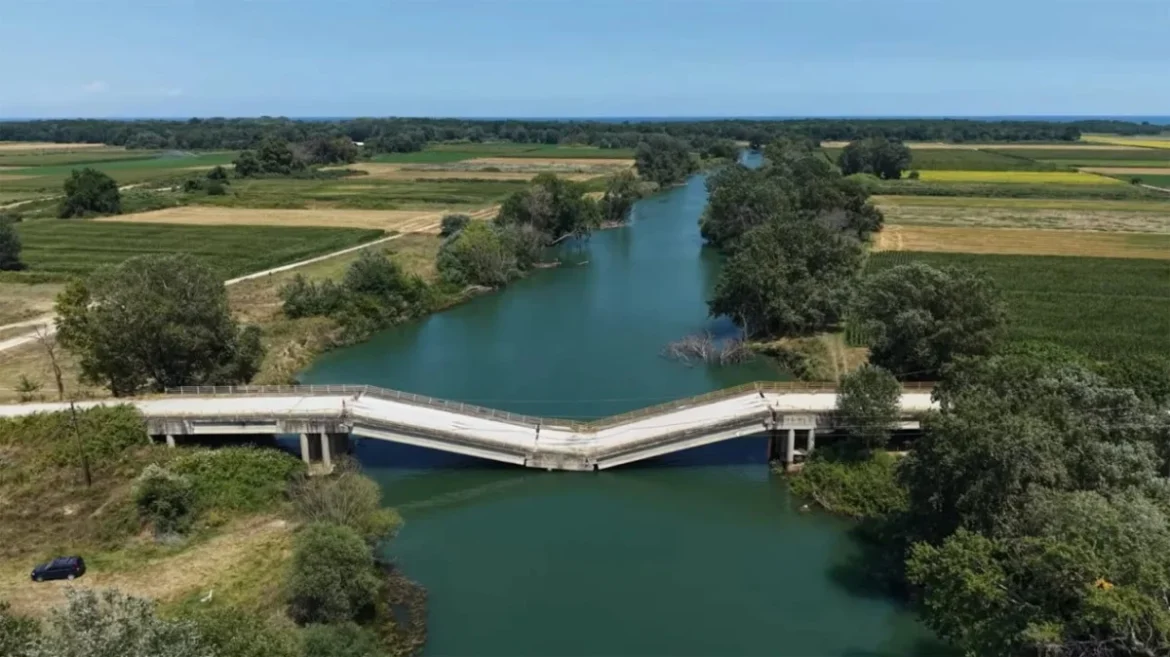
Larissa, Greece – July 20, 2026 – 23:22 WIB – In a striking display of human tenacity and disregard for official warnings, a viral video emerging from Greece has captured the alarming reality of drivers repeatedly traversing a significantly collapsed bridge, nearly three years after its structural integrity was compromised. The Palaiopyrgos Bridge, located near the city of Larissa, has become a daily thoroughfare for local residents despite its severe damage from a catastrophic flood in 2023 and subsequent official closure by authorities.
The footage, which has garnered widespread attention online, depicts a variety of vehicles, from utilitarian pickup trucks to robust SUVs, navigating the perilous section of the bridge. The vehicles are seen descending sharply onto a severely angled concrete surface, the remnants of the roadway, before ascending a steep incline on the opposite side. The scene bears a closer resemblance to an extreme off-road course than a public transportation artery, highlighting the perilous conditions drivers willingly subject themselves to.
Contrary to what might be assumed as a thrill-seeking endeavor, reports from Carscoops, citing local sources on July 20, 2026, indicate that these dangerous crossings are driven by practical necessity rather than a desire for adrenaline. Local inhabitants, particularly farmers, are opting for this hazardous route to significantly reduce their travel time and mitigate fuel costs. The official detour necessitates a considerable lengthening of their journeys along national roads. For those engaged in the daily transportation of agricultural produce, the added mileage translates directly into increased operational expenses, a burden they are evidently keen to avoid. Consequently, the bridge, officially condemned and forbidden for passage, continues to see regular vehicular traffic.
The Genesis of Disaster: Storm Daniel’s Devastation
The structural failure of the Palaiopyrgos Bridge is directly attributable to the ferocity of Storm Daniel, which unleashed its fury upon Greece in September 2023. This extreme weather event triggered widespread and devastating floods across the Thessaly region, a fertile agricultural heartland of the country. The deluge overwhelmed natural waterways and infrastructure, resulting in the destruction of numerous bridges and roads. The Palaiopyrgos Bridge, a vital link for the local community, bore the brunt of the storm’s destructive power.
The central span of the bridge experienced a dramatic subsidence, dropping to a level perilously close to the Pineios River flowing beneath. The stark visual evidence of the sharply curved concrete structure serves as an undeniable testament to the bridge’s compromised state and the inherent danger it now poses. Despite these visible signs of imminent collapse, the resilience of the local community in finding alternative, albeit perilous, routes is evident.
Local media outlet LarissaNet captured footage of a Ford Ranger pickup truck successfully navigating the damaged section. The video meticulously documents the vehicle’s slow descent onto the warped bridge deck and its careful ascent to the other side, underscoring the challenging maneuver required. This particular incident, shared widely, ignited further public discussion about the audacious actions of the drivers and the underlying reasons for their risky behavior.
Beyond the Viral Sensation: Underlying Socio-Economic Pressures
The viral nature of the Palaiopyrgos Bridge footage has thrust into the spotlight not just the immediate danger but also the deeper socio-economic pressures faced by rural communities in the wake of natural disasters. The decision to risk one’s life and vehicle on a collapsed structure is not made lightly. It is a calculated response to economic realities that make the official, safer routes untenable for daily livelihoods.
The economic impact of natural disasters on agricultural communities can be profound and long-lasting. Beyond the immediate destruction of crops and property, the disruption of transportation networks can cripple supply chains and increase the cost of doing business. For farmers in the Thessaly region, whose livelihoods depend on efficient transport of their produce to markets, the extended detours imposed by damaged infrastructure translate into significant financial losses. Fuel costs, a major component of agricultural operating expenses, become a critical factor.
The situation at Palaiopyrgos Bridge is a microcosm of a larger challenge: the slow pace of infrastructure repair and reconstruction following major natural disasters. While governments often pledge swift action, the reality on the ground can be protracted, leaving communities to improvise and adapt in ways that can compromise safety.
Official Response and Navigation Woes
In an attempt to mitigate the risks, local authorities have erected warning signs indicating that the bridge is closed to all traffic. However, the absence of physical barriers, such as concrete blocks or robust fencing, has proven insufficient to deter the determined drivers. The ease with which these signs can be circumvented or ignored, especially by those familiar with the area and their daily routines, highlights a critical flaw in the enforcement of the closure.
Adding another layer of complexity to the situation, several popular navigation applications have been identified as continuing to direct users towards the Palaiopyrgos Bridge. This technological oversight means that unsuspecting drivers, particularly those less familiar with the region, may arrive at the site only to discover the perilous state of the bridge. The subsequent need for a U-turn on a potentially narrow or congested road can introduce its own set of hazards. This digital misdirection exacerbates the problem, inadvertently leading more people into a dangerous situation.
Analyzing the Implications: Infrastructure, Safety, and Community Resilience
The Palaiopyrgos Bridge incident raises several critical questions regarding infrastructure resilience, public safety, and the effective management of post-disaster recovery.
-
Infrastructure Vulnerability: The collapse of the bridge underscores the vulnerability of critical infrastructure to extreme weather events. Climate change is projected to increase the frequency and intensity of such events, necessitating a re-evaluation of engineering standards and the implementation of more robust designs for bridges and other transportation networks in flood-prone areas. Investment in climate-resilient infrastructure is no longer a luxury but a necessity.
-
Public Safety and Enforcement: The continued use of a collapsed bridge, despite official warnings, highlights the challenges in enforcing safety regulations when faced with compelling economic pressures. A multi-faceted approach is required, combining clear signage with effective physical deterrents and, crucially, addressing the underlying reasons that drive such risky behavior. This might involve providing alternative, subsidized transport routes or expediting repairs to critical infrastructure that directly impacts livelihoods.
-
Post-Disaster Recovery and Communication: The slow pace of reconstruction and the continued reliance on outdated navigation data point to potential shortcomings in post-disaster recovery coordination and communication. Enhanced collaboration between government agencies, infrastructure operators, and technology providers is essential to ensure that safety information is accurate, up-to-date, and effectively disseminated to the public.
-
Community Resilience vs. Recklessness: While the ingenuity of the local community in finding ways to maintain their economic activities is commendable, it also borders on recklessness. The long-term sustainability of such practices is questionable, as the risk of a fatal accident remains high. Balancing community resilience with an unwavering commitment to public safety is a delicate act that requires thoughtful policy interventions and community engagement.
The Road Ahead: Repair, Alternatives, and a Call for Vigilance
The situation at the Palaiopyrgos Bridge serves as a stark reminder of the human cost of natural disasters and the complex interplay between environmental challenges, infrastructure, and socio-economic realities. While the immediate focus for the Greek authorities must be on the expedited repair or replacement of the Palaiopyrgos Bridge, the broader implications of this incident demand a comprehensive review of disaster preparedness, infrastructure investment, and public safety strategies.
Until a permanent solution is in place, a more robust enforcement strategy for the bridge closure, potentially involving temporary barriers or increased surveillance, is warranted. Furthermore, a concerted effort to update all relevant navigation systems is crucial to prevent further instances of unsuspecting drivers being led into harm’s way. The viral video, while sensational, has inadvertently provided a critical impetus for dialogue and action, urging a more proactive and effective approach to safeguarding lives and livelihoods in the face of nature’s unforgiving power. The safety of the Greek citizens who continue to navigate this perilous passage depends on swift and decisive action.
