
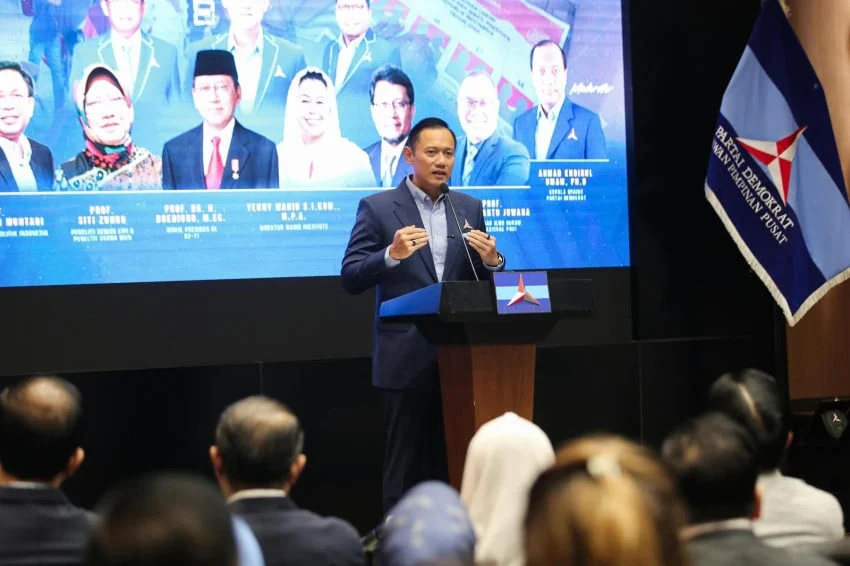
JAKARTA — The political landscape in Indonesia has been shaken by explosive allegations of widespread and unauthorized surveillance targeting top-tier government officials, civil society leaders, and the head of state. Agus Harimurti Yudhoyono (AHY), Chairman of the Central Executive Board of the Democratic Party (Partai Demokrat), has forcefully demanded a comprehensive, transparent, and uncompromised investigation into the alleged illegal wiretapping operations. The scandal, which reportedly involves high-ranking security apparatuses, has raised profound concerns regarding national security, the protection of constitutional privacy, and the integrity of Indonesia’s democratic institutions.
Speaking in Jakarta, AHY underscored that the ongoing probe must go beyond superficial findings to unmask the masterminds, the precise targets, and the geopolitical or domestic political agendas driving the clandestine operations. The gravity of the situation is heightened by preliminary findings from the Indonesian National Police (Polri), which suggest that the web of surveillance was cast remarkably wide, ensnaring not only the highest executive office in the land but also key stakeholders across the political, economic, and social spectrums.
Main Facts and Scope of the Allegations
The core of the controversy centers on unauthorized intercept operations conducted outside legally established judicial frameworks. According to briefings provided by law enforcement agencies, the alleged targets of this extensive wiretapping network are diverse, spanning the executive branch, legislative figures, prominent political opposition and coalition leaders, investigative media outlets, mass organizations, non-governmental organizations (NGOs), and influential business magnates.
AHY voiced strong condemnation against the practice, categorizing it as a direct threat to the rule of law and individual liberties protected under the Indonesian Constitution.
"I strongly condemn the alleged wiretapping carried out outside established procedures and legal foundations. According to information from the National Police, the targets of this alleged wiretapping encompass the President, state officials, political figures, the media, community organizations, NGOs, and business leaders," AHY stated.
The sheer breadth of the targeted groups has transformed what might have been viewed as an isolated security breach into a systemic crisis. Analysts note that when a surveillance apparatus allegedly reaches from the presidential palace down to civil society watchdogs and commercial leaders, it indicates an institutional capability that has either been subverted from within or operated by rogue elements seeking to amass leverage over virtually every pillar of Indonesian society.
Chronology and Background Context
The revelations began to surface during routine oversight and internal security audits conducted by state apparatuses, which subsequently prompted the National Police to initiate a preliminary inquiry. As digital forensics and intelligence reviews progressed, the scale of the unauthorized intercepts became increasingly alarming.
The timeline of the scandal escalated dramatically when high-ranking executive offices were forced to address the breaches publicly. The situation took a severe turn when the Ministry of State Secretariat (Mensesneg) weighed in on the gravity of the findings. In a public statement that sent shockwaves through the capital, Mensesneg indicated that the unauthorized surveillance targeting President Prabowo Subianto—allegedly linked to maneuvers involving former high-ranking security figures such as Listyo Sigit and associates—exceeded ordinary intelligence overreach and bore characteristics pointing directly toward treasonous activity, or makar.
This institutional framing elevates the investigation from a matter of privacy violations or administrative malpractice to a high-stakes national security crisis. The involvement or suspected complicity of high-level personnel has paralyzed normal administrative trust, compelling legislative oversight bodies to demand emergency hearings with the State Intelligence Agency (BIN), the National Police, and the Ministry of Defense.
Official Responses and Institutional Reactions
The fallout from the alleged wiretapping has triggered a cascade of reactions across Indonesia’s political spectrum. Ruling coalition parties and opposition factions alike have expressed varying degrees of alarm, though consensus remains absolute on the necessity of an independent and thorough inquiry.
Civil society organizations, particularly those dedicated to human rights, freedom of the press, and digital privacy, have echoed AHY’s sentiments, warning that if state-owned or state-adjacent surveillance tools can be weaponized against the President and domestic watchdogs, no citizen is safe from arbitrary state intrusion.
The Indonesian National Police have pledged full cooperation with independent oversight bodies, including the National Police Commission (Kompolnas) and the House of Representatives (DPR) Commission III, which oversees legal and security affairs. However, pressure continues to mount on investigators to deliver swift interim reports to prevent misinformation and public panic.
Lawmakers from various factions have called for the immediate freezing of compromised surveillance budgets and the suspension of officials whose departments are implicated in the unauthorized interception protocols. Parliamentary hearings are expected to summon key witnesses in the coming weeks to establish a definitive chain of command regarding who authorized the equipment procurement and deployment.
Broader Impact and Implications for Indonesian Democracy
The implications of this wiretapping scandal extend far beyond immediate political friction, touching upon structural, legal, and economic dimensions of contemporary Indonesia.
From a governance perspective, the allegations expose vulnerabilities in the institutional safeguards designed to prevent the abuse of state intelligence technology. In recent years, global concerns regarding the proliferation of commercial spyware and unregulated electronic interception tools have intensified. Indonesia’s domestic market for security technology is now facing intense scrutiny regarding how powerful surveillance apparatuses were acquired, maintained, and operated outside the strict oversight of the State Intelligence Law and relevant judicial authorization procedures.
Economically, the inclusion of prominent business leaders and commercial actors on the alleged target list introduces significant risk. Investor confidence relies heavily on legal certainty, data security, and the protection of corporate communications from industrial espionage or politically motivated coercion. If economic elites can be subjected to illegal state-sponsored wiretapping, the climate for both foreign and domestic investment could face a chilling effect until structural guarantees are restored.
Politically, the scandal tests the resilience of President Prabowo Subianto’s administration. By framing the unauthorized surveillance as a potential threat of makar (treason), the executive branch has signaled a zero-tolerance approach toward internal subversion. How the administration navigates the investigation will set a vital precedent for civil-military relations, the autonomy of law enforcement, and the enforcement of constitutional rights in the digital age.
Conclusion
As the investigation moves into its next phase, the demands articulated by political leaders like Agus Harimurti Yudhoyono reflect a broader public insistence on accountability. The fundamental questions remain starkly visible on the national agenda: Who ordered the operations, what specific intelligence was gathered, and how will the state ensure that such a profound breach of security is never repeated? The answers to these questions will define not only the outcome of the current political crisis but also the future trajectory of transparency and the rule of law in Indonesia.
