
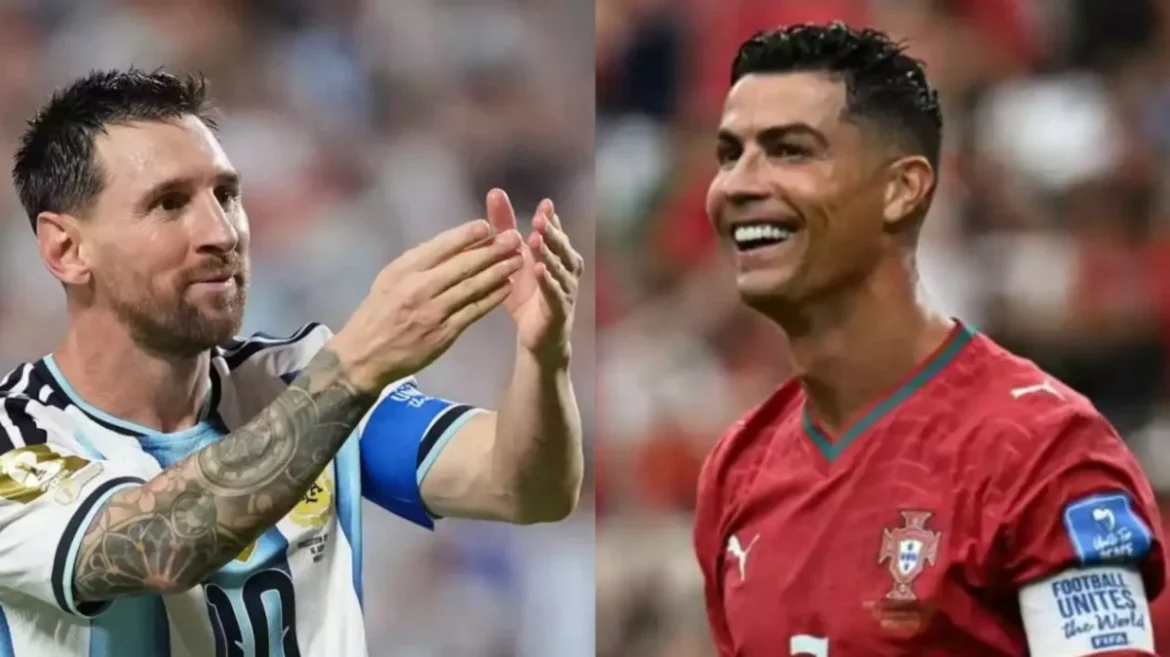
The enduring rivalry between Cristiano Ronaldo and Lionel Messi has entered an entirely unprecedented arena, shifting from legendary battles on the pitch to the corporate boardrooms of Spanish football. In a stunning parallel that underscores their lifelong pursuit of excellence, both global icons have expanded their investments into Spain’s Segunda División—officially known as LaLiga Hypermotion—marking a monumental shift in how football’s greatest modern legends intend to shape the sport’s future.
According to developments reported in early September 2026, Cristiano Ronaldo has officially secured a 25 percent minority stake in UD Almería through his investment vehicle, CR7 Sports. Meanwhile, his perennial rival, Lionel Messi, has reportedly reached a fundamental agreement to acquire 100 percent ownership of another Spanish second-tier club, CD Eldense. This dual takeover not only breathes new life into the historic sporting duel between the Portuguese and Argentine icons but also signals a broader trend of elite athletes transitioning into club ownership and sports governance on the Iberian Peninsula.
The Acquisition of UD Almería by Cristiano Ronaldo
Cristiano Ronaldo’s entry into Spanish football club ownership has been formalized through his company, CR7 Sports, which purchased a 25 percent stake in UD Almería, a club currently competing in LaLiga Hypermotion. The majority ownership of Almería remains with the SMC Group, but Ronaldo’s substantial minority share grants him significant influence over the strategic trajectory of the Andalusian outfit.
For Ronaldo, this acquisition represents the realization of a long-held ambition to influence football from a managerial and administrative perspective. Speaking on his evolving career goals, the five-time Ballon d’Or winner articulated his vision for life after playing professional football.
"It has long been my dream to contribute to football outside of the pitch," Ronaldo stated, reflecting on his broader entrepreneurial ambitions. "UD Almería is a Spanish club with strong foundations and clear growth potential. I look forward to working with the leadership team to support this next phase of the club’s growth."
Ronaldo’s history with Almería adds a layer of nostalgia and familiarity to the partnership. During his illustrious tenure at Real Madrid, where he cemented his status as one of the greatest goalscorers in football history, Ronaldo faced Almería on seven occasions in LaLiga. His record against the Andalusian club was formidable, yielding seven goals and helping his side secure six victories alongside a single draw. Now, instead of tormenting their defense on the turf of the Power Horse Stadium, Ronaldo finds himself tasked with elevating the club’s competitive standing from the boardroom.
At the time of the acquisition, Almería finds itself sitting 12th in the Segunda División standings, having accumulated six points from the early stages of the 2026–27 campaign. The club’s leadership views Ronaldo’s global brand, financial backing, and wealth of elite football experience as catalysts capable of bridging the gap toward promotion back to Spain’s top-flight, LaLiga EA Sports.
Lionel Messi’s Strategic Expansion with CD Eldense
While Ronaldo anchors his presence in Andalusia, Lionel Messi is simultaneously deepening his footprint in Spanish football through a comprehensive takeover of CD Eldense. The Argentina captain and Inter Miami forward has reached an agreement in principle to acquire 100 percent of the Segunda División club without the intervention of third-party consortiums.
The transaction, which first surfaced through reports by the Spanish sports daily Marca, represents a major ownership play for Messi’s family portfolio. However, the takeover remains subject to standard regulatory procedures. Before the deal receives formal ratification, it must successfully navigate a rigorous due diligence phase and secure official clearance from Spain’s High Council for Sports, known as the Consejo Superior de Deportes (CSD).
CD Eldense was previously under the control of an international investment group led by businessman Juan Carlos Trujillo, who had acquired the club from Pascual Pérez in October 2025. Under the stewardship of Messi’s camp, Eldense is expected to undergo a comprehensive operational restructuring designed to modernize its academy infrastructure, scouting networks, and commercial appeal.
Crucially, Eldense is not an isolated asset within Messi’s burgeoning football empire. Industry insiders note that the acquisition mirrors a broader multi-club ownership strategy pursued by elite athletes and investment groups. Prior to the Eldense agreement, Messi was linked to the acquisition of UE Cornellà, a Catalan club competing in the lower divisions of Spanish football, suggesting that the World Cup winner is quietly building a robust pyramid of developmental clubs designed to unearth and nurture young talent.
Chronology of the Dual Takeovers
The converging timelines of Ronaldo and Messi’s investments highlight a fascinating synchronized movement within the upper echelons of football entrepreneurship.
The groundwork for Ronaldo’s move was laid earlier in the year. In February 2026, the Portuguese icon publicly expressed his desire to pivot toward executive roles within the sport, setting the stage for negotiations with the SMC Group over Almería’s equity distribution. By September 2026, those talks culminated in the official announcement of the CR7 Sports partnership.
Simultaneously, negotiations regarding CD Eldense accelerated behind closed doors through the spring and summer of 2026. Following the stabilization of the club under Juan Carlos Trujillo’s brief ownership tenure, Messi’s representatives moved swiftly to negotiate a full buyout. By early September 2026, a fundamental agreement was struck, setting off the mandatory regulatory review process overseen by the CSD.
This timing means that both legends are entering the Spanish club ownership landscape at an identical juncture: the early autumn of the 2026–27 European football season. While their respective clubs trade blows on the pitch in Spain’s grueling second division, the presence of Ronaldo and Messi off the pitch has instantly transformed LaLiga Hypermotion into one of the most scrutinized and commercially viable secondary leagues in world football.
Broader Economic and Sporting Implications
The entry of Cristiano Ronaldo and Lionel Messi into Spanish club ownership carries profound implications for the business of football, particularly within the financial ecosystem of the Segunda División.
LaLiga Hypermotion has historically operated in the shadow of its affluent older sibling, LaLiga EA Sports. Television rights distributions, global sponsorships, and matchday revenues are significantly lower in the second tier, often leaving clubs vulnerable to financial instability as they gamble on the high-stakes lottery of promotion.
The involvement of Ronaldo and Messi fundamentally alters this dynamic. The mere association of their names instantly elevates the global visibility of Almería and Eldense. Broadcasters and streaming platforms seeking to capitalize on the eternal "Ronaldo versus Messi" narrative will undoubtedly cast a sharper lens on Spain’s second division, potentially unlocking lucrative new international media rights deals and sponsorship opportunities for both clubs.
Furthermore, the operational expertise and global networks that both players command are expected to revolutionize how these clubs approach the transfer market. With Ronaldo’s ties to elite European agencies and Messi’s deep connections throughout South America and North America, Almería and Eldense will likely enjoy unprecedented access to high-potential young talent seeking a stepping stone to Europe’s major leagues.
Reactions and Expert Analysis
Football administrators, financial analysts, and supporters have reacted to the news with a mixture of awe and pragmatic optimism. The transformation of players into owners is a well-established global phenomenon—exemplified by figures like David Beckham with Inter Miami or Ronaldo Nazário’s previous ownership ventures—but having the two defining figures of 21st-century football simultaneously invest in competing clubs within the same domestic pyramid is unprecedented.
LaLiga officials have privately welcomed the investments, recognizing that the star power of Ronaldo and Messi serves as an invaluable promotional tool for the Spanish football ecosystem as a whole. Enhanced global interest in the Segunda División translates directly into heightened engagement across digital platforms, increased merchandise sales, and a general elevation of the league’s competitive profile.
However, sports economists also caution that successful ownership requires more than just legendary status. The transition from elite athletes to effective club executives demands astute financial management, adherence to strict Financial Fair Play (FFP) regulations, and the appointment of competent sporting directors capable of navigating the relentless 42-game grind of the Spanish second tier.
As Almería fights for promotion under Ronaldo’s watchful eye, and Eldense prepares to enter a new era under Messi’s stewardship, the grand narrative of their rivalry has transcended the white lines of the pitch. For millions of fans worldwide, the eternal debate over who is the greatest of all time has now found a new battleground: the boardroom of Spanish football.
