
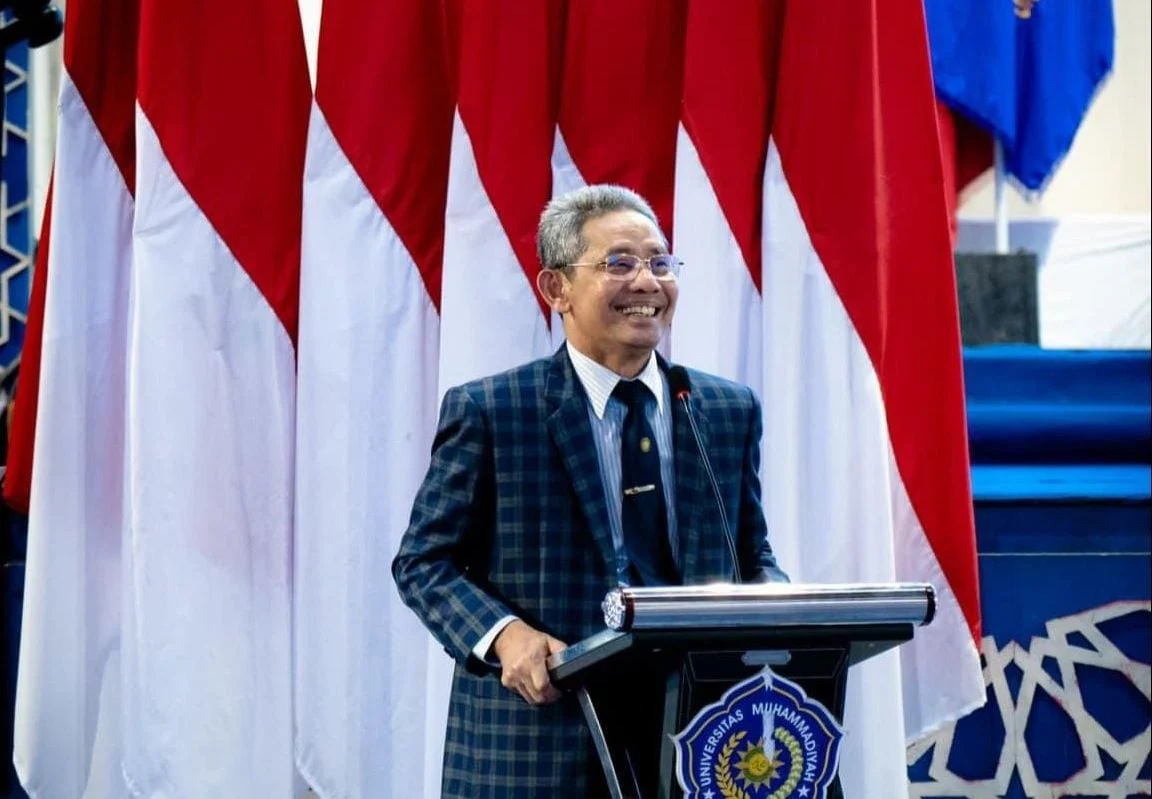
The pursuit of academic excellence and international competitiveness took center stage in Bandung as the Central Leadership of Muhammadiyah officially inaugurated the National Coordination Meeting for Superior Muhammadiyah Schools and Madarsas. Centered around the theme "Nurturing Excellence and Global Competitiveness," the high-profile gathering convened prominent educators, regional board leaders, and institutional administrators to deliberate on the future trajectory of Islamic education in Indonesia. The event served as a critical platform for addressing systemic challenges, sharing institutional best practices, and aligning curriculum standards with the demands of an increasingly interconnected world.
Strategic Objectives and Inter-Regional Collaboration
The primary objective of the coordination meeting was to foster a robust framework for dialogue and knowledge exchange among school managers from various regions across the archipelago. According to Irwan Akib, Chairman of the Central Leadership of Muhammadiyah, who officially opened the forum, the diverse operational landscapes of Muhammadiyah institutions present unique opportunities for mutual learning. Each region possesses distinct administrative and pedagogical characteristics that, when shared collectively, can elevate the standard of the entire educational network.
Akib emphasized that isolation in school management is detrimental to progress. By creating a collaborative ecosystem where successful regional models can be analyzed and replicated, Muhammadiyah aims to bridge the quality gap between urban and rural institutions. The forum encouraged administrators to move away from insular management styles and embrace a cooperative approach to institutional development. This collaborative ethos is viewed as essential for maintaining the organization’s historical legacy as a pioneer of progressive Islamic education in Indonesia.
Addressing Enrollment Challenges Through Quality Enhancement
A central focus of the discussions was the persistent challenge of student enrollment numbers, a critical metric for institutional sustainability. Akib candidly addressed a common concern among regional administrators: the disparity in student populations between Muhammadiyah schools and other educational institutions, particularly state-run schools or heavily commercialized private academies.
Rather than attributing enrollment fluctuations to external market pressures or demographic shifts alone, Akib placed the responsibility squarely on institutional quality. He articulated a clear and direct philosophy: sustainable enrollment growth is a direct byproduct of uncompromised academic and operational excellence.
"This is fundamentally a matter of the quality of the schools we build. If our schools are genuinely high quality, God willing, the number of students will also increase organically," Akib stated during his opening address.
He urged all academic components within the Muhammadiyah network—from foundation leaders and principals to teachers and administrative staff—to approach quality enhancement with utmost seriousness and dedication. The leadership maintained that aggressive marketing campaigns or promotional tactics are insufficient without a foundational product rooted in academic rigor, character development, and modern facilities.
The Defining Role of ISMUBA in Muhammadiyah Education
While emphasizing the need to compete with global educational standards, Akib underscored the unique philosophical identity that distinguishes Muhammadiyah institutions from mainstream or secular schools. The organization’s competitive edge is not solely measured by standardized test scores or technological infrastructure, but by its distinct ideological and moral framework.
At the heart of this framework is ISMUBA—an acronym for Al-Islam, Kemuhammadiyahan, and Bahasa Arab (Islamic Studies, Muhammadiyah Studies, and Arabic). Akib stressed that ISMUBA must transcend its traditional status as a mere subject within the academic curriculum.
"We have the ISMUBA standard, and this is not just a subject taught in our schools. It is the very soul of Muhammadiyah education," Akib declared.
This integration ensures that modern scientific inquiry and technological literacy are balanced with strong ethical grounding and spiritual resilience. Educational analysts note that this dual focus on global competitiveness and Islamic values addresses a growing demand among modern Indonesian parents who seek institutions capable of preparing their children for a globalized economy without compromising their religious identity.
Background Context and Institutional Evolution
The gathering in Bandung takes place against the backdrop of a rapidly evolving educational landscape in Indonesia. Founded over a century ago by K.H. Ahmad Dahlan, Muhammadiyah has grown into one of the largest Islamic socio-religious organizations in the country, operating thousands of educational institutions ranging from early childhood education to higher education universities.
Historically, Muhammadiyah schools played a foundational role in democratizing access to education during the colonial era and the early decades of the Indonesian republic. In the contemporary era, however, these institutions face unprecedented challenges. The proliferation of elite private schools, the increasing standards of state-funded public schools, and shifting socioeconomic expectations among parents have heightened competition within the education sector.
In response, the central leadership has initiated systematic modernization programs. These include digital transformation initiatives, teacher competency certification programs, and infrastructure upgrades. The National Coordination Meeting serves as an operational checkpoint to evaluate the progress of these modernization efforts and to ensure that institutional policies are effectively implemented at the grassroots level.
Broader Implications for Indonesian Education
The discussions held during the Bandung coordination meeting carry significant implications for the broader national education system. As Indonesia strives to achieve its vision of an advanced nation by 2045, the quality of intermediate education remains a critical determinant of human capital development.
Experts note that private Islamic educational networks like Muhammadiyah occupy a strategic position in the national ecosystem. By educating millions of students across diverse socioeconomic strata, these institutions act as social elevators. The emphasis on global competitiveness combined with moral education aligns with national priorities aimed at producing adaptive, critical-thinking, and globally minded citizens.
Furthermore, the emphasis on peer-to-peer institutional learning addresses a long-standing structural weakness in Indonesia’s private education sector: the uneven distribution of resources and administrative capacity. By institutionalizing regional collaboration, Muhammadiyah provides a scalable model that other educational foundations might emulate to elevate overall standards nationwide.
Future Outlook and Strategic Roadmap
As the coordination meeting concluded its initial plenary sessions, participants outlined several strategic priorities for the upcoming academic year. These include the standardization of teacher training protocols, the integration of artificial intelligence and digital tools into classroom instruction, and the enhancement of financial management transparency across regional boards.
The leadership reiterated that maintaining excellence is not a static achievement but a continuous process of adaptation. By balancing the timeless values of Islamic teachings with the dynamic requirements of the twenty-first-century global economy, Muhammadiyah schools aim to reinforce their position as benchmarks of quality education in Indonesia and beyond.
