
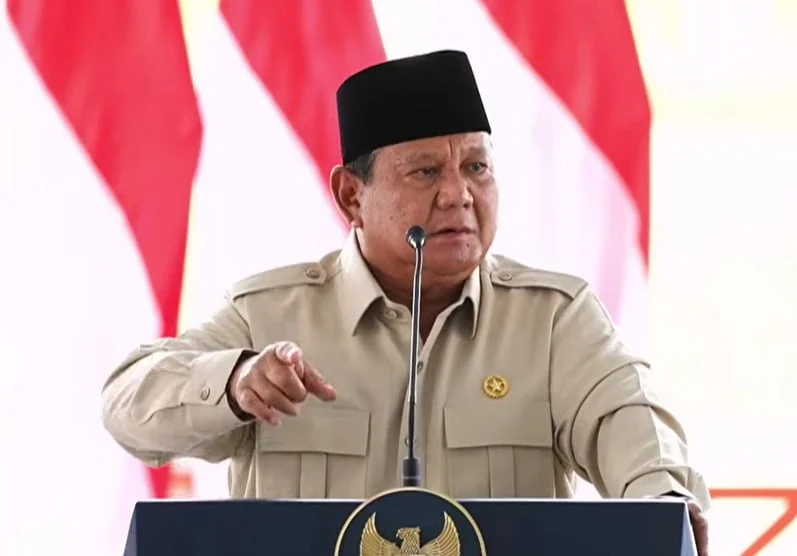
During a high-level Plenary Cabinet Meeting held at the State Palace on Monday, July 20, 2026, President Prabowo Subianto delivered a pointed critique of the nation’s economic governance, focusing specifically on the systemic failures that led to the scarcity of cooking oil in a country that stands as the world’s preeminent producer of crude palm oil (CPO). The President expressed profound disbelief and concern over the "illogical" reality that Indonesian citizens faced weeks of supply shortages and price volatility for a basic commodity derived from a resource the country possesses in abundance. This phenomenon, according to the President, is not merely a logistical hiccup but a symptom of deep-seated "distortions" in the national economy, characterized by massive capital flight and sophisticated trade fraud, such as under-invoicing.
President Prabowo emphasized that the struggle to secure domestic cooking oil supply is a stark indicator that the current economic machinery is failing to protect the interests of the people. He noted that as the largest producer of palm oil globally, Indonesia should, by all accounts, be immune to such shortages. The fact that the domestic market suffered while export markets remained well-supplied suggests a misalignment between corporate incentives and national welfare. The President’s remarks serve as a directive to his cabinet to overhaul the monitoring of the palm oil supply chain and to crack down on the financial irregularities that allow the nation’s wealth to be siphoned abroad.
The Paradox of Scarcity in the Land of Abundance
Indonesia’s position in the global palm oil market is unparalleled. For over a decade, the country has contributed approximately 55% to 60% of the world’s total palm oil supply. Data from the Indonesian Palm Oil Association (GAPKI) and the Ministry of Agriculture indicates that Indonesia produces upwards of 47 million to 50 million tons of crude palm oil annually. In contrast, domestic consumption for food—primarily cooking oil—usually accounts for less than 20% of that total production. Despite this massive surplus, the Indonesian public has periodically faced "cooking oil droughts," characterized by empty supermarket shelves and skyrocketing prices that disproportionately affect low-income households and small-scale food vendors.
President Prabowo described this situation as "something that does not make sense." He argued that the scarcity was a manufactured crisis resulting from a failure to prioritize domestic needs over international trade profits. The President’s frustration mirrors the sentiment of the general public, who have witnessed a disconnect between the country’s status as an agricultural powerhouse and the daily reality of food inflation. By highlighting this paradox during the Plenary Cabinet Meeting, the President signaled that his administration would no longer tolerate "business as usual" in the management of strategic commodities.
Identifying the Mechanics of Economic Distortion: Under-Invoicing
A central theme of President Prabowo’s address was the identification of "under-invoicing" as a primary tool for economic distortion. Under-invoicing occurs when exporters report a lower value for their goods on official trade documents than the actual price paid by the foreign buyer. This practice serves two illicit purposes: first, it reduces the amount of export duties and taxes the company must pay to the Indonesian government; second, it allows the difference in value—the "hidden profit"—to be deposited directly into offshore bank accounts.
The President estimated that these practices, along with other forms of report falsification, result in the loss of "thousands of trillions of rupiah" and "hundreds of billions of dollars" every year. This massive capital flight weakens the Indonesian rupiah, reduces the state’s fiscal capacity to fund social programs, and creates an uneven playing field for honest businesses. Prabowo’s focus on under-invoicing suggests that the government will move toward more aggressive digital monitoring of trade transactions and increased cooperation between the Ministry of Finance, the Ministry of Trade, and international customs agencies to ensure that the true value of Indonesia’s exports is captured within the domestic economy.
A Chronology of the Cooking Oil Crisis and Regulatory Responses
The remarks made by President Prabowo are rooted in a series of turbulent events in the Indonesian commodity market that began in late 2021 and peaked throughout 2022 and 2023. During that period, global vegetable oil prices surged due to the conflict in Ukraine and various climate-related supply disruptions. While this was a windfall for Indonesian exporters, it created a domestic vacuum as producers sought higher profits abroad.
In response to the initial crisis, the Indonesian government implemented several layers of intervention:
- The DMO (Domestic Market Obligation) Policy: This required palm oil exporters to set aside a certain percentage of their export volume for the domestic market at a fixed price.
- The DPO (Domestic Price Obligation): This set a price cap on CPO and olein sold to domestic refiners to keep the retail price of cooking oil affordable.
- The Temporary Export Ban: In April 2022, the government took the drastic step of banning CPO exports entirely for several weeks to force supply back into the local market.
- The "Minyakita" Program: A government-subsidized brand of simple-packaged cooking oil was introduced to provide a reliable baseline for consumers.
Despite these measures, the President’s recent comments suggest that the underlying structural issues remain unresolved. The "distortions" he mentioned refer to the ability of large actors to bypass these regulations through legal loopholes or fraudulent reporting. The President’s current stance indicates a shift from temporary "firefighting" policies to a more permanent structural reform of the trade system.
Financial Implications and National Wealth Leakage
The "thousands of trillions" mentioned by the President in his speech highlight the scale of the financial stakes involved. When wealth flows out of Indonesia through under-invoicing, the multiplier effect on the national economy is lost. This capital, if retained, could be used for industrialization, infrastructure development, and the transition to renewable energy.
Furthermore, the President’s focus on the falsification of trade reports points to a broader issue of institutional integrity. For under-invoicing to happen on such a massive scale, there are often gaps in the auditing process and potential vulnerabilities in the regulatory oversight. By bringing this issue to the forefront of the Cabinet meeting, Prabowo is effectively tasking his ministers with "plugging the leaks." The Ministry of Finance’s Directorate General of Customs and Excise, along with the Directorate General of Taxes, are expected to be at the frontline of this new enforcement push.
Reactions from Industry Stakeholders and Analysts
While the President’s rhetoric is firm, industry analysts suggest that the solution requires a delicate balance. Palm oil is a vital source of foreign exchange for Indonesia. Aggressive over-regulation could potentially discourage investment or lead to a slowdown in the sector’s growth. However, economists generally agree that the issue of under-invoicing is a "clear and present danger" to the country’s fiscal health.
Smallholder farmers, who manage about 40% of Indonesia’s palm oil plantations, have often been the most vulnerable during periods of market distortion. When prices are manipulated or exports are restricted, it is the smallholders who frequently see their fresh fruit bunch (FFB) prices plummet, even while retail cooking oil prices remain high. Civil society groups have welcomed the President’s focus on "economic justice," urging the government to ensure that the crackdown on trade fraud also leads to better price protections for independent farmers.
The Strategic Path Forward: Digitization and Law Enforcement
To address the President’s concerns, the administration is expected to accelerate the implementation of the "Sistem Informasi Minyak Goreng Curah" (SIMIRAH) and other digital tracking platforms. These systems aim to provide real-time visibility into the movement of palm oil from the plantation to the refinery, and finally to the consumer or the export port. By digitizing the supply chain, the government hopes to eliminate the "shadow" transactions that facilitate under-invoicing.
Moreover, the President’s speech serves as a warning to the corporate sector. The mention of "falsification of reports" carries legal weight, suggesting that the Attorney General’s Office and the Corruption Eradication Commission (KPK) may take a more active role in investigating trade-related crimes. In previous years, high-ranking officials and corporate executives have been prosecuted for corruption related to export permits, and the President’s latest statements suggest that the net may be cast even wider in the coming months.
Broader Implications for Indonesia’s Economic Sovereignty
President Prabowo’s address at the State Palace is more than just a critique of the palm oil industry; it is a manifesto for "Economic Sovereignty." The President is framing the cooking oil issue as a test case for how Indonesia manages its natural resources. If the country cannot ensure the affordability of its own primary product, it raises questions about its ability to manage other critical sectors like nickel, bauxite, and copper, which are also central to the government’s "downstreaming" (hilirisasi) agenda.
By demanding an end to the "irrational" scarcity and the "significant" outflow of wealth, Prabowo is setting a high bar for his cabinet. The success of his administration will likely be measured by its ability to stabilize domestic food prices while simultaneously increasing state revenue through the elimination of trade fraud. As the meeting concluded, the directive was clear: the era of allowing Indonesia’s wealth to be hidden behind falsified invoices and distorted markets must come to an end to ensure that the nation’s resources truly benefit its people.
