
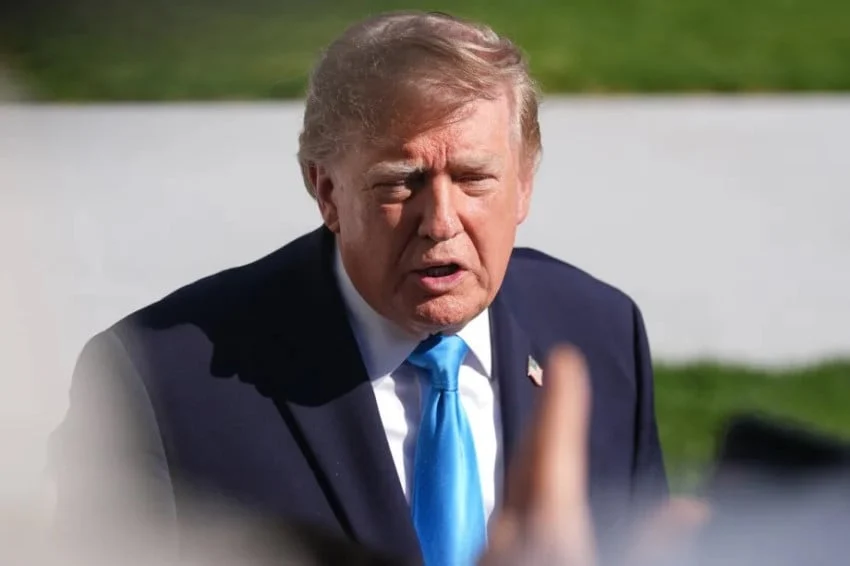
The geopolitical landscape of the Middle East is currently navigating a period of intense diplomatic maneuvering as Saudi Arabia reportedly signals to the administration of United States President Donald Trump that a preference for de-escalation must take precedence over military confrontation with the Islamic Republic of Iran. According to intelligence and reports surfacing via the Israeli news outlet i24News, Riyadh has communicated a clear message to Washington: the window for diplomatic engagement must remain open to avoid a cycle of violence that could have catastrophic consequences for regional stability and global energy markets.
This shift in tone from the Kingdom comes at a pivotal moment, as the newly inaugurated U.S. administration assesses its foreign policy posture toward Tehran. The concerns articulated by Saudi officials are rooted in the existential vulnerability of the Kingdom’s energy infrastructure. With memories of the 2019 Abqaiq-Khurais attacks still fresh in the minds of regional security analysts, Riyadh is acutely aware that any military escalation between Washington and Tehran would likely see its own oil processing facilities, pipelines, and export terminals become primary targets for retaliatory strikes by Iran or its proxy networks.
The Diplomatic Pivot: A Multilateral Effort
The urgency of the Saudi message follows a high-level diplomatic outreach characterized by unusual, yet strategic, regional coordination. Recent reports indicate that Saudi Minister of Defense, Prince Khalid bin Salman, led a significant diplomatic mission to Tehran. Notably, the Saudi delegation was accompanied by the head of the Pakistani army and the chief of Turkish intelligence. This tripartite presence underscores a broader, regional attempt to construct a buffer zone of diplomacy.
By involving Pakistan—a nation that maintains deep historical and military ties with both Riyadh and Tehran—and Turkey, which acts as a key regional power broker, Saudi Arabia is seeking to institutionalize a mediation framework. The objective of this mission is twofold: first, to facilitate a direct or indirect channel between the White House and the Iranian leadership; and second, to negotiate a baseline agreement that prevents the current tensions from spiraling into a kinetic conflict.
Chronology of Escalating Tensions
The current impasse is the culmination of years of fluctuating hostility and brief, fragile windows of détente. To understand the gravity of the current situation, one must look at the recent historical trajectory:
- 2019-2020: The region witnessed a series of maritime escalations in the Persian Gulf and the September 2019 drone and missile attack on Saudi Aramco facilities, which temporarily halved the Kingdom’s oil production.
- 2023: Under Chinese mediation, Saudi Arabia and Iran signed a historic agreement to resume diplomatic relations, signaling a desire to cool regional temperatures.
- 2024: Persistent instability in the Red Sea, largely driven by the Houthi movement—an Iranian-backed proxy—remained a point of friction, complicating the normalization process.
- 2025: With the transition of power in Washington, the Trump administration signaled a shift in strategy, prompting Tehran to confirm that it had received outreach from U.S. Vice President J.D. Vance regarding the potential for renewed negotiations.
The Vulnerability of Global Energy Infrastructure
Saudi Arabia’s apprehension is not merely a matter of statecraft; it is a matter of economic survival. The Kingdom remains the world’s leading exporter of crude oil, and its infrastructure is the backbone of global energy security. Historical data illustrates that even a minor disruption in Saudi production can lead to significant volatility in the Brent and WTI crude benchmarks.
An analytical review of the "Energy Risk Index" in the Middle East shows that the concentration of oil infrastructure in the Eastern Province of Saudi Arabia makes it a high-value target. Should a conflict erupt, the insurance premiums for maritime shipping in the Strait of Hormuz—the world’s most important oil transit chokepoint—would likely skyrocket. Analysts estimate that a prolonged military engagement could increase global oil prices by $15 to $30 per barrel, depending on the severity of the infrastructure damage. Consequently, Riyadh’s diplomatic push is also a protective measure for the global economy, which remains sensitive to inflationary pressures caused by energy price spikes.
Official Responses and the U.S. Stance
While the Trump administration has historically favored a "maximum pressure" campaign against Iran, the current signal from Vice President J.D. Vance suggests a more nuanced approach may be under consideration. The confirmation from Iranian officials that they have received messages regarding the resumption of negotiations suggests that the U.S. is testing the waters for a diplomatic off-ramp.
Tehran, for its part, finds itself in a complex position. While it maintains a robust network of regional proxies, the Iranian economy remains strained by years of international sanctions. The willingness of the Iranian leadership to engage with the Saudi delegation—and to acknowledge the communication from the U.S. Vice President—indicates that there is a faction within the Iranian establishment that recognizes the benefits of de-escalation, provided it can be achieved without the perception of national humiliation.
Broader Implications and Strategic Analysis
The move by Saudi Arabia to lead a regional mediation effort represents a significant maturation of its foreign policy. Historically reliant on the U.S. security umbrella, Riyadh is now proactively shaping the regional environment to minimize its own risk. This "strategic autonomy" is a trend that observers have noted since the signing of the 2023 normalization deal with Iran.
From a military perspective, the prospect of a new conflict is viewed with extreme caution by the U.S. Department of Defense. A full-scale war with Iran would necessitate a massive mobilization of assets, potentially diverting U.S. focus from other geopolitical priorities such as the Indo-Pacific. Furthermore, the effectiveness of Iranian-made ballistic missiles and Unmanned Aerial Vehicles (UAVs) has improved significantly since 2019, making a traditional air-defense strategy increasingly difficult to execute.
Experts suggest that the current diplomatic window offers a rare opportunity to formalize a "Regional Security Architecture." If Saudi Arabia can successfully leverage its relationships with Pakistan, Turkey, and the Gulf Cooperation Council (GCC) to act as a collective voice for moderation, it may force both Washington and Tehran to move beyond transactional diplomacy toward a more durable framework.
The Path Forward: Challenges and Opportunities
The primary obstacle to a successful resolution remains the deep-seated mistrust between the United States and Iran. Previous attempts at negotiations have frequently been undermined by domestic political pressures in both capitals. However, the involvement of regional intermediaries provides a unique buffer. By allowing Saudi Arabia to act as the primary interlocutor, Washington can maintain a degree of distance, while Tehran can engage without the immediate optics of direct capitulation to U.S. demands.
Looking ahead, the focus of the international community will remain on whether these diplomatic messages translate into concrete actions. Key indicators to watch include:
- De-escalation in the Red Sea: A reduction in Houthi activity would be a primary indicator that Tehran is willing to exert its influence to support the diplomatic process.
- Back-channel Progress: Evidence of sustained communication between the U.S. State Department and Iranian representatives, likely facilitated by Riyadh or Muscat.
- Regional Security Pacts: The development of a multilateral security agreement that includes non-aggression clauses among the Gulf states and Iran.
In conclusion, the message from Riyadh is a stark reminder that the stakes of contemporary geopolitics are too high for unilateralism. As Saudi Arabia pushes for a diplomatic solution, the world watches to see if the Trump administration will embrace this opportunity to recalibrate its Middle East policy, prioritizing stability and the security of global energy supplies over the risks of a protracted and potentially devastating military confrontation. The coming months will be critical in determining whether this regional initiative can forestall conflict or if the region is destined to revisit the cycles of violence that have defined its recent history.
