
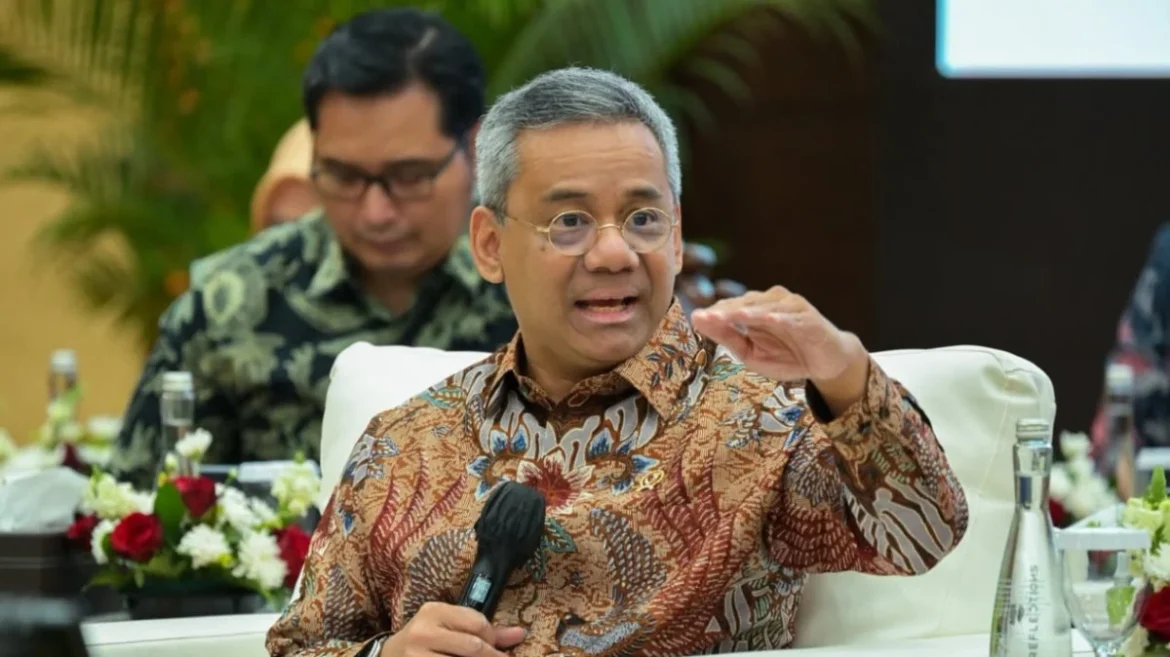
JAKARTA — The Indonesian Ministry of Finance has firmly guaranteed that legitimate claims for tax overpayments, commonly known as restitution, will be fully disbursed to business actors who comply with prevailing regulatory frameworks. This official assurance was delivered by Minister of Finance Suahasil Nazara during the September 2026 edition of the "APBN KiTa" (State Budget Performance and Facts) press conference held at the Ministry of Finance headquarters in Jakarta on Friday, September 18, 2026.
The declaration addresses lingering anxieties within the business community regarding the processing times and operational procedures surrounding tax refunds. Minister Suahasil underscored the government’s unwavering commitment to upholding taxpayer rights while simultaneously fostering a transparent and accountable fiscal ecosystem.
Commitment to Taxpayer Rights and Procedural Integrity
During the briefing, Minister Suahasil emphasized that the government views tax restitution not merely as an administrative obligation, but as a fundamental right of business entities that have fulfilled their tax duties correctly.
"If it is the right of the business actor, it will certainly be granted," Suahasil stated firmly before journalists and financial analysts.
The Minister further elaborated that the Directorate General of Taxes (DJP) operates under strict legislative mandates, ensuring that all disbursements of tax overpayments are executed in strict accordance with established tax mechanisms and regulations. He highlighted that while the Ministry actively encourages nationwide tax compliance—including the proper utilization of restitution channels where applicable—it maintains a zero-tolerance stance on arbitrary administrative delays.

To streamline this process, Minister Suahasil revealed that he has issued direct instructions to the newly appointed Director General of Taxes, Bimo Wijayanto. The directive commands the tax authority to enhance its restitution management protocols, particularly focusing on transparent communication with taxpayers to mitigate misunderstandings regarding audit timelines and disbursement schedules.
The Perspective of the Directorate General of Taxes
Echoing the Minister’s sentiments, Director General of Taxes Bimo Wijayanto explained that the administration and disbursement of tax restitutions are conducted through a selective, measured, and rigorous approach. Bimo noted that corporate tax restitution claims frequently undergo a comprehensive examination phase to verify validity and prevent fraudulent claims against the state revenue.
"Examinations naturally have standards and Standard Operating Procedures (SOPs) that must be followed. Certainly, the DJP is not in a position to violate these SOPs," Bimo explained. He stressed that meticulous auditing is a necessary safeguard to protect state finances while ensuring that legitimate claimants receive their rightful refunds without systemic corruption or undue friction.
Furthermore, Bimo outlined that future administrative policies regarding restitution will closely align with the strategic directives of Minister of Finance Suahasil Nazara. Beyond merely processing individual claims, the Directorate General of Taxes must harmonize restitution outflows with national funding priorities and broader macroeconomic considerations.
"We must also adapt to the funding requirements of ongoing national development projects. At the same time, we need to carefully manage the fiscal deficit to ensure that the posture of the State Budget (APBN) remains robust, healthy, resilient, and sustainable," Bimo added.
Understanding Tax Restitution Mechanisms in Indonesia
To provide greater clarity for taxpayers, the Directorate General of Taxes outlines specific legal conditions under which a tax restitution can be legally requested and processed. Generally, tax restitution falls into two primary categories:

- Refunds for Payments on Non-Taxable Liabilities: This scenario occurs when a taxpayer has remitted funds to the state treasury for a tax obligation that, according to prevailing statutory provisions, was never actually due or legally mandated. Such instances often arise from misinterpretations of complex tax classifications or retroactive regulatory adjustments.
- Refunds for Excess Payments on Major Tax Lines: This is the most common form of restitution, involving overpayments concerning Income Tax (Pajak Penghasilan or Pph), Value Added Tax (Pajak Pertambahan Nilai or PPN), and/or Sales Tax on Luxury Goods (Pajak Penjualan atas Barang Mewah or PPnBM). Restitution under this category can be formally submitted when the total amount of tax paid by a taxpayer during a fiscal period exceeds the actual tax liability calculated under statutory rules.
Businesses often accumulate excess Value Added Tax (PPN) credits when their input VAT—paid on purchases of raw materials, capital goods, and operational services—surpasses their output VAT collected from sales to consumers. For capital-intensive industries and export-oriented sectors, these credits can accumulate rapidly, making timely restitution a critical lifeline for maintaining corporate liquidity and operational cash flow.
Broader Fiscal Implications and Economic Context
The reaffirmation of the government’s stance on tax restitution arrives at a critical juncture for Indonesia’s macroeconomic landscape. As Southeast Asia’s largest economy navigates global economic uncertainties, maintaining a delicate balance between fiscal stimulus and budget consolidation remains paramount for the Ministry of Finance.
Business associations and chambers of commerce have historically monitored tax restitution policies closely. Delays in processing refunds can severely constrain corporate working capital, forcing businesses to rely on expensive commercial financing to cover operational shortfalls. Conversely, an overly permissive refund policy without adequate auditing risks compromising state revenues, thereby widening the fiscal deficit beyond prudent legislative thresholds.
By committing to a management approach that balances strict procedural compliance with guaranteed payouts for rightful claimants, the Ministry of Finance aims to foster a predictable and investor-friendly climate. This policy continuity is expected to bolster investor confidence, signal administrative reliability, and support ongoing national infrastructure projects without sacrificing the financial health of the private sector.
Complementary Tax Policies: E-Commerce Taxation on the Horizon
In tandem with discussions surrounding corporate tax management and restitution reforms, the Directorate General of Taxes continues to expand its regulatory reach across evolving economic sectors. During the same period, Dirjen Pajak Bimo Wijayanto highlighted upcoming structural changes in digital economy taxation, announcing that the collection of Income Tax (PPh) Article 22 on transactions conducted across digital marketplace platforms is officially scheduled to take effect starting November 1, 2026.
This impending regulation aims to create a level playing field between traditional brick-and-mortar merchants and digital storefronts, ensuring that the rapid expansion of e-commerce contributes equitably to national tax revenues. As the government modernizes its digital tax infrastructure, the parallel optimization of the restitution framework ensures that businesses operating in both traditional and digital domains can rely on a fair, efficient, and transparent tax administration system moving forward.
