
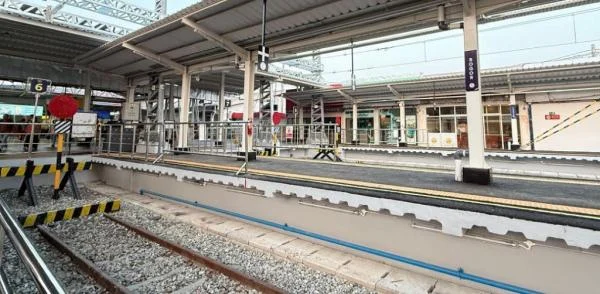
PT Kereta Commuter Indonesia, operating as KAI Commuter, has officially announced the commencement of a significant infrastructure project at Bogor Station, focusing on the installation of platform canopies, known as overcapping, on Tracks 4 and 5. This initiative is a cornerstone of the company’s broader strategy to elevate the safety, security, and overall experience of the thousands of passengers who utilize the station daily. As one of the busiest hubs in the Jabodetabek (Jakarta, Bogor, Depok, Tangerang, and Bekasi) metropolitan area, Bogor Station serves as a vital artery for the region’s workforce, making any improvement to its facilities a matter of high public interest and regional economic importance.
The construction of these canopies is not an isolated project but rather a continuation of a phased development plan designed to modernize the station’s aging infrastructure. According to Karina Amanda, the VP Corporate Secretary of KAI Commuter, the current work follows the successful completion of platform extensions and upgrades on Tracks 6, 7, and 8. These previous enhancements were critical in allowing the station to accommodate longer train formations, specifically the 12-car (SF12) Commuter Line trains, which have significantly boosted the capacity of the Bogor-Jakarta Kota line.
A Strategic Timeline for Modernization
The construction phase for the new canopies is scheduled to begin in earnest on Saturday, July 18, 2026. To facilitate the heavy engineering work required for the overcapping structure, KAI Commuter will implement temporary operational changes. Starting Monday, July 20, 2026, Tracks 4 and 5 will be temporarily closed to passenger traffic. This closure is necessary to ensure the safety of both the construction crews and the commuters, as the work involves overhead installations that cannot be safely performed while trains are actively boarding or discharging passengers on those specific tracks.
Despite the closure of two major tracks, KAI Commuter has assured the public that the impact on train schedules will be kept to an absolute minimum. During the construction period, the arrival and departure of Commuter Line trains will be redistributed across the remaining active tracks, specifically Tracks 2, 3, 6, 7, and 8. The management has emphasized that the total number of daily trips to and from Bogor Station will remain consistent with the existing timetable, ensuring that the daily flow of commuters is not disrupted.
Technical Specifications and the Necessity of Overcapping
The term "overcapping" refers to the large roof structures that span across railway platforms and tracks. In the context of Bogor Station, this is a particularly vital upgrade due to the city’s unique climatic conditions. Known as "Kota Hujan" or the City of Rain, Bogor experiences some of the highest rainfall totals in Indonesia. Without adequate canopy coverage, passengers on the platforms are frequently exposed to heavy downpours and strong winds, which not only causes discomfort but also creates safety hazards such as slippery platform surfaces.

The new canopies on Tracks 4 and 5 are designed to provide seamless protection from the elements. The engineering specifications for the project include high-durability materials capable of withstanding tropical weather cycles. By extending the overcapping, KAI Commuter aims to create a "dry-foot" environment, where passengers can transition from the station entrance to the train car without exposure to rain. This is expected to improve the efficiency of boarding and alighting, as passengers will no longer need to huddle in sheltered areas before rushing to the train doors during storms.
Historical Context and Station Evolution
Bogor Station is a site of immense historical significance. Originally opened in 1881 by the Staatsspoorwegen (the state railway company of the Dutch East Indies), it has evolved from a colonial-era terminus into a high-tech transit hub. The station building itself is a protected cultural heritage site, featuring neoclassical architectural elements that reflect its 19th-century origins.
However, the rapid urbanization of the Greater Jakarta area over the last three decades has placed immense pressure on this historic facility. In the early 2000s, the station struggled with overcrowding and inadequate facilities. The transformation began in earnest around 2013 with the introduction of electronic ticketing and the sterilization of platforms from unauthorized vendors. Since then, PT KAI and its subsidiary KAI Commuter have consistently invested in the station’s capacity.
The current canopy project represents the latest chapter in this evolution. It aligns with the Ministry of Transportation’s master plan to increase the national railway’s modal share. By making the Commuter Line more comfortable and reliable, the government hopes to encourage more private vehicle users to switch to public transit, thereby reducing the chronic traffic congestion on the jagged corridor between Bogor and Jakarta.
Supporting Data: Managing High Passenger Volumes
The scale of this project is best understood through the lens of passenger data. Bogor Station is consistently ranked among the top three busiest stations in the KRL Commuter Line network. On an average weekday, the station handles between 45,000 and 55,000 passengers. During holiday periods or long weekends, this number can surge as tourists travel from Jakarta to Bogor’s botanical gardens and culinary hotspots.
The Bogor-Jakarta Kota line is the "backbone" of the entire network. With trains departing as frequently as every 5 to 10 minutes during peak hours, the station must function with surgical precision. The addition of canopies on Tracks 4 and 5 is a proactive measure to prevent weather-related bottlenecks. When platforms are wet, the boarding process slows down by an estimated 15-20% as passengers move more cautiously, which can lead to cascading delays across the entire line. By providing a controlled environment, KAI Commuter is essentially safeguarding the punctuality of the entire network.

Official Responses and Public Sentiment
Karina Amanda’s announcement has been met with cautious optimism from passenger advocacy groups. The Indonesian Consumers Foundation (YLKI) has long called for improved facilities at major transit hubs, noting that "passenger comfort is a right, not a luxury." While the temporary closure of Tracks 4 and 5 may cause some minor confusion for occasional travelers, regular commuters have generally expressed support for the upgrades.
"We apologize for any inconvenience caused by the temporary track adjustments," Karina Amanda stated in her written communication. "However, these steps are vital for the long-term benefit of our users. We are committed to completing the work as quickly and safely as possible."
To assist passengers during the transition, KAI Commuter will deploy additional station officers and "Passenger Service" staff to guide commuters to the correct platforms. Updated signage and digital announcements will also be prioritized to ensure that the flow of people remains orderly, particularly during the morning and evening rush hours.
Broader Implications for Urban Mobility
The modernization of Bogor Station is indicative of a larger trend in Indonesian infrastructure development: the shift toward Transit-Oriented Development (TOD). As Bogor continues to grow as a satellite city, the station is becoming more than just a place to catch a train; it is becoming a focal point for integrated urban living.
The improvement of the station’s physical environment coincides with efforts to integrate the Commuter Line with other modes of transport, such as the "BisKita" Trans Pakuan bus system and local angkot (public minivans). A comfortable, well-sheltered station encourages this multi-modal connectivity. If a passenger knows they can reach their destination dry and safe regardless of the weather, the "last-mile" problem becomes much easier to solve.
Furthermore, this project reflects KAI Commuter’s resilience in the face of climate change. As extreme weather events become more frequent, upgrading transport infrastructure to withstand heavy rain and heat is no longer optional. The overcapping project is a practical application of climate adaptation, ensuring that the city’s most important transport link remains operational and safe under all conditions.

Conclusion and Future Outlook
As the construction on Tracks 4 and 5 progresses, KAI Commuter is already looking toward future enhancements. Potential plans include further digitalization of station services, the expansion of commercial areas to provide better amenities for waiting passengers, and continued efforts to make all stations in the network fully accessible to people with disabilities.
The canopy project at Bogor Station is a testament to the fact that even in a system carrying nearly a million people a day, the details matter. A roof over a platform might seem like a simple addition, but for the thousands of workers, students, and travelers who stand on those platforms every day, it represents a significant improvement in their quality of life. As July 18 approaches, the focus remains on execution—ensuring that the modernization of this historic station continues to meet the demands of a 21st-century metropolis.
By balancing historical preservation with modern engineering, KAI Commuter is ensuring that Bogor Station remains not just a relic of the past, but a functional, comfortable, and safe gateway for the future of Indonesian rail travel. The closure of Tracks 4 and 5 is a small price to pay for a facility that will serve the public for decades to come.
