
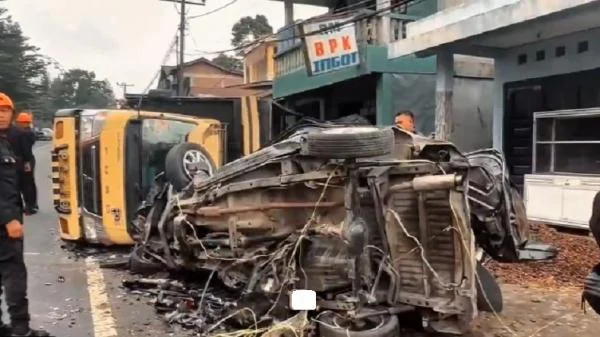
The Indonesian House of Representatives (DPR RI) is moving to tighten the regulatory framework governing the logistics and transportation sector following a devastating multi-vehicle collision in Sibolangit, North Sumatra, which resulted in four fatalities. Musa Rajekshah, a prominent member of Commission V—the parliamentary body overseeing infrastructure and transportation—announced that the commission is currently formulating a set of stringent rules designed to hold not only drivers but also vehicle owners and transport companies directly accountable for road safety violations. This legislative push aims to address the systemic negligence often found in the expedition and heavy-haulage industry, ensuring that safety protocols are no longer treated as secondary to profit margins.
The proposed regulations come as a direct response to the tragic incident that occurred on Friday, July 17, 2026, on the Medan-Berastagi route, specifically on Jalan Jamin Ginting in the Sibolangit district. The accident, which involved a large Fuso truck and several other vehicles, has once again highlighted the perilous nature of North Sumatra’s primary mountain corridors and the recurring issue of mechanical failure in heavy-duty vehicles.
The Sibolangit Tragedy: A Chronology of the Incident
The accident took place during the late afternoon on Friday, a period typically characterized by high traffic volume as commuters and tourists travel between the provincial capital of Medan and the highland retreat of Berastagi. Preliminary reports and police investigations indicate that the catastrophe was triggered by a large truck transporting gallon-sized water containers. As the vehicle navigated a steep downward gradient in the Sibolangit area, it reportedly experienced a total brake failure, known locally as "rem blong."
Unable to decelerate or control the massive weight of the vehicle, the truck barreled into a line of cars and motorcycles. The force of the impact was catastrophic, crushing several smaller vehicles and causing a chain reaction that involved multiple units. Emergency services and local residents rushed to the scene, but the severity of the wreckage made rescue efforts difficult. By the time the scene was cleared, authorities confirmed that four individuals had lost their lives, while several others sustained critical injuries and were rushed to nearby medical facilities in Medan and Deli Serdang.
Following the initial investigation, the driver of the Fuso truck was taken into custody. However, Musa Rajekshah, often referred to by his nickname Ijeck, emphasized that the blame should not rest solely on the individual behind the wheel. The investigation has pointed toward potential overloading and a lack of routine maintenance—factors that fall squarely under the responsibility of the vehicle’s owner and the operating company.
Moving Beyond Driver Liability: Corporate Accountability
A central pillar of the new proposal by Commission V is the shift toward corporate liability. Historically, in the aftermath of Indonesian road accidents, the legal system has primarily targeted the drivers. Ijeck argued that this approach fails to address the root causes of road carnage.
“In response to these accidents, we in Commission V DPR RI will suggest a firm regulation that does not only apply to the drivers of the vehicles,” Ijeck stated in an official release on Saturday, July 18, 2026. “We will provide input ensuring that owners or transport service companies also face firm action. This is to ensure that companies pay closer attention to vehicle maintenance and strictly adhere to load limits in accordance with the KIR (periodic inspection) permits of the trucks in question.”
The DPR’s stance is that if a company incentivizes or mandates its drivers to carry loads exceeding the legal limit, or if it neglects the mechanical upkeep of its fleet to save costs, the company must be held legally and financially responsible for any resulting loss of life. This could include the revocation of business licenses, heavy fines, and criminal charges for corporate executives in cases of gross negligence.
The Persistent Crisis of Over Dimension Over Loading (ODOL)
The Sibolangit accident has reignited the national debate over Over Dimension Over Loading (ODOL) vehicles. ODOL refers to trucks that have been illegally modified to increase cargo space or are loaded far beyond their rated tonnage capacity. Despite years of government promises to achieve a "Zero ODOL" status on Indonesian highways, the practice remains rampant due to the high demand for low-cost logistics.
The dangers of ODOL are particularly acute in mountainous regions like Sibolangit. When a vehicle is overloaded, its braking system is subjected to heat and pressure far beyond its design specifications. On long descents, this leads to "brake fade," where the brakes lose their effectiveness entirely. Furthermore, the altered center of gravity in over-dimensioned vehicles makes them prone to tipping on the sharp curves that characterize the Medan-Berastagi route.
Commission V has identified ODOL as a primary factor in the degradation of national road infrastructure and a leading cause of fatal accidents. The DPR plans to use the findings from the Sibolangit police investigation to bolster their argument for a more aggressive crackdown on companies that utilize ODOL vehicles. This includes a call for more rigorous and transparent KIR (Uji Kendaraan Bermotor) inspections, which are the mandatory periodic technical examinations for commercial vehicles.
Technical Oversight and the KIR Inspection System
A critical component of the proposed legislative changes involves the reform of the KIR inspection process. Currently, all commercial vehicles in Indonesia are required to undergo safety checks every six months. These checks cover braking systems, tire conditions, engine health, and structural integrity. However, Ijeck and other members of Commission V have noted that many vehicles involved in fatal crashes possess valid KIR stickers despite being visibly unfit for the road.
The DPR suggests that the current inspection system is vulnerable to manipulation and lacks the technological integration necessary for real-time monitoring. The new proposal envisions a digitalized oversight system where the results of KIR inspections are linked to a national database accessible by highway patrol and transport authorities. This would allow for the immediate identification of vehicles that have bypassed safety protocols or have been illegally modified after receiving their permits.
Furthermore, Commission V is advocating for the installation of more weigh stations (Jembatan Timbang) equipped with Weight-in-Motion (WIM) technology. This technology allows authorities to detect overloaded vehicles without requiring them to stop, significantly increasing the efficiency of enforcement along high-risk corridors like the Jalan Jamin Ginting.
The Strategic Importance of the Medan-Berastagi Route
The location of the accident adds a layer of economic and social urgency to the DPR’s proposal. The Medan-Berastagi route is one of the most vital arteries in North Sumatra. It serves as the primary conduit for agricultural products—including vegetables, fruits, and flowers—from the Karo Regency to the markets of Medan and for export through the Port of Belawan.

Additionally, Berastagi is a major tourism hub. On weekends, the road is packed with family cars, tourist buses, and motorcycles. The coexistence of heavy logistics trucks and light passenger traffic on a narrow, winding mountain road creates a high-risk environment. Every fatal accident on this route not only results in the loss of life but also causes massive traffic congestion that can paralyze the regional economy for hours.
Local residents and regular commuters have long called for stricter regulations and the construction of alternative routes, such as the proposed "Cantilevers" or a toll road, to bypass the most dangerous sections of the Sibolangit cliffs. While infrastructure projects are part of the long-term solution, Commission V believes that immediate regulatory intervention regarding vehicle safety is the most effective way to prevent further tragedies in the short term.
Data and Trends in Indonesian Road Safety
To support their legislative push, Commission V is drawing on sobering statistics regarding road safety in Indonesia. According to data from the National Police (Polri) and the Ministry of Transportation, thousands of people die annually in accidents involving heavy vehicles. A significant percentage of these incidents are attributed to mechanical failure, with "rem blong" being the most cited cause in mountainous regions.
Research indicates that the economic loss resulting from road accidents in Indonesia amounts to billions of rupiah annually, encompassing medical costs, property damage, and lost productivity. When the damage to road surfaces caused by ODOL vehicles is factored in—estimated by the Ministry of Public Works and Housing to be over IDR 43 trillion per year—the argument for strict regulation becomes an economic necessity as well as a moral one.
The DPR’s move reflects a growing consensus that the "human error" label often applied to accidents is a simplification that ignores the systemic pressures placed on drivers by their employers. By refocusing the law on the owners and the corporate structures, the government hopes to create a culture of safety where maintenance and legal loading are viewed as essential operating costs rather than optional expenses.
Collaborative Investigation and Future Deliberations
The next steps for Musa Rajekshah and Commission V involve a series of consultative meetings with the Ministry of Transportation, the National Transportation Safety Committee (KNKT), and the Indonesian National Police. The goal is to synchronize the findings from the Sibolangit crash with the broader national transport safety strategy.
"We are waiting for the full results of the investigation from the police," Ijeck concluded. "Those results will serve as our primary material for discussion in meetings with the government. We must ensure that the rules we draft are not only tough on paper but also enforceable on the ground."
The proposed rules are expected to include mandatory GPS tracking for heavy vehicles to monitor speed and driving hours, stricter penalties for KIR forgery, and a "blacklist" for transport companies that repeatedly violate safety standards. As the investigation into the Sibolangit tragedy continues, the pressure on the DPR to deliver a safer transport landscape has never been higher. The four lives lost on Jalan Jamin Ginting have become a catalyst for a long-overdue overhaul of how Indonesia manages its roads and the heavy machines that traverse them.
