
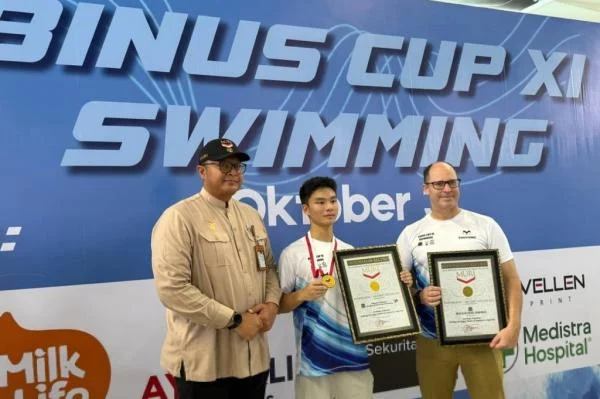
The prestigious BINUS Cup XI Swimming 2026 has officially etched its name into the history books, securing a place in the Museum Rekor-Dunia Indonesia (MURI) after successfully hosting 1,128 student participants in a high-intensity, one-day swimming competition. Held at the iconic Gelora Bung Karno (GBK) Aquatic Stadium in Jakarta on Saturday, October 31, 2026, the event served as a monumental showcase of youth sports development in Indonesia, drawing talent from across the Jabodetabek (Jakarta, Bogor, Depok, Tangerang, and Bekasi) metropolitan region.
The event, which marked the inaugural inclusion of a competitive swimming category within the long-standing BINUS Cup tradition, was the culmination of months of rigorous planning led by the students of SMA BINUS School Simprug. By mobilizing over a thousand athletes ranging from primary to senior high school levels, the organizers have set a new benchmark for student-led athletic initiatives in the country.
A Historic Achievement in Numbers
The primary catalyst for the MURI recognition was the sheer volume of participants, which significantly exceeded the organizers’ initial projections. According to official data released by the organizing committee, the event was originally designed to accommodate a target of 933 student athletes. However, following a thorough registration verification process and final headcounts conducted on the morning of the competition, the figure climbed to 1,128.
This surge in participation reflects a growing interest in competitive swimming among Indonesian youth, a trend supported by recent national successes in regional aquatic championships. The participants were divided across 41 distinct racing categories, ensuring that students of various skill levels and age groups could compete in a structured, professional environment. The competitive structure was designed to mimic professional-grade meets, utilizing the world-class infrastructure of the GBK Aquatic Stadium to ensure precise timing and fair adjudication.

The MURI Certification Ceremony
The atmosphere at the GBK Aquatic Stadium reached its peak during the official award ceremony, where the Museum Rekor-Dunia Indonesia formally recognized the achievement. Awan Rahargo, the Operational Director of MURI, presented the commemorative plaque to the event organizers amidst a crowd of cheering parents, coaches, and school administrators, including the Principal of SMA BINUS School Simprug, Aaron Wise.
During his address, Awan Rahargo emphasized the significance of the achievement, noting that the record was not merely about the number of attendees but about the organizational prowess of the students themselves. "Today, MURI records a profound achievement and a testament to the capabilities of Indonesia’s future generation," Awan stated. He specifically lauded the vision of the project’s primary initiator, Sebastian Sudirman, whose leadership and logistical coordination were instrumental in bringing the vision of the BINUS Cup XI Swimming division to life.
Chronology of the Event
The journey to the record-breaking day began several months prior, with the student committee at BINUS School Simprug initiating a city-wide outreach program. The goal was to bridge the gap between amateur school sports and professional-level competition.
- Phase 1: Planning and Outreach: Organizers initiated outreach to schools across the Jabodetabek area, focusing on institutions with established extracurricular swimming programs.
- Phase 2: Technical Preparation: The committee coordinated with aquatic associations to ensure the 41 racing categories complied with standardized regulations.
- Phase 3: Registration and Verification: Between September and mid-October 2026, registrations poured in, quickly outpacing the initial 933-participant estimate.
- Phase 4: The Event Day (October 31, 2026): The competition commenced at dawn, with a tightly packed schedule of heats and finals. The record was officially verified by MURI officials on-site after the final tally of unique participants was confirmed.
Broadening the Scope of Student Athletics
The inclusion of swimming in the BINUS Cup XI is a strategic move that aligns with broader national efforts to improve Indonesian performance in water sports. Indonesia has historically shown potential in aquatic disciplines, as evidenced by recent victories in regional competitions such as the Asian Para Games 2026, where national athletes demonstrated world-class speed and technique.
By providing a platform for younger students to compete, the organizers are effectively creating a grassroots pipeline for the next generation of competitive swimmers. The professional environment of the GBK Aquatic Stadium—the same venue used for international events—provides students with the necessary experience to handle the psychological and physical pressures of competitive sports.

Analysis: Why This Matters for Youth Development
The success of the BINUS Cup XI Swimming 2026 serves as a case study in effective student-led project management. In an era where extracurricular activities are increasingly vital for holistic education, the ability of high school students to manage a logistics-heavy operation involving over 1,000 athletes is a significant development.
From a sporting perspective, the event addresses a critical need for more frequent, high-quality local competitions. Frequent competitive exposure is essential for refining race strategies, improving personal bests, and fostering a culture of sportsmanship. With 41 categories, the competition catered to a diverse talent pool, ensuring that inclusivity was maintained alongside high-performance standards.
Furthermore, the record-breaking nature of the event provides a psychological boost to the participants. Knowing that their participation contributed to a national record adds a layer of prestige to the competition, likely encouraging more schools to invest in their respective swimming programs for future iterations of the BINUS Cup.
Official and Institutional Responses
The support from school leadership was a cornerstone of the event’s success. Aaron Wise, Principal of SMA BINUS School Simprug, highlighted that the event was a reflection of the school’s commitment to cultivating leadership and community engagement. By delegating the responsibility of organizing such a large-scale event to students, the school allowed them to navigate complex challenges, from safety regulations to event scheduling.
The success also drew attention from the wider sports community. While the focus remained on the students, the logistical success of the event provided a template for how private schools can contribute to the national sporting ecosystem. By utilizing public venues like the GBK Aquatic Stadium, the organizers successfully fostered a collaboration between private educational institutions and national sporting infrastructure.

Future Implications and Legacy
As the dust settles on the record-breaking day, the organizers are already looking toward the future. The challenge moving forward will be to sustain this momentum. The success of the 2026 edition has effectively set a high bar for future BINUS Cup events.
For the students of SMA BINUS School Simprug, the experience has provided practical skills in event management, communication, and crisis mitigation. For the participants, the event will be remembered as a milestone in their athletic development. The MURI record, while a symbolic victory, serves as a permanent marker of a day when the youth of Jakarta came together to demonstrate the power of organized athletics.
As swimming continues to grow in popularity in Indonesia, events like this are essential. They do not just produce better athletes; they produce better-organized, more disciplined, and highly motivated citizens. The legacy of BINUS Cup XI Swimming 2026 will likely be measured by the number of students who continue to pursue the sport, inspired by the camaraderie and the sense of accomplishment they felt on that October day in 2026.
In conclusion, the record-breaking achievement at the GBK Aquatic Stadium is a testament to what can be accomplished when institutional support meets student ambition. With 1,128 participants, the BINUS Cup XI has proven that the appetite for competitive swimming in Indonesia is robust and that the next generation is ready to make waves on both the national and international stage. The event stands as a landmark in the history of Indonesian student sports, paving the way for a more active, competitive, and engaged generation of young athletes.
