
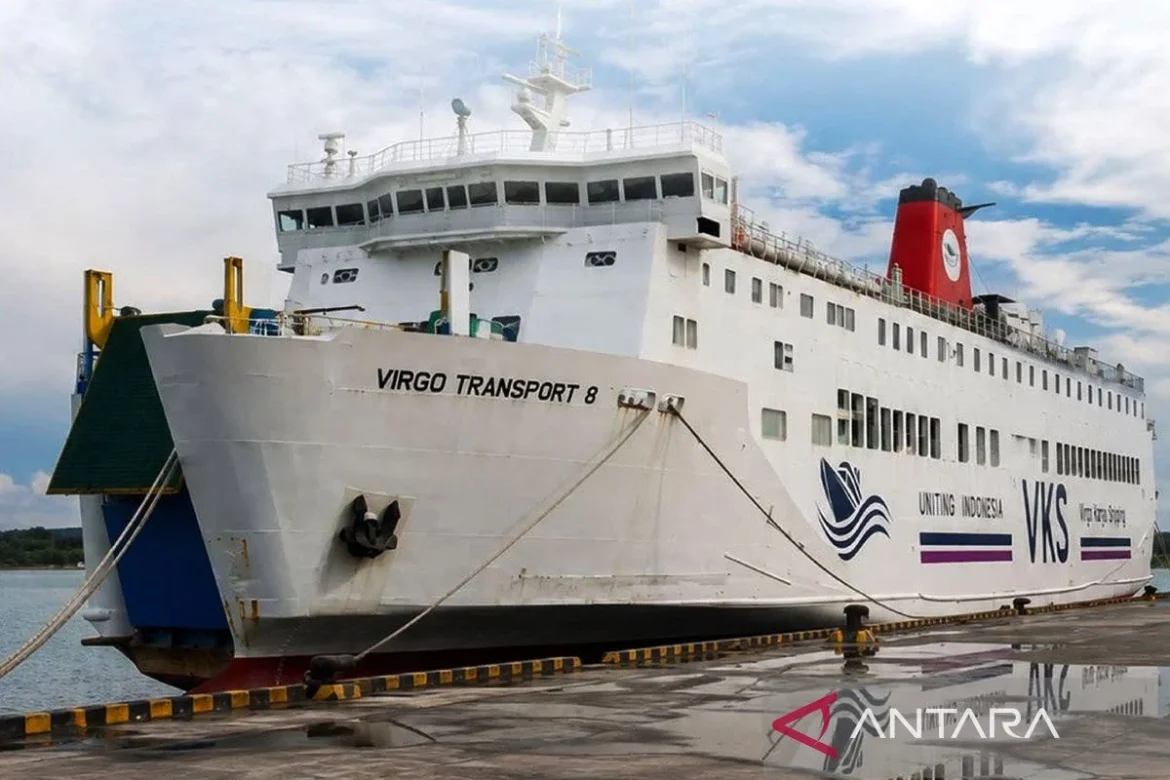
The peaceful expanse of the Java Sea transformed into a theater of maritime tragedy on Sunday, September 13, 2026, when the passenger and vehicle ferry KMP Virgo Transport 8 capsized amidst treacherous weather conditions. En route from the bustling port of Surabaya in East Java to Banjarmasin in South Kalimantan, the vessel was carrying hundreds of souls and a substantial cargo of vehicles when it encountered severe meteorological hazards that ultimately proved catastrophic. As the maritime community reels from the disaster, a massive, coordinated search and rescue (SAR) operation involving hundreds of personnel, specialized naval assets, and aviation units is racing against the clock to locate 129 individuals still missing at sea.
The incident underscores the enduring vulnerabilities of interisland maritime transport in the sprawling Indonesian archipelago, where millions rely on ferry networks to bridge vast expanses of water. With conflicting elements of severe weather, shifting cargo dynamics, and an aging hull under intense scrutiny, the sinking of KMP Virgo Transport 8 has triggered profound questions regarding safety compliance, regulatory oversight, and emergency protocols in Indonesian waters.
Vessel Profile and Manifest Details
KMP Virgo Transport 8 was a critical logistical link in the maritime corridor connecting the island of Java to Kalimantan. Operating as a roll-on/roll-off (Ro-Ro) ferry, the vessel was uniquely designed to transport not only passengers but also commercial trucks, private automobiles, and freight, thereby facilitating the vital flow of goods and commerce between the regions.
According to official manifest reports compiled following the distress call, the ferry was carrying a total of 243 people at the time of the disaster. This total comprised 213 paying passengers and 30 dedicated crew members responsible for the operation and safety of the ship. Additionally, the vessel’s cargo deck held 89 various vehicles, ranging from heavy-duty logistics transport trucks to personal cars.
Built in Japan in 1987, the vessel had a long operational history before eventually being acquired by PT Virgo Karya Shipping for deployment in Indonesian domestic waters. While maritime experts emphasize that the chronological age of a vessel does not inherently dictate its seaworthiness—provided rigorous maintenance, structural integrity checks, and adherence to safety codes are maintained—the ship’s nearly four-decade lifespan has inevitably become a point of discussion among investigators analyzing the sequence of failures that led to the capsizing.
Detailed Chronology of the Disaster
The final voyage of KMP Virgo Transport 8 began on Saturday, September 12, 2026. Departing from the port of Surabaya at approximately 10.13 GMT, the ferry initially experienced routine sailing conditions as it cleared the Java coastal waters and pushed northward into the open expanse of the Java Sea toward Banjarmasin.
However, meteorological conditions deteriorated rapidly as night fell. The region was gripped by severe weather characterized by high, churning waves and violent squalls. Recognizing the escalating peril, the vessel’s nakhoda (captain) contacted company representatives around midnight to apprise them of the worsening environmental conditions and the strain the weather was placing on the vessel.
The situation escalated from hazardous to critical in the early hours of Sunday, September 13. At approximately 02:00 WITA, the master of the vessel transmitted an urgent update reporting that the ship had developed a severe, uncorrectable list to one side. This communication would prove to be the final direct message received from the bridge before the ship plunged into complete radio silence.
The formal alarm was raised at approximately 04:10 WITA, when General Manager of PT Virgo, Yoel Rihi, contacted the Banjarmasin Class A Search and Rescue Office to report that contact with the vessel had been lost. Recognizing the gravity of the situation, the SAR office immediately activated emergency protocols, dispatching the rescue vessel KN SAR Laksmana 241 alongside mobilization orders for multi-agency assets.
Emergency Response and Multi-Agency Rescue Operations
The rescue operation launched in the wake of the disaster is one of the largest coordinated maritime SAR efforts in the region in recent years. Spearheaded by the National Search and Rescue Agency (Basarnas), the mission has drawn upon extensive inter-institutional cooperation.
Forces deployed to the search zone include personnel and assets from the Harbormaster and Port Authority (KSOP) of Banjarmasin, the Indonesian Navy (TNI AL), the Water Police (Polairud), the Banjarmasin District Navigation Office, Pelindo, and company-affiliated agents. In total, the operation has scaled up to involve approximately 622 specialized personnel utilizing 12 primary vessels, alongside strategic aerial reconnaissance support provided by military and rescue helicopters.
Swift intervention by commercial shipping in the vicinity also prevented an even greater loss of life. Notably, a Pertamina oil tanker operating in the area diverted its course to assist in the rescue efforts, successfully pulling 16 survivors from the turbulent waters and providing immediate medical stabilization and shelter.
Despite these heroic efforts, the operational environment remains exceptionally challenging. Search teams arriving at the last known coordinates discovered KMP Virgo Transport 8 floating partially submerged in a fully inverted position. The upside-down hull presents acute hazards for rescue divers, as trapped air pockets inside air-tight compartments offer slim chances of survival, while submerged wreckage obstructs underwater sweeps.
Current Status of Casualties and Missing Persons
As of the latest operational updates released on Monday, September 14, the human toll of the disaster has come into stark focus, even as uncertainty clouds the fate of those still unaccounted for.
Out of the 243 individuals aboard, search teams have successfully rescued 108 survivors, many of whom are receiving medical treatment for hypothermia, shock, and saltwater ingestion at regional healthcare facilities. Tragically, confirmation has been received that six individuals perished in the disaster, their remains recovered by rescue vessels and transported for identification and subsequent repatriation to their grieving families.
The remaining 129 individuals—comprising a mix of passengers and crew members—are still officially classified as missing. The primary focus of the hundreds of rescue workers combing the Java Sea remains concentrated on locating these survivors, utilizing surface sweeps, sonar scanning, and aerial spotters to scour expanding drift models generated by local currents and wind patterns.
Regulatory Scrutiny and Investigation into Causes
As the rescue phase continues, preliminary inquiries into the root causes of the capsizing have already commenced. While eyewitness accounts from survivors and initial operational logs point directly to the severity of the weather and high-impact wave action, maritime safety experts caution against drawing premature conclusions before a comprehensive forensic investigation is finalized.
Investigators from the National Transportation Safety Committee (KNKT) and maritime authorities are expected to examine a multifaceted array of contributory factors. These include:
- Meteorological Data: Analyzing satellite telemetry and weather forecasts to determine whether gale warnings were issued in a timely manner and whether the vessel should have been cleared to depart or ordered to seek shelter.
- Cargo Stowage and Integrity: Assessing whether the 89 vehicles secured on the lower deck shifted violently amid heavy rolling, which could rapidly compromise the ship’s center of gravity and induce an irreversible list.
- Watertight Integrity: Evaluating the condition of hull doors, ventilation shafts, and cargo bay seals to ascertain how quickly water flooded the internal compartments once the ship began listing.
- Compliance and Certification: Reviewing the ship’s maintenance logs, statutory safety certifications, and life-saving appliance readiness to ensure adherence to international and domestic maritime standards.
Broader Implications for Indonesian Maritime Safety
The capsizing of KMP Virgo Transport 8 serves as a sobering reminder of the inherent risks associated with maritime transit in tropical waters prone to sudden, violent meteorological shifts. Beyond the immediate grief inflicted upon the families of the victims, the incident is anticipated to prompt rigorous policy debates regarding the modernization of Indonesia’s interisland ferry fleet.
Stakeholders within the transportation sector are increasingly calling for enhanced satellite tracking systems, stricter enforcement of weather-related sailing bans, and accelerated fleet renewal programs to phase out older tonnage. Furthermore, the disaster highlights the critical need for enhanced passenger manifest accuracy, which has historically complicated rescue efforts by obscuring the exact number of souls aboard interisland vessels.
For now, the immediate priority of the Indonesian government, local authorities, and the dedicated personnel on the frontline remains resolute: to exhaust every available resource in the relentless search for the 129 missing individuals, offering closure to families suspended in agony while upholding the highest tenets of maritime solidarity and service.
