
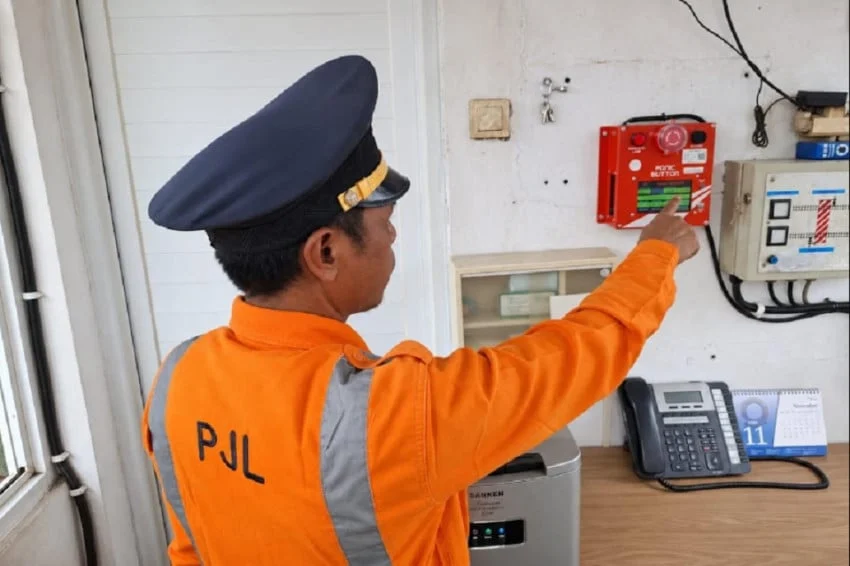
PT Kereta Api Indonesia (Persero) Daerah Operasi 1 Jakarta has completed the strategic installation of 94 panic button units across various level crossings within its operational jurisdiction. This infrastructure initiative, which concluded on November 24, 2026, represents a significant technological upgrade designed to mitigate the risks of collisions and improve emergency response times ahead of the peak travel season for Christmas 2026 and New Year 2027 (Nataru). As rail traffic density is expected to spike during this period, the deployment of these devices underscores a shift toward proactive, technology-driven safety protocols in Indonesia’s railway operations.
Understanding the Technological Framework
The panic button system is not merely a standalone alarm but an integrated network comprising three primary technical components. First, the physical panic button is strategically mounted at level crossings, accessible to crossing guards or authorized personnel. Second, the "Loco Alert" system functions as the receiver within the locomotive cab, providing immediate visual and audible notifications to the train engineer (masinis). Finally, a centralized dashboard monitoring system allows the Operations Control Center (OCC) to track the activation of any device in real-time.
This system addresses a critical vulnerability in railway operations: the "reaction gap." In the event of a vehicle stalling on the tracks or an obstruction blocking the path of an oncoming train, every second is vital for the train crew to engage emergency braking systems. By digitizing the alert process, KAI Daop 1 has replaced manual reporting—which was historically prone to communication delays—with a near-instantaneous transmission of data directly to the cockpit.
Chronology of Implementation and Safety Planning
The project was executed in phases throughout 2026, culminating in the final installations in late November. The timing of this completion is deliberate, aligning with the national directive to ensure the safety of the annual Nataru transport window.
- Q1 2026: KAI conducted risk assessments across its network to identify high-traffic, high-risk level crossings, particularly those lacking automated barriers or those situated near busy urban intersections in the Greater Jakarta area.
- Q2-Q3 2026: Procurement and pilot testing of the Loco Alert systems were carried out to ensure compatibility with existing rolling stock and signal infrastructure.
- October 2026: Installation commenced at major crossings with the highest historical frequency of near-miss incidents.
- November 24, 2026: The final units were installed and integrated into the central monitoring system, marking the completion of the 94-unit deployment.
Official Perspectives on Operational Safety
Franoto Wibowo, Manager of Public Relations for KAI Daop 1 Jakarta, highlighted the necessity of this technology during a press briefing on November 28, 2026. "When a critical condition occurs at a level crossing, the speed at which information reaches the train driver is paramount. The Panic Button system ensures that the driver is alerted immediately, providing the necessary window of time to initiate emergency procedures according to established safety protocols," Wibowo stated.
Industry analysts suggest that this development reflects a broader modernization trend within KAI. By reducing reliance on verbal communication over radio channels—which can be congested during emergencies—KAI is moving toward a system of automated safety buffers. This is particularly relevant given the complex geography of Jakarta’s rail network, where hundreds of crossings intersect with dense vehicular traffic, often leading to human error or mechanical failure of vehicles at the worst possible moments.
Statistical Context and Accident Mitigation
The prevalence of accidents at level crossings remains a primary safety challenge for KAI. Historical data indicates that the majority of rail-related accidents in Indonesia occur at crossings, often involving private vehicles. While human behavior, such as ignoring warning signals or trying to beat the closing gates, is a frequent factor, infrastructure limitations have historically exacerbated these incidents.
The installation of 94 units acts as a force multiplier for safety. By providing an additional layer of protection, KAI aims to reduce the "black box" nature of crossing incidents. Prior to this, if a vehicle stalled, the crossing guard had to rely on manual flag signals or radio contact with the station, both of which are slower than an automated system that alerts the driver directly in the cab.
Broader Implications for Rail Infrastructure
The move to install panic buttons is part of a wider incentive program for the 2026-2027 holiday season. Beyond the technical hardware, KAI has been working on improving overall service quality, including ticket incentives and improved scheduling. However, the focus on the panic button highlights that safety remains the cornerstone of the operator’s operational philosophy.
The implications of this system are twofold:
- Operational Accountability: The central dashboard monitoring ensures that every time a button is pressed, the event is logged. This provides KAI with data on which crossings are the most "active" in terms of emergency alerts, allowing for better future infrastructure planning, such as the construction of flyovers or underpasses.
- Increased Public Trust: As the volume of travelers increases during the Nataru season, the perception of safety is crucial. Visible safety measures, such as these buttons, provide a psychological safeguard for the public, reinforcing the reliability of rail as a preferred mode of mass transit.
Challenges and Future Considerations
While the installation of 94 panic buttons is a commendable step forward, experts in transport safety argue that this technology must be paired with continuous public awareness campaigns. A button, however advanced, is only as effective as the person who presses it. There is a need for continuous training of crossing guards and, ideally, the integration of automated sensors that can detect an obstruction on the tracks without human intervention.
Furthermore, the integration of these buttons into the existing signaling system is a complex task. Ensuring that the Loco Alert system remains reliable in all weather conditions and that there is no "alarm fatigue" among drivers is essential. KAI must maintain a rigorous maintenance schedule to ensure that these devices do not fail at the critical moment, as a false sense of security could be as dangerous as having no system at all.
Economic and Logistical Impact
The cost of implementation, while significant, is viewed as a necessary investment in protecting rolling stock and, more importantly, human life. A single derailment caused by a collision at a level crossing can lead to millions of dollars in damages, not including the loss of life and the immense disruption to the national transport network. By investing in preventative measures, KAI is effectively minimizing the potential for massive economic losses during the busiest travel period of the year.
The Nataru period typically sees a surge in ridership that tests the limits of the rail infrastructure. With the addition of the Panic Button system, Daop 1 Jakarta is signaling that it is better prepared for the 2026-2027 season than in previous years. The readiness of these systems will be monitored closely by the Ministry of Transportation, which has been pushing for stricter safety standards across all modes of public transit.
Conclusion
The completion of the 94-unit panic button project by PT KAI Daop 1 Jakarta marks a pivotal moment in the modernization of Indonesian railway safety. By bridging the communication gap between the track and the locomotive, KAI is positioning itself to handle the upcoming holiday travel surge with greater confidence. As the rail network continues to expand and serve as the backbone of regional connectivity, such technological interventions will remain essential. The success of this system will likely serve as a blueprint for other operational regions across the Indonesian archipelago, potentially leading to a national rollout of similar alert systems.
For the traveling public, these measures are a tangible assurance that safety protocols are evolving alongside the increasing demand for rail travel. As the 2026-2027 holiday season approaches, the focus now shifts to the effective utilization of these tools and the continued commitment of KAI to maintaining the highest standards of operational integrity in the face of ever-increasing passenger demands.
