
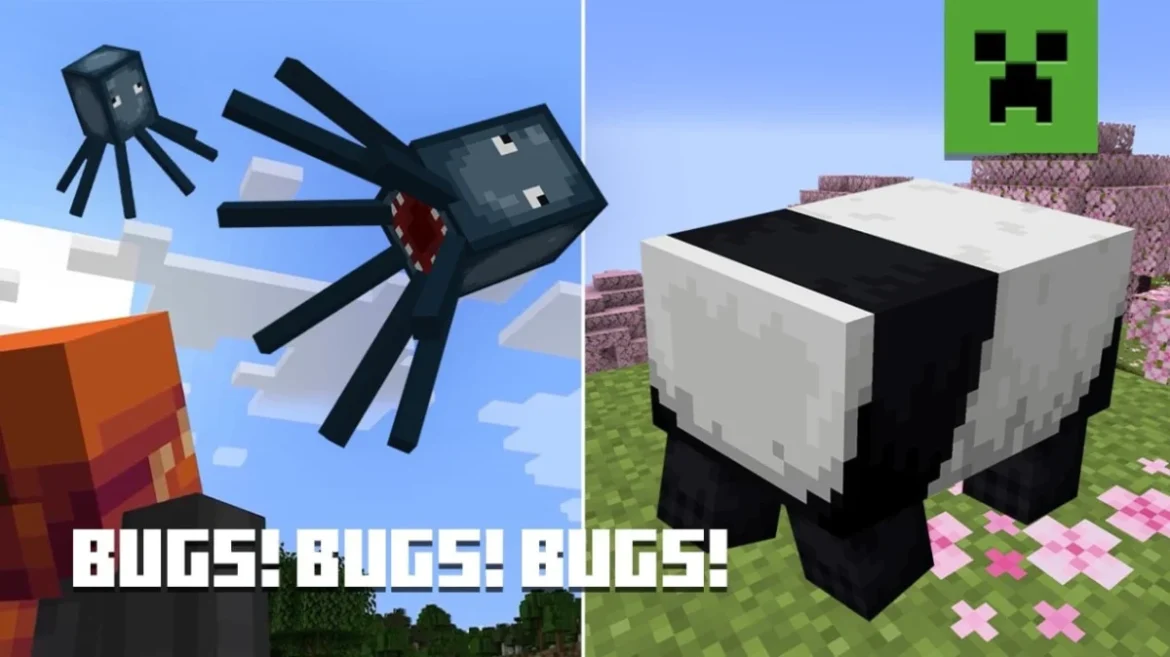
Minecraft, the sandbox phenomenon developed by Mojang Studios, has maintained its status as the best-selling video game of all time, with over 300 million copies sold as of late 2023. Its procedural generation, infinite world-building capabilities, and intricate redstone mechanics have created a digital ecosystem of unparalleled scale. However, the very complexity that allows players to construct sprawling metropolises and complex logic gates also makes the game susceptible to technical irregularities. As of September 10, 2026, the community and developers continue to navigate the persistent challenge of bugs and glitches that periodically disrupt the intended gameplay experience.
The Complexity of Sandbox Architecture
At its core, Minecraft operates on a complex mathematical engine that renders terrain, manages entities, and calculates light levels in real-time. Because the world is generated procedurally, the game must make millions of decisions every second. When these algorithms encounter unexpected variables, the result is a "bug"—a technical anomaly that can manifest as anything from a minor graphical flicker to a game-breaking crash.
Mojang Studios utilizes a public bug tracking system known as the Minecraft Issue Tracker. This database serves as the frontline for community reporting, where hundreds of thousands of players catalog anomalies. For the development team, these reports are critical for maintaining the stability of the game across its various platforms, including Java Edition and Bedrock Edition. While many bugs are harmless, some significantly impact the core gameplay loop, forcing developers to prioritize patches in their routine update cycles.
1. The Persistence of Mob Behavior Bugs
Mob AI (Artificial Intelligence) remains a common source of technical errors. Mobs in Minecraft are programmed with state machines that determine how they react to the environment, players, and other entities. When these states conflict, the mob’s behavior becomes erratic.
Historical data from the Minecraft issue logs highlights persistent problems, such as hostile mobs—like zombies or skeletons—attempting to engage players even when the game is set to Creative Mode, where the player is technically immune to damage. Another notable instance involved "trader llamas," which would occasionally vanish or desync when tethered to a Wandering Trader. These bugs, while often humorous to the observer, represent a fundamental disconnect in the game’s entity management system.
2. Anomalies in Mob Spawning Logic
Mob spawning is governed by strict light level requirements, biome constraints, and regional density caps. When these conditions are improperly calculated, the result is an imbalance in the game’s difficulty. During the development of the 1.18 "Caves & Cliffs" update, which overhauled world generation, Mojang documented several instances where passive mobs—such as sheep, cows, and pigs—failed to spawn in areas where they were intended to populate.
Furthermore, biome-exclusive mobs sometimes ignore their environmental triggers. This leads to scenarios where rare mobs fail to appear in their designated habitats, potentially breaking the progression for players seeking specific loot or materials. The difficulty for developers lies in the fact that spawning algorithms are tied to the terrain, meaning a change in one system often triggers a ripple effect in the other.
3. World Generation Glitches and Terrain Corruption
World generation is perhaps the most computationally demanding aspect of Minecraft. By utilizing Perlin noise functions, the game constructs mountains, river valleys, and underground caverns on the fly as the player explores. Because the world is theoretically infinite, the game must "load" chunks of data constantly.
Historically, the community has seen significant bugs involving cave generation, where terrain fails to carve correctly, leading to "floating" water or lava pools that defy gravity. Additionally, the formation of dripstone structures outside of their intended cave biomes has been a frequent point of frustration. These errors are not merely aesthetic; they can disrupt the structural integrity of a player’s base or lead to dangerous hazards in exploration-heavy modes.
4. Structural Discontinuities and Chunk Borders
Minecraft’s world is divided into 16x16x256-block "chunks." When these chunks are generated at different times, errors can occur at the borders. A prominent example involves shipwrecks and mineshafts that appear to be "cut in half" or fused with unrelated terrain.
When a structure is generated across a chunk boundary, the game may inadvertently assign different metadata to each half. This can result in a ship appearing as two distinct variations, or a mineshaft suddenly terminating against a wall of solid stone. This issue highlights the limitations of the game’s segment-based loading system, which remains a primary focus for Mojang’s optimization patches.
5. The Mechanics of Chunk Corruption
Beyond simple structural errors, "chunk corruption" is a more severe technical failure. This occurs when the data defining a specific area of the world is overwritten or lost. For players, this results in a "void" where the world simply ceases to exist, or a sudden revert to a previous state of the terrain.
Historically, this has been linked to improper saving processes, particularly when a game crashes during an autosave. While Mojang has implemented robust recovery systems, the risk of data loss in a procedurally generated environment remains a challenge that requires constant refinement of the file management architecture.
6. Redstone and Logic Gate Malfunctions
Redstone is the heart of engineering in Minecraft, allowing for everything from simple automated doors to functional computers. However, because redstone signals propagate through the game’s update ticks, it is highly susceptible to timing-related bugs.
"Quasi-connectivity" is perhaps the most famous example—a quirk where blocks are powered by a source that isn’t physically adjacent to them. While some players have adopted this as a feature, it remains a bug that complicates the design of reliable contraptions. Unexpected behavior in redstone signal transmission can cause machines to stop functioning after a world reload, forcing engineers to troubleshoot complex wiring that should, by all accounts, be functioning correctly.
7. Inventory and Item Desync Issues
In multiplayer environments, inventory management is crucial. Bugs related to item synchronization often cause players to lose hard-earned resources. This occurs when the server’s state of a player’s inventory fails to match the client’s version.
In the past, items placed in chests or dropped on the ground would occasionally disappear or duplicate during high-latency periods. These synchronization bugs represent a significant hurdle for server administrators, who must balance the demands of hundreds of concurrent users against the limitations of the server’s processing power.
8. Lighting Engine Inconsistencies
The lighting engine in Minecraft is responsible for determining visibility and mob spawning, but it is notoriously prone to errors. Players frequently encounter "shadow glitches," where an area appears dark even when fully illuminated by torches or natural sunlight.
These lighting bugs are often caused by the game failing to recalculate light levels after a block update. While often just a visual nuisance, these glitches can lead to unintended mob spawns in player-protected areas, creating a tangible threat to the player’s safety and base security.
9. Interaction Bugs with Non-Player Entities
Beyond mobs, Minecraft features various non-player entities like minecarts, boats, and armor stands. These objects often suffer from "clipping" issues, where they pass through solid blocks or become trapped inside terrain geometry.
These bugs are particularly problematic for transit systems. A minecart that clips through a track can derail an entire automated logistics chain. As Mojang continues to update the game, ensuring that entity hitboxes and movement physics remain consistent across various hardware platforms remains a priority for the development team.
10. Performance and Crash-Inducing Bugs
Finally, there are the bugs that cause the game to crash entirely. These are usually related to memory leaks or stack overflows where the game attempts to process more information than the allocated RAM can handle.
Large-scale projects, such as massive automated farms or complex redstone builds, can inadvertently trigger these crashes by putting too much load on the game’s processing thread. Mojang’s technical support teams analyze these crash logs to identify which specific entities or blocks are causing the failure, often resulting in "hotfixes" that limit the number of entities that can exist in a single chunk or optimize the way the game handles complex object calculations.
The Broader Impact and Industry Context
The existence of these bugs serves as a testament to the sheer ambition of Minecraft. In the broader gaming industry, few titles offer the same degree of freedom, which inherently carries the risk of instability. Mojang Studios has adopted an open approach, frequently acknowledging these issues through their "Bug of the Week" features or detailed patch notes.
From a development perspective, the challenge is not just to fix bugs, but to ensure that the "fix" does not break other interconnected systems. The Minecraft community has shown remarkable resilience, often finding "workarounds" for known bugs, which in turn informs Mojang’s development trajectory. As the game enters its next decade, the focus remains on stabilization, performance optimization, and the delicate balance of preserving the "feel" of a game that has become a digital home for millions. For the average player, understanding these bugs is not just about frustration management; it is a way to better understand the complex, ever-evolving architecture of the world they are building.
