
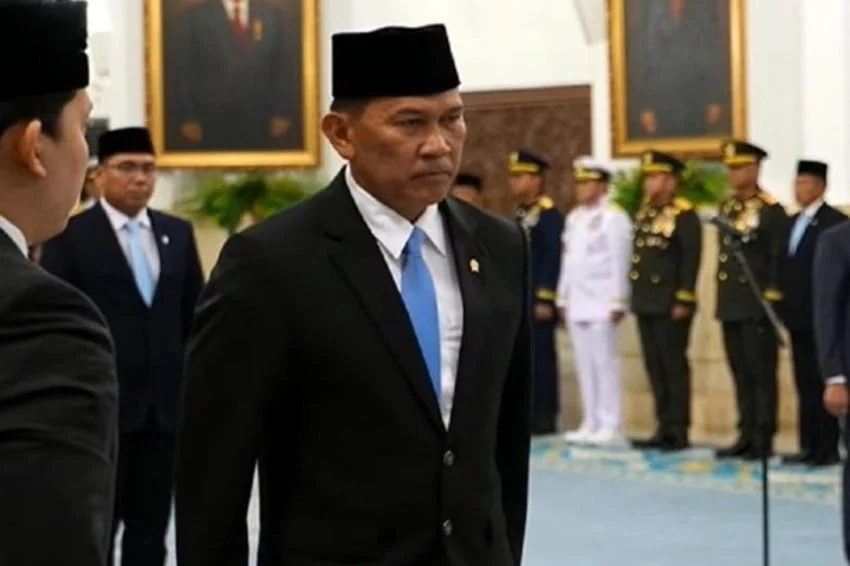
The National Disaster Management Agency (BNPB) has formally announced a comprehensive institutional overhaul following a high-profile sting operation conducted by the Corruption Eradication Commission (KPK). The corruption probe, which sent shockwaves through the disaster relief sector, has prompted the agency’s leadership to initiate strict preventative measures, stringent financial audits, and a cultural realignment aimed at restoring public trust. Head of BNPB, Lieutenant General TNI Kristomei Sianturi, stated that the agency is fully committed to eradicating illicit practices, enforcing absolute transparency, and rebuilding a clean institutional framework capable of managing national emergencies without compromising integrity.
The sweeping internal cleanup comes in the wake of an Enforcement Operation (OTT) executed by Indonesia’s anti-graft body. The operation directly targeted senior administrative officials within BNPB, most notably Principal Secretary (Sestama) Rustian, who was subsequently taken into custody and questioned at the KPK headquarters in Jakarta. The involvement of a high-ranking bureaucrat responsible for day-to-day administrative operations and budgetary executions has exposed vulnerabilities in how emergency funds and logistical procurement are managed during both crisis responses and non-emergency periods.
Chronology of the Crisis and the KPK Sting Operation
The events leading up to the current institutional overhaul began to unfold late last month when KPK investigators gathered actionable intelligence regarding alleged illicit financial transactions, kickbacks, and procurement irregularities within BNPB. The anti-graft commission tracked suspicious communications and financial movements tied to disaster mitigation contracts and operational funding allocations.
On the day of the operation, KPK operatives moved swiftly across several locations in Jakarta, apprehending several individuals suspected of involvement in corrupt practices related to state budget utilization. Among those ensnared in the dragnet was Sestama BNPB Rustian. Following his detention, Rustian was transported directly to the KPK Red and White Building for intensive questioning. True to the protocol of high-profile detentions, the senior official maintained silence as he navigated a scrum of journalists upon leaving the KPK facility, further escalating public interest and media scrutiny over the case.
The swift actions of the anti-graft commission prompted an immediate emergency response from the military and civilian leadership at BNPB. Recognizing the severe reputational damage and the critical necessity of maintaining public confidence—especially given the agency’s frontline role in safeguarding millions of Indonesian citizens from natural disasters—Lieutenant General Kristomei Sianturi convened emergency leadership sessions to formulate an immediate containment and corrective strategy.
The 100-Day Consolidation Plan: Clean, Prepared, Connected
To systematically address the institutional flaws exposed by the KPK investigation, BNPB has rolled out an aggressive 100-day internal consolidation program. This strategic framework is built upon three foundational pillars: "Clean" (Bersih), "Prepared" (Siaga), and "Connected" (Terhubung).
The "Clean" pillar focuses heavily on financial integrity, asset declaration audits, and the rigorous screening of personnel involved in procurement and supply chain management. This involves stripping away opportunities for rent-seeking behavior and introducing automated tracking systems for all expenditures.
The "Prepared" pillar ensures that while administrative and legal housekeeping is actively taking place, the agency’s operational readiness to respond to natural disasters—such as earthquakes, floods, volcanic eruptions, and landslides—remains uncompromised. BNPB leadership has emphasized that internal investigations must not hinder the primary humanitarian mandate of saving lives and coordinating swift emergency relief across the archipelago.
The "Connected" pillar addresses bureaucratic silos by improving communication channels between central offices, regional disaster management agencies (BPBD), and external oversight bodies. By fostering an environment of open communication, BNPB aims to dismantle the opaque decision-making pathways that historically allowed administrative abuses to go unnoticed.

Comprehensive Evaluation of Procurement and Budgetary Governance
At the core of BNPB’s reform agenda is a rigorous, top-to-bottom evaluation of institutional governance, procurement mechanisms, and budget execution protocols. Government agencies tasked with managing large sums of emergency funds are frequently exposed to fast-tracked procurement processes, which, while necessary during sudden-onset disasters, have historically created loopholes exploited by corrupt actors.
Lieutenant General Kristomei Sianturi highlighted that the agency is rewriting its standard operating procedures (SOPs) for goods and services procurement. These updated guidelines are designed to eliminate discretionary loopholes, enforce stricter vendor verification processes, and mandate multi-layered approval chains that require verifiable digital trails for every rupiah spent.
"The restructuring of our internal workflow mechanisms is being implemented systematically to ensure that every level of the BNPB operating system functions with total transparency and strict accountability," Kristomei stated during a press briefing in Jakarta. By embedding digital oversight into the administrative framework, the agency seeks to deter potential offenders and provide clear audit trails for external regulatory bodies, including the Supreme Audit Agency (BPK) and the Financial and Development Supervisory Agency (BPKP).
Strengthening Internal Oversight: The Role of the Inspectorate
A critical component of BNPB’s preventative strategy involves empowering the agency’s Inspectorate General to act as a proactive watchdog rather than a reactive administrative unit. Historically, internal inspectorates within many government ministries and non-ministerial agencies have suffered from a lack of independence or adequate investigative teeth.
Under the new directives, the Inspectorate Utama BNPB has been granted expanded mandates to conduct unannounced audits, monitor procurement bidding processes in real-time, and establish secure whistleblowing channels for agency employees who report financial misconduct. Whistleblower protection protocols are being reinforced to guarantee that staff members can flag irregularities without fear of professional retaliation or intimidation.
Furthermore, BNPB is collaborating closely with external governance watchdogs and legal experts to review past contracts and ongoing projects initiated prior to the KPK sting operation. Any contracts flagged for potential inflated pricing, non-delivery of goods, or conflict of interest are being subjected to immediate legal review and potential cancellation.
Broader Implications for Disaster Management and Public Trust
The scandal and subsequent cleanup at BNPB carry profound implications for Indonesia’s broader governance landscape. As a nation geographically situated along the Pacific Ring of Fire, Indonesia faces a perpetual array of natural hazards. The efficient, uncorrupted deployment of disaster relief funds is a matter of national security and humanitarian urgency. When corruption infiltrates disaster management agencies, the ultimate cost is borne by vulnerable communities who receive substandard emergency supplies, delayed logistical support, or compromised infrastructure resilience.
Civil society organizations and anti-corruption watchdogs have welcomed BNPB’s swift acknowledgment of the crisis and its commitment to transparency. However, analysts emphasize that true reform cannot be achieved through rhetoric or short-term administrative adjustments alone. Sustained cultural change, strict judicial follow-through on the individuals implicated in the KPK investigation, and the continuous monitoring of procurement pipelines will be essential to restoring institutional credibility.
The ongoing legal proceedings against Sestama Rustian and other potential co-conspirators will serve as a critical litmus test for the independence and efficacy of Indonesia’s anti-corruption framework. As the KPK continues its multifaceted investigation into the flow of illicit funds, the public and international donors will be closely watching how BNPB navigates this delicate transitional phase.
Ultimately, Lieutenant General Kristomei Sianturi’s leadership during this turbulent period will dictate whether the agency emerges from the scandal as a more resilient, transparent, and trusted pillar of public service, or remains burdened by the systemic vulnerabilities of the past. The success of the 100-day consolidation program and the ongoing internal purge will establish a vital benchmark for accountability across all Indonesian government institutions tasked with managing public funds during national crises.
