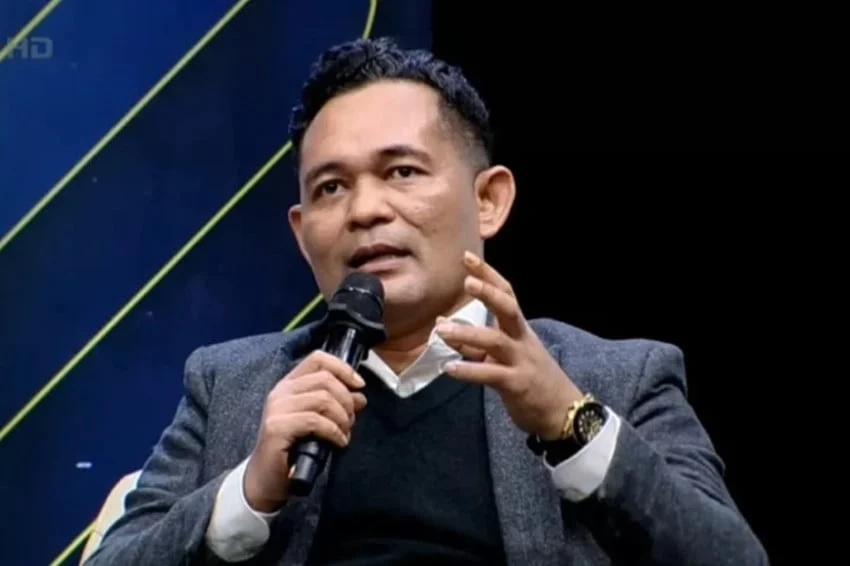
The recent appearance of Indonesian National Police (Polri) Chief General Listyo Sigit Prabowo at the Grand Consolidation of the Federation of Indonesian Metal Workers Unions (FSPMI) in Bekasi Regency, West Java, has drawn widespread acclaim from political and legal analysts. Prominent observer Boni Hargens has publicly lauded the police chief’s proactive engagement, interpreting it as a definitive signal of the National Police’s unwavering commitment to modern community policing and the operationalization of the Presisi framework—Predictive, Responsibility, and Transparency-seeking—as a vital catalyst for national security.
The high-profile event, which brought together thousands of industrial laborers, union representatives, and security stakeholders, serves as a pivotal moment in contemporary Indonesian labor relations. By stepping directly into the heart of union activity, General Listyo Sigit Prabowo demonstrated a paradigm shift within the police force: transitioning from a traditional, reactive security apparatus to a collaborative partner deeply integrated into the fabric of civil society. This comprehensive report examines the background, implications, and broader macroeconomic context of the Kapolri’s landmark visit, analyzing how security and labor dynamics intersect in Southeast Asia’s largest economy.
Background and Context: Labor Dynamics in Bekasi Industrial Hubs
Bekasi Regency, located in the densely populated West Java province, stands as the industrial heartbeat of Indonesia. Housing some of the largest manufacturing zones in Southeast Asia, including Cikarang and Jababeka, the region accommodates thousands of domestic and multinational corporations ranging from automotive assembly plants to electronics and heavy machinery manufacturing. Consequently, Bekasi is home to hundreds of thousands of industrial workers and represents the epicenter of the Indonesian labor movement.
For decades, the relationship between industrial employers, government regulators, and labor unions in this region has experienced periodic friction. Issues concerning minimum wage adjustments, outsourcing regulations, severance compensation, and workplace safety standards frequently trigger intense negotiations and, at times, large-scale industrial strikes or mass demonstrations. In high-stakes environments like Bekasi, the potential for social unrest carries significant economic implications, directly impacting foreign direct investment (FDI), national supply chains, and investor confidence.
Historically, state security interventions in labor disputes were predominantly focused on maintaining public order through containment and crowd control, a dynamic that occasionally exacerbated tensions between workers and law enforcement authorities. The shift toward a more collaborative and preventative security strategy has therefore become an urgent priority for both the government and industrial stakeholders seeking sustainable economic growth.
The FSPMI Grand Consolidation Event and Strategic Significance
Against this complex backdrop, General Listyo Sigit Prabowo’s attendance at the FSPMI Grand Consolidation marked a departure from standard bureaucratic and law enforcement protocols. Rather than monitoring the massive gathering from a distance or deploying personnel solely for perimeter security, the Kapolri directly addressed the assembly of metalworkers, fostering an environment of open dialogue and mutual respect.
Political and legal analyst Boni Hargens emphasized that the police chief’s presence carried profound symbolic and practical weight. According to Hargens, the visit transcended mere ceremonial protocol, establishing a clear institutional determination by Polri to bridge historical divides between the state apparatus and the labor movement.
"The consolidation of business owners, laborers, government officials, and industrial estate managers is the primary modal factor in creating a conducive economic climate within the industrial world," Hargens stated, highlighting the interdependent nature of national security and labor welfare.
By engaging directly with union members, General Listyo Sigit Prabowo reinforced the core tenets of community policing—a philosophy that redefines citizens not merely as subjects of regulation or targets for crowd control, but as strategic partners in maintaining public safety and regional stability. This approach recognizes that stable labor relations and secure industrial zones are mutually reinforcing objectives.
Operationalizing the Presisi Paradigm in Labor Relations
At the heart of General Listyo Sigit’s leadership tenure has been the implementation of the "Presisi" operational framework, an acronym translating to Predictive, Responsibility, and Transparency-seeking (Prediktif, Responsibilitas, dan Transparansi Berkeadilan). Introduced upon his ascension to the role of Kapolri, the Presisi doctrine aims to modernize the Indonesian National Police through data-driven forecasting, accountability in public service, and equitable law enforcement.
The event in Bekasi served as a case study for the practical application of the Presisi model within the realm of labor economics and industrial security:
- Predictive Policing: By engaging directly with union leadership and workers before potential disputes escalate into disruptive street protests, Polri leverages intelligence and direct communication to anticipate grievances, identify systemic pain points, and preemptively facilitate dialogue between employers and employees.
- Responsibility: The proactive stance of the national police leadership signals accountability not only to the state and corporate entities but equally to the working class, ensuring that the constitutional rights of peaceful assembly and expression are protected while maintaining public order.
- Transparency-Seeking: Open engagement helps dismantle historical perceptions of police bias during labor negotiations, fostering an environment of trust where all stakeholders—unions, management, and law enforcement—operate under transparent and predictable rules of engagement.
This philosophical evolution aligns closely with recent messaging from the national leadership directed at the corporate sector. Notably, General Listyo Sigit has consistently urged business owners and corporate executives to view their workforce not merely as operational expenses or replaceable labor units, but as valuable organizational assets, strategic partners, and integral members of the broader corporate family.
Economic Implications and Stakeholder Reactions
The broader economic implications of enhanced cooperation between law enforcement, labor unions, and industrial management are profound. Indonesia continues to pursue aggressive economic development targets, aiming to attract robust foreign investment, expand its domestic manufacturing capabilities, and integrate further into global supply chains.
Economists and labor experts note that foreign investors evaluate destination markets based not only on tax incentives and infrastructure availability, but also on sociopolitical stability and predictability. Industrial disputes that result in prolonged strikes, factory shutdowns, or civil unrest represent major risk factors for international corporations. Conversely, an industrial sector characterized by cooperative labor-management relations and proactive, mediation-oriented policing provides a highly attractive investment climate.
Reactions from various sectors following the Kapolri’s address at the FSPMI gathering have been largely positive:
- Labor Unions: Representatives from the Federation of Indonesian Metal Workers Unions expressed cautious optimism, viewing the high-level engagement as recognition of their legitimate role as economic stakeholders. Open channels of communication reduce the likelihood of heavy-handed interventions during peaceful advocacy campaigns.
- Corporate and Business Associations: Industry associations have welcomed initiatives that promote stability in key manufacturing hubs. Business leaders recognize that predictable security management and minimized operational disruptions safeguard productivity and protect capital investments.
- Government Regulators: Manpower ministries and regional authorities view the collaboration as a welcome complement to statutory labor mediation processes, easing the burden on administrative dispute-resolution mechanisms through community-level trust-building.
Chronology of Modern Police Reform and Community Engagement
To fully understand the significance of the recent event in Bekasi, it is helpful to review the trajectory of recent reforms within the Indonesian National Police under the leadership of General Listyo Sigit Prabowo:
- January 2021: General Listyo Sigit Prabowo outlines the "Presisi" transformation roadmap during his confirmation hearing before the House of Representatives (DPR), emphasizing modernization, human rights protection, and public trust.
- 2021–2022: Throughout the post-pandemic economic recovery phase, Polri introduces various community-oriented security initiatives, focusing on collaboration with local communities, religious groups, and civil society organizations to manage social tensions.
- 2023–2024: Amid global economic uncertainties and domestic inflationary pressures that trigger occasional labor demonstrations regarding wage policies, the National Police increasingly deploys soft-approach negotiation teams and specialized civil rights-trained personnel to manage public assemblies.
- 2025: Strategic dialogues are expanded to include regional industry centers, acknowledging the direct link between industrial harmony and national economic resilience.
- September 2026: The Kapolri attends the FSPMI Grand Consolidation in Bekasi Regency, marking a symbolic and operational milestone in integrating labor relations with national security policy through community policing.
Broader Impact on National Security and Civil-Military/Police Relations
The evolution of policing in Indonesia’s industrial corridors reflects a broader maturation of democratic institutions in the country. Over two decades into the Reformasi era, civil-police relations continue to adapt to the realities of a dynamic, open society where freedom of expression and collective bargaining are constitutionally protected rights.
By positioning the police as a neutral, mediating force that safeguards the interests of both workers and enterprises, Polri helps preserve the delicate balance between economic productivity and social justice. When workers feel secure in exercising their rights without facing disproportionate state resistance, and when employers feel confident that their assets and supply chains remain protected from unlawful disruption, the entire national economy benefits.
Furthermore, analysts point out that this proactive outreach sets a positive precedent for other regional police jurisdictions across the archipelago. As industrialization spreads beyond Java into emerging economic zones in Sumatra, Sulawesi, and Kalimantan, the lessons learned from the Bekasi engagement—emphasizing dialogue, predictive conflict resolution, and mutual partnership—will serve as a valuable operational blueprint for regional police chiefs.
Conclusion
The participation of National Police Chief General Listyo Sigit Prabowo in the FSPMI Grand Consolidation in Bekasi Regency represents far more than a routine official visit. As analyzed by legal and political experts like Boni Hargens, the event crystallizes a fundamental evolution in Indonesian policing: the successful operationalization of the Presisi paradigm and the deepening of community-oriented security strategies.
By bridging the historical gap between law enforcement agencies and the labor movement, the National Police has demonstrated that national security and social welfare are inextricably linked. As Indonesia continues its journey toward sustainable economic development and industrial modernization, collaborative frameworks that unite workers, employers, government regulators, and security forces will remain indispensable pillars of a stable, prosperous, and democratic society.