
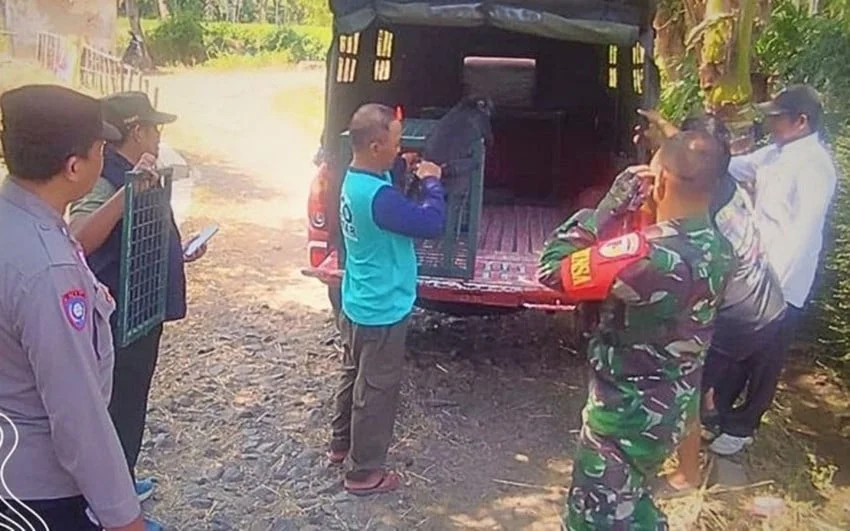
BONDOWOSO, EAST JAVA – A Javan Langur (Trachypithecus auratus), affectionately named "Momon" by its caretaker, has been successfully evacuated by the Indonesian Ministry of Forestry (Kemenhut) from a private residence in Sukosari Lor Village, Sukosari District, Bondowoso Regency, East Java. The surrender, initiated voluntarily by the resident, marks a significant development in the nation’s ongoing efforts to protect endangered wildlife and underscores the increasing role of public participation in conservation initiatives. Momon is currently undergoing observation and rehabilitation at a facility managed by the Center for Natural Resources Conservation (BBKSDA) East Java, prior to determining its long-term conservation plan.
The successful handover of Momon is directly attributed to the Ministry of Forestry’s renewed commitment under the leadership of Minister Raja Juli Antoni. This commitment aims to bolster the protection of protected wildlife species and safeguard Indonesia’s rich biodiversity. The ministry’s strategy encompasses several key pillars: strengthening patrol operations and law enforcement against illegal wildlife trade, enhancing the capacity for wildlife rescue operations, facilitating the rehabilitation and release of rescued animals back into their natural habitats, and fostering broader collaboration with regional governments, security forces, conservation institutions, and the general public.
A Voluntary Surrender: The Story of Momon
The narrative of Momon’s surrender is a testament to evolving public awareness regarding wildlife protection. While the specific details of how Momon came to be in private care are not fully disclosed, the act of voluntary surrender signifies a shift from traditional, often uninformed, pet ownership of protected species to a more responsible approach guided by conservation principles. Historically, many protected animals have been kept as pets due to a lack of awareness about their endangered status or the legal ramifications of possessing them. However, the proactive decision by the Bondowoso resident to hand over Momon to the authorities demonstrates a growing understanding of the ethical and legal obligations associated with wildlife.
Ristianto Pribadi, Head of the Public Relations and International Cooperation Bureau of the Ministry of Forestry, emphasized that the successful rescue of Momon highlights a critical truth: wildlife protection cannot be solely the responsibility of the government. It necessitates active support and genuine concern from the community. This case serves as an encouraging example for other citizens who may be in similar situations, prompting them to consider the welfare of the animal and the importance of its role within its natural ecosystem.
The Javan Langur: An Endangered Icon
The Javan Langur (Trachypithecus auratus), also known as the ebony leaf monkey, is an endemic species to the island of Java, Indonesia. This primate is characterized by its distinctive black or golden-brown fur and a white-ringed face. As its name suggests, its diet primarily consists of leaves, supplemented by fruits and flowers. The Javan Langur plays a vital role in its ecosystem as a seed disperser and is an integral part of the forest’s ecological balance.
Unfortunately, the Javan Langur is classified as Endangered by the International Union for Conservation of Nature (IUCN). Its population has been severely impacted by habitat loss due to deforestation, agricultural expansion, and infrastructure development. Furthermore, illegal hunting and the pet trade pose significant threats, further diminishing their numbers in the wild. The species’ vulnerability makes every individual animal, like Momon, a crucial component of the broader conservation effort.
Chronology of the Evacuation and Rehabilitation
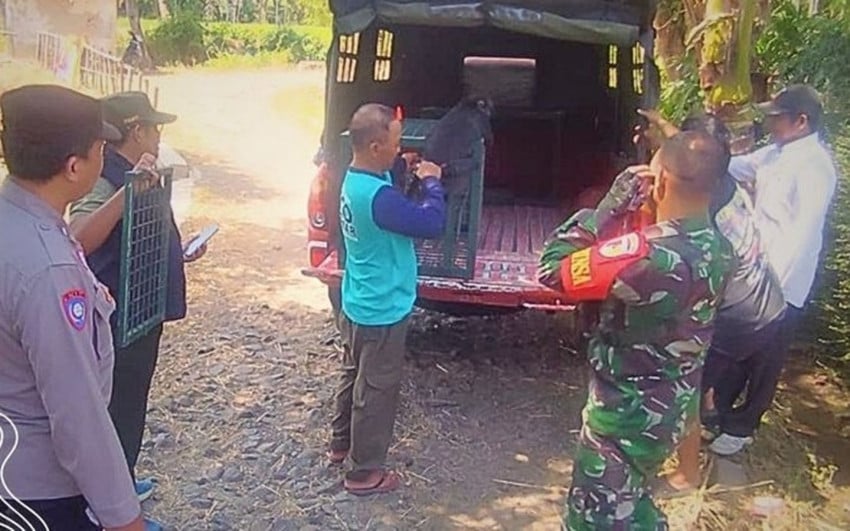
While a precise timeline of Momon’s time in private care is not available, the evacuation process itself signifies a successful intervention by Kemenhut. The process would typically involve:
- Initial Reporting or Discovery: Information regarding Momon’s presence in private care likely reached the BBKSDA East Java through various channels, possibly including tip-offs from concerned citizens or routine monitoring.
- Assessment and Verification: BBKSDA officials would have conducted an assessment to verify the information, confirm the species, and evaluate the animal’s condition.
- Engagement with the Caretaker: A crucial step would involve engaging with the resident who was caring for Momon. This would likely have been a sensitive process aimed at educating the individual about the Javan Langur’s protected status and the benefits of surrendering the animal for proper care and potential rehabilitation. The voluntary nature of this surrender is a positive indicator of successful community outreach.
- Evacuation and Transport: Once an agreement was reached, BBKSDA personnel, equipped with appropriate capture and transport equipment, would have safely evacuated Momon. This process requires specialized knowledge to minimize stress and ensure the animal’s well-being.
- Arrival at Rehabilitation Facility: Momon was transported to a BBKSDA facility in East Java, where it is currently undergoing a period of observation and rehabilitation. This phase is critical for assessing the animal’s physical and psychological health after its time in captivity.
- Conservation Planning: Following the rehabilitation period, a decision will be made regarding Momon’s future. This could include preparation for release into a suitable natural habitat, or if the animal is deemed unable to survive in the wild, placement in a long-term care facility or a zoological institution that contributes to conservation breeding programs.
Supporting Data and the Broader Conservation Landscape
The surrender of Momon is not an isolated incident. It reflects a growing trend of public engagement in wildlife conservation across Indonesia. The Ministry of Environment and Forestry has consistently reported an increase in public cooperation in reporting wildlife crimes and voluntarily surrendering protected animals.
- Protected Species Statistics: According to Kemenhut data, hundreds of protected animals are rescued and rehabilitated annually across Indonesia. These often include primates, birds of prey, reptiles, and mammals.
- Legal Framework: Indonesia has a robust legal framework for wildlife protection, primarily governed by Law No. 5 of 1990 concerning the Conservation of Biological Natural Resources and their Ecosystems. This law prohibits the capture, possession, and trade of protected species, with severe penalties for offenders.
- Challenges in Enforcement: Despite strong legislation, challenges remain in effectively enforcing these laws across the vast archipelago. Factors such as limited resources, vast forest areas, and the complex nature of illegal wildlife trade networks contribute to these difficulties.
- The Role of BBKSDA: BBKSDA centers, like the one in East Java, are instrumental in the frontline of wildlife rescue, rehabilitation, and conservation efforts. They work in tandem with local authorities and communities to address immediate threats to wildlife.
Official Responses and Ministry Initiatives
The Ministry of Forestry, through its spokesperson Ristianto Pribadi, has consistently championed the importance of public-private partnerships in conservation. The ministry’s strategic plans actively incorporate community-based conservation programs, aiming to empower local communities to become stewards of their natural heritage.
Minister Raja Juli Antoni has been a vocal advocate for strengthening Indonesia’s biodiversity conservation efforts. Under his leadership, Kemenhut has prioritized:
- Enhanced Law Enforcement: Increased patrols and stricter enforcement of regulations against illegal wildlife trafficking.
- Capacity Building: Training programs for rescue teams and wildlife rehabilitation specialists.
- Habitat Restoration: Initiatives focused on restoring degraded habitats and protecting critical ecosystems.
- Public Awareness Campaigns: Ongoing efforts to educate the public about the importance of wildlife and biodiversity.
- Technological Integration: Utilizing technology for monitoring, data collection, and public outreach.
The ministry also actively collaborates with international organizations and non-governmental organizations (NGOs) that specialize in wildlife conservation, leveraging global expertise and resources.
Broader Implications and Future Outlook
The voluntary surrender of Momon carries significant implications for Indonesia’s conservation agenda:
- Increased Public Trust and Cooperation: Such acts of voluntary surrender build trust between the public and conservation authorities, fostering a more collaborative approach to protecting wildlife.
- Reduced Pressure on Wild Populations: When individuals voluntarily surrender protected animals, it reduces the demand for these animals in the illegal pet trade, thereby alleviating pressure on wild populations.
- Educational Opportunities: Each rescued animal provides a valuable opportunity for education, both for the individual who surrendered the animal and for the wider community through public awareness campaigns.
- Reinforcement of Conservation Ethics: The incident reinforces the ethical imperative to protect endangered species and highlights the importance of respecting wildlife’s right to exist in its natural habitat.
Looking ahead, the Ministry of Forestry aims to further institutionalize public engagement in conservation. This includes developing more accessible reporting mechanisms for wildlife-related issues, expanding community outreach programs to remote areas, and recognizing and rewarding individuals and communities that actively contribute to conservation efforts. The success of Momon’s case serves as a powerful narrative, underscoring that while the challenges of wildlife protection are immense, collective action, driven by public awareness and governmental commitment, can lead to tangible positive outcomes for Indonesia’s invaluable biodiversity. The journey of Momon, from private care to rehabilitation, embodies a hopeful step towards a future where humans and wildlife can coexist more harmoniously.
