
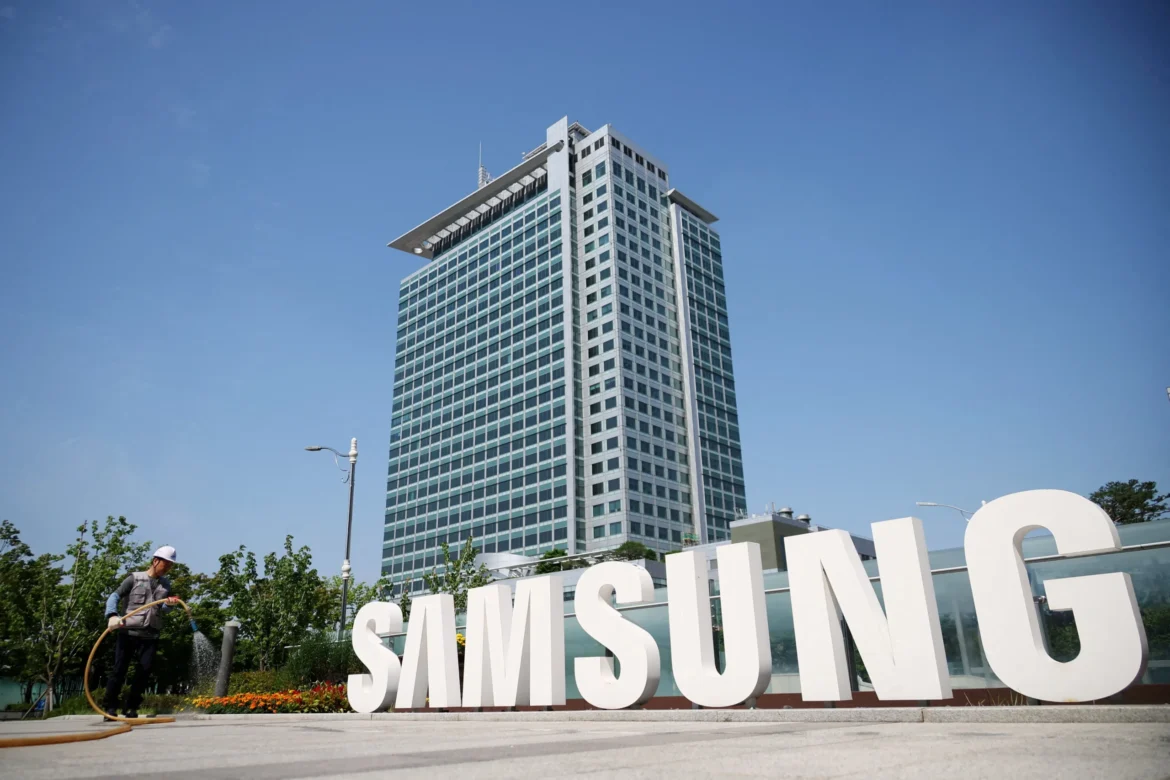
Samsung Electronics has officially announced its financial results for the third quarter of 2026, marking the most lucrative period in the history of the South Korean technology conglomerate. Propelled by an unprecedented, global surge in demand for advanced artificial intelligence hardware, Samsung recorded an operating profit of 107.4 trillion won, equivalent to approximately USD 80.47 billion. Total consolidated revenue for the quarter reached an extraordinary 195.3 trillion won, representing a staggering 125 percent increase compared to the same period in the previous fiscal year.
This monumental financial milestone underscores a dramatic turnaround for the semiconductor industry, which only a few years prior experienced a severe cyclical downturn. Analysts attribute this quarter’s unprecedented success to Samsung’s strategic pivot toward high-performance memory solutions tailored specifically for generative artificial intelligence models, high-performance computing clusters, and hyperscale data center infrastructure.
Semiconductor Division Dominates as the Primary Financial Engine
The overwhelming majority of Samsung’s financial triumph during the third quarter of 2026 originated from its Device Solutions division, which houses the company’s semiconductor and memory operations. According to the financial disclosure, the semiconductor business alone generated 147.1 trillion won in revenue, translating into an operating profit of 106.5 trillion won. This exceptional profit margin highlights the dominant market positioning of Samsung’s specialized memory products in an era defined by aggressive global artificial intelligence adoption.
At the core of this growth is the rapid enterprise deployment of advanced memory technologies, specifically High Bandwidth Memory—most notably the latest HBM4 architecture—and ultra-high-capacity Solid-State Drives designed explicitly for server environments powering large language models. As cloud service providers and enterprise technology giants race to expand their artificial intelligence training and inference capabilities, the global requirement for high-bandwidth, low-latency memory solutions has outpaced manufacturing capacities, allowing suppliers with advanced technological readiness to command premium pricing.
Furthermore, Samsung’s foundry business, which handles contract chip manufacturing, showed robust recovery signs. The company has formally outlined plans to achieve double-digit revenue growth heading into the fourth quarter of 2026. Looking further ahead, Samsung confirmed its strategic timeline to commence commercial production at its heavily anticipated fabrication facility in Taylor, Texas, by 2027. This expansion is designed to capture regional demands and diversify its manufacturing footprint outside of Asia. Simultaneously, the System LSI division reported stable growth, bolstered by consistent shipment volumes of proprietary Exynos processors and advanced 200-megapixel camera image sensors utilized across mobile markets.
The Historical Context and Chronology of the AI Supercycle
To fully comprehend the magnitude of Samsung’s Q3 2026 financial report, it is essential to examine the macro-level trajectory of the technology sector over the preceding three years. The semiconductor landscape of 2024 was characterized by cautious stabilization following the post-pandemic inventory glut. Throughout 2024 and 2025, memory manufacturers faced volatile pricing environments, forcing strategic production cuts to balance supply with sluggish consumer electronics demand.
However, the rapid commercialization of generative artificial intelligence systems initiated a systemic transformation in enterprise capital expenditure. By late 2025, the bottleneck in technological development shifted away from raw computing power alone toward memory bandwidth limitations. Samsung capitalized on this industry-wide shift by accelerating its research, development, and mass-production timelines for advanced packaging technologies.
By early 2026, industry analysts noted a severe supply deficit in high-end dynamic random-access memory and enterprise-grade storage. Samsung’s proactive alignment of its manufacturing lines to prioritize next-generation memory architectures positioned the corporation at the epicenter of the artificial intelligence infrastructure boom. The third quarter of 2026 thus represents the culmination of a multi-year engineering and capital allocation strategy aimed at capturing high-margin enterprise segments.
Divergent Realities: Mobile Division Faces Cost Pressures
While the semiconductor sector shattered historical records, Samsung’s Mobile Experience division experienced notable headwinds during the same operational period. The MX division, responsible for smartphones, tablets, and telecommunications network equipment, reported an operating loss of approximately 600 billion won, or roughly USD 450 million.
The primary catalyst for this financial contraction was the unprecedented increase in component costs, particularly the steep price inflation of memory chips that proved so advantageous to the semiconductor division. As enterprise demand for high-end memory drove up market rates, the cost to manufacture flagship consumer electronics escalated significantly. Although consumer demand for premium devices—exemplified by strong reception toward the company’s foldable smartphone lineup, including regional variants such as the Galaxy Z Fold8 Ultra—remained fundamentally resilient, profit margins were severely compressed.

Faced with rising retail prices driven by increased component costs, a broader segment of global consumers elected to delay hardware upgrade cycles, opting to retain existing devices longer. This consumer hesitation added downward pressure on unit shipment volumes, creating a stark dichotomy within Samsung’s corporate structure: an exceptionally profitable component business juxtaposed against a margin-constrained consumer hardware division.
Market Implications and Industry Reactions
Financial analysts and institutional investors have responded to Samsung’s Q3 2026 report with both awe and cautious forward-looking analysis. The scale of profitability achieved within a single three-month window recalibrates expectations for the global technology sector. Industry experts suggest that the structural reliance on artificial intelligence infrastructure is not a temporary anomaly but a permanent shift in enterprise computing priorities.
Competitors in the memory space are expected to accelerate their own capital expenditure plans to challenge Samsung’s dominance in high-bandwidth memory. However, Samsung’s massive scale, integrated supply chain—ranging from raw silicon processing to finished memory modules—and proactive manufacturing investments grant the conglomerate a formidable competitive moat.
Broader economic implications include potential inflationary pressures on consumer-facing electronics as component makers prioritize high-margin enterprise orders over consumer-grade silicon. Economists note that while corporate capital expenditure in artificial intelligence continues to drive unprecedented revenue for foundational hardware suppliers, the long-term sustainability of this trend will depend heavily on the commercial return on investment realized by enterprises deploying artificial intelligence solutions.
As Samsung looks toward the fourth quarter of 2026 and the impending operational launch of its Texas fabrication plant in 2027, the corporation remains uniquely positioned to navigate the evolving technological landscape. The record-setting performance of Q3 2026 cements Samsung Electronics not merely as a consumer electronics manufacturer, but as an indispensable pillar of the global digital infrastructure.
