
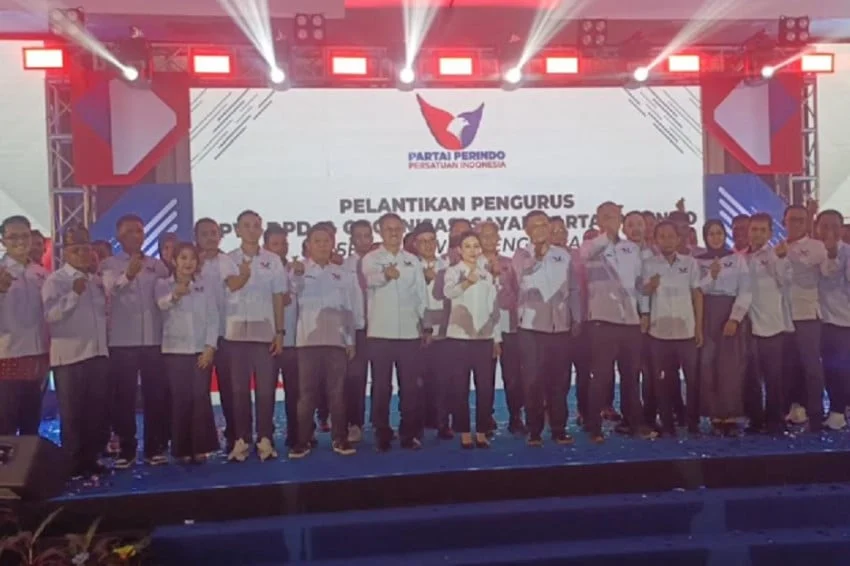
The newly inducted regional leadership of the Indonesian Unity Party (Perindo) in Southeast Sulawesi has wasted no time in mobilizing its ranks, setting an aggressive agenda focused on internal consolidation and sweeping structural reforms across all administrative levels. Following their formal inauguration, the Regional Leadership Council (DPW) of Perindo Southeast Sulawesi announced a comprehensive strategy designed to recalibrate the party’s organizational framework, strengthen grassroots engagement, and elevate its electoral competitiveness ahead of upcoming political contests.
The momentum generated by the recent induction ceremony—which encompassed not only the DPW executives but also the Regency and Municipal Leadership Councils (DPD) alongside various party wing organizations—serves as the primary catalyst for this operational shift. Party leaders have emphasized that this transition marks a critical juncture in executing the strategic directives handed down by the Central Leadership Council (DPP).
Strategic Imperatives and Leadership Vision
At the helm of this organizational revitalization is Ferry Irawan, Chairperson of the DPW Perindo Southeast Sulawesi. Speaking immediately after the inauguration proceedings in Kendari, Irawan articulated a clear vision for the regional branch, stressing that structural readiness is the bedrock of political success. He underscored that the overarching objective of the ongoing restructuring is to align local party initiatives with the national vision articulated by Perindo General Chairperson Angela Tanoesoedibjo and Secretary-General Ferry Kurnia Rizkiyansyah.
According to Irawan, the newly minted leadership teams across the province are tasked with translating national policy frameworks into tangible, community-driven action plans. This alignment ensures that regional strategies resonate with broader party objectives while remaining acutely responsive to the socio-economic realities of Southeast Sulawesi. The leadership overhaul is not merely administrative; it is envisioned as a cultural reset aimed at instilling greater discipline, operational efficiency, and responsiveness within the party ranks.
Chronology of the Structural Overhaul
The sequence of events leading to the current consolidation phase highlights a deliberate and methodical approach by the party’s central command. In the months preceding the official induction, the DPP conducted comprehensive evaluations of regional capabilities, identifying key areas where structural reinforcement was urgently required.

- Pre-Induction Assessment and Alignment: The DPP initiated dialogues with prospective regional leaders to evaluate grassroots strength, identify leadership potential, and map out electoral vulnerabilities within Southeast Sulawesi’s diverse constituencies.
- The Formal Induction Ceremony: The milestone event officially swore in the executive boards of the DPW, multiple DPD units across the province’s regencies and cities, and specialized wing organizations dedicated to youth, women, and labor empowerment.
- Immediate Post-Induction Conclave: Within hours of the ceremony, DPW Perindo Southeast Sulawesi convened its first formal internal consolidation meeting to establish specialized task forces responsible for auditing local chapters and updating membership databases.
- Rollout of Grassroots Programs: Following the structural audit, the regional leadership slated a series of territorial visits to engage local communities, assess localized economic challenges, and forge stronger ties with civil society organizations.
Contextualizing Perindo’s Organizational Strategy
Perindo’s aggressive push in Southeast Sulawesi mirrors a broader national strategy aimed at fortifying the party’s infrastructure following the previous electoral cycle. Political analysts note that mid-cycle structural overhauls are vital for political parties seeking to transition from transitional campaign mechanisms to permanent, community-embedded institutions.
Southeast Sulawesi presents a unique political landscape characterized by a mix of rapidly developing urban centers like Kendari and sprawling agricultural, mining, and maritime communities. Recognizing this diversity, the newly restructured DPW Perindo has prioritized the empowerment of its DPD units to tailor political messaging and developmental programs to local economic drivers. This localized approach is deemed essential for capturing the aspirations of diverse demographics, particularly the growing cohort of young voters and small-to-medium enterprise (SME) operators who form the backbone of the regional economy.
Strengthening Grassroots Connections and Economic Empowerment
The internal consolidation efforts are closely tied to Perindo’s broader national platform, which emphasizes grassroots economic empowerment, support for micro, small, and medium enterprises (MSMEs), and the elevation of productivity among Generation Z and millennial populations. In tandem with structural reforms in regions such as Bogor and other strategic areas nationwide, Perindo is increasingly positioning itself as a party dedicated to pragmatic economic solutions.
In Southeast Sulawesi, the restructured party apparatus is expected to roll out targeted initiatives aimed at assisting local traders, farmers, and fishermen. By addressing fundamental economic concerns such as access to capital, market linkages, and digital literacy for small business owners, the leadership believes the party can build enduring trust with the electorate. This policy-centric approach moves beyond traditional rhetoric, seeking to embed the party deeply into the daily lives of constituents.
Implications for the Regional Political Landscape
The proactive stance adopted by DPW Perindo Southeast Sulawesi carries significant implications for the region’s political dynamics. By swiftly establishing a unified command structure and addressing internal friction early, the party aims to project stability and organizational maturity—traits that are frequently scrutinized by potential voters and coalition partners alike.
Furthermore, a well-organized party structure significantly enhances administrative readiness for future electoral verifications, candidate vetting campaigns, and voter mobilization drives. Political observers suggest that parties capable of maintaining disciplined, active networks between electoral cycles are best positioned to expand their vote shares. For Perindo in Southeast Sulawesi, the success of this structural overhaul will ultimately be measured by its ability to translate administrative efficiency into tangible electoral gains, securing a more formidable presence in regional legislative bodies and establishing a resilient foundation for long-term political growth.
