
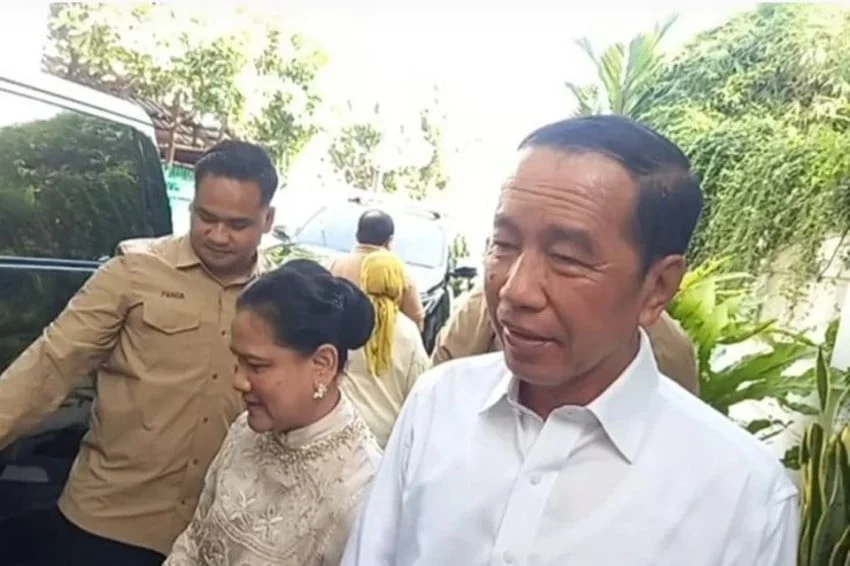
The legal battle surrounding the authenticity of the academic credentials of Joko Widodo, Indonesia’s seventh president, reaches a critical juncture today as he is scheduled to appear personally at the East Jakarta District Court. The high-profile court session, set for Thursday, November 5, 2026, marks a pivotal moment in ongoing litigation that has captivated public attention for years. The confirmation of his attendance was officially provided by his aide, AKBP Syarif Muhammad Fitriansyah, confirming that the former head of state is currently in Jakarta and prepared to take part in the judicial proceedings.
This development follows months of escalating legal maneuvers, public accusations, and intense media scrutiny regarding allegations of a fabricated university diploma. As the proceedings unfold, the courtroom is expected to draw immense crowds, heavy security, and widespread journalistic coverage, reflecting the enduring political and social resonance of the case.
Chronology and Background of the Dispute
The controversy surrounding Joko Widodo’s educational background is not a recent phenomenon; rather, it represents a protracted legal saga that originated during his tenure in office and persisted into his post-presidency. The core of the dispute involves persistent, unverified claims propagated by various critics alleging that the diploma issued by Universitas Gadjah Mada (UGM) in Yogyakarta—specifically from the Faculty of Forestry, where Widodo graduated in 1985—was forged or fraudulent.
Despite repeated clarifications, legal refutations, and the public exhibition of original academic documents by both university officials and Joko Widodo himself, various individuals and activist groups continued to question the validity of his graduation. Over the years, these accusations transitioned from digital discourse and public forums into formal legal complaints, resulting in defamation lawsuits, police investigations, and subsequent criminal trials.
The current criminal proceedings at the East Jakarta District Court involve prominent public figures who have actively disseminated allegations regarding the academic credentials. Among the central defendants in these related cases are former minister and digital media expert Roy Suryo, alongside public health commentator and activist Tifauzia Tyassuma, commonly known as Doctor Tifa. Both have faced legal actions initiated by authorities following formal reports concerning the dissemination of unverified information and alleged defamation.
The trajectory leading to today’s hearing accelerated during a previous session at the East Jakarta District Court on Wednesday, October 28, 2026. During those proceedings, the Public Prosecutor’s Office formally requested permission from the presiding panel of judges to summon Joko Widodo and his aide, AKBP Syarif Muhammad Fitriansyah, to testify as material witnesses. The prosecution emphasized the necessity of their direct testimony to establish the factual foundation of the case and to resolve once and for all the persistent public doubts regarding the documentation.
Legal Strategy and Prosecution Requests
During the court session on October 28, 2026, the prosecution team outlined its operational strategy for handling the testimony of the former president. Acknowledging the extraordinary security protocols required when transporting and hosting a former head of state in a public judicial setting, the prosecutors requested that the hearings for multiple defendants be consolidated or synchronized.
Specifically, the prosecution formally asked the judges to schedule the testimony of Joko Widodo on the same day as the hearings involving Doctor Tifa. Prosecutors cited security and safety considerations as the primary justification for grouping these appearances together, minimizing logistical disruptions and optimizing the deployment of law enforcement personnel around the East Jakarta District Court complex.
"We request time for the proceedings to be held on the same day as Tifa’s trial. Therefore, the postponement should be set for Thursday, November 5, 2026, taking into account safety considerations, Your Honor," the prosecutor stated during the October 28 hearing.
The defense teams, particularly legal representatives for Doctor Tifa, have previously signaled their intention to conduct rigorous cross-examinations. Reports from defense circles indicated ambitious preparations, including the compilation of an extensive series of questions intended to challenge the timeline, administrative procedures, and physical characteristics of the educational documents in question. This dynamic guarantees that today’s hearing will feature intense legal sparring between the prosecution, defense attorneys, and the prominent witnesses on the stand.
Institutional Responses and Verification Efforts
Throughout the duration of this controversy, Universitas Gadjah Mada has consistently maintained a transparent and unequivocal position regarding the authenticity of its alumnus’s degree. Senior academic leaders, including rectors and faculty deans from UGM, have repeatedly issued official statements confirming that Joko Widodo successfully completed his studies at the Faculty of Forestry, graduating in 1985 in accordance with all standard administrative requirements and academic regulations of the institution.
University archives, physical registry books, graduation photographs, and testimonies from contemporaries who studied alongside Widodo during the 1980s have been repeatedly presented to investigative bodies. Independent verification by journalistic institutions and law enforcement agencies has similarly corroborated the validity of the academic records. Despite these comprehensive institutional validations, the persistence of public skepticism underscores the complex interplay between modern digital misinformation, political polarization, and public trust in institutions within Indonesia.
Legal experts have noted that the decision of a former president to voluntarily appear in court as a witness is a significant constitutional and legal gesture. While Indonesian law permits witnesses to request alternative arrangements under specific conditions, Joko Widodo’s decision to attend in person demonstrates a willingness to subject himself to direct judicial scrutiny, thereby reinforcing the principle that no individual is above the law.
Broader Implications and Socio-Political Impact
The resolution of the diploma controversy through formal judicial channels carries profound implications for Indonesia’s legal and political landscape. For years, the dissemination of unverified claims regarding public officials has served as a vector for political friction, testing the boundaries of freedom of speech, defamation laws, and the enforcement of the Electronic Information and Transactions (ITE) Law.
By bringing the matter into a court of law, the judicial system provides an impartial forum to sift through evidence, evaluate expert testimonies, and deliver a binding legal verdict. The outcome of the trials involving Roy Suryo, Doctor Tifa, and associated figures is expected to establish an important legal precedent concerning the accountability of public commentators and digital content creators who propagate unverified allegations against high-ranking state officials.
Furthermore, the trial highlights the ongoing challenges facing Indonesian democracy in the digital era, where misinformation can rapidly scale across social media platforms, embedding itself in public consciousness despite overwhelming factual refutations. The direct testimony of Joko Widodo today is anticipated to provide a definitive closure to one of the most persistent controversies of his political career, offering a stark reminder of the enduring necessity of documentary integrity and institutional verification.
As proceedings commence at the East Jakarta District Court, security personnel have implemented stringent access controls around the perimeter to manage the expected influx of journalists, observers, and interested citizens. The eyes of the nation remain fixed on the courtroom, awaiting the formal testimony that could finally put an end to years of debate over a piece of paper that became a focal point of national political contention.
