
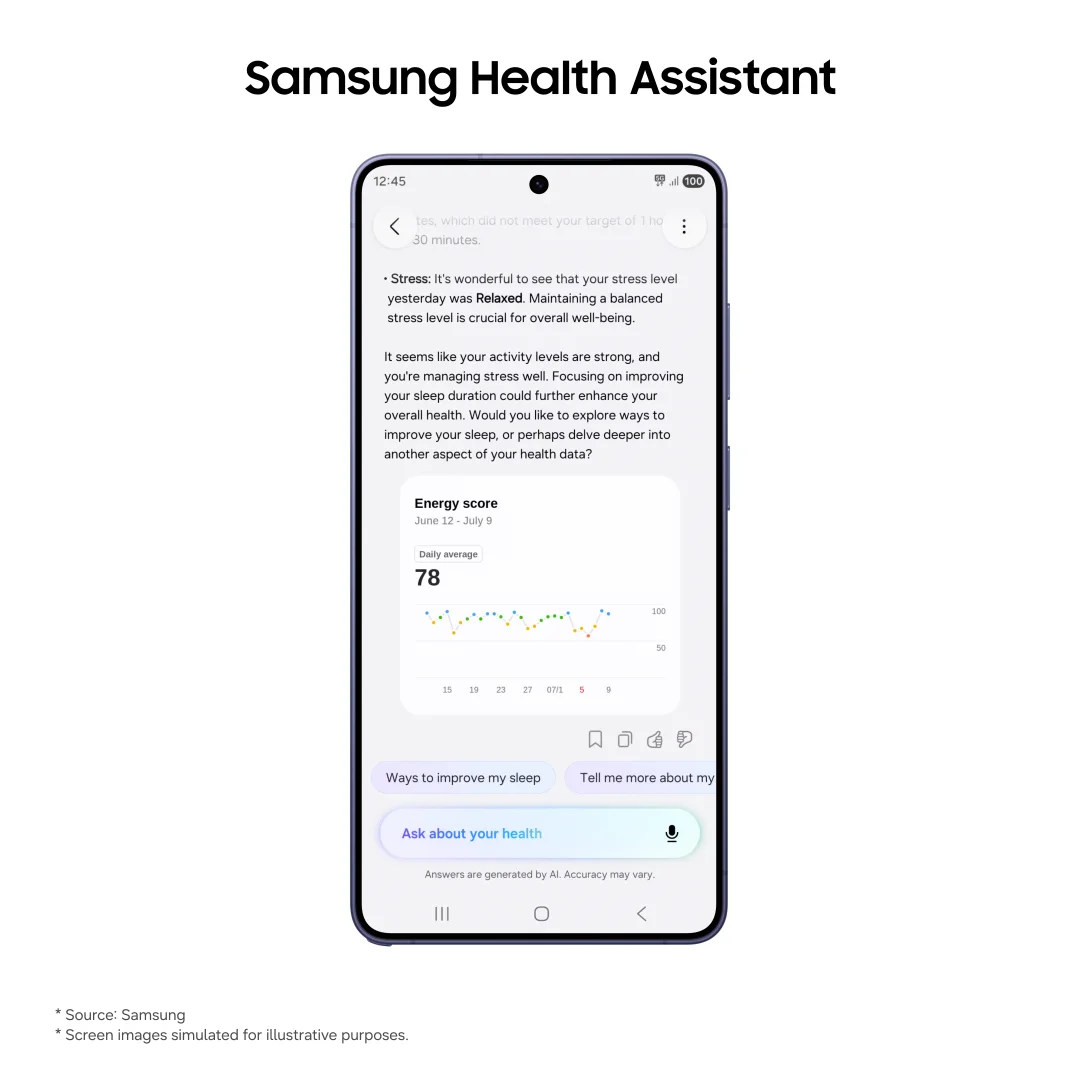
Samsung has officially announced the launch of its new Health Assistant, an advanced artificial intelligence (AI)-powered personal health assistant designed to revolutionize how users engage with their wellness journey. This innovative feature is slated to be integrated into the widely used Samsung Health application, providing a comprehensive and deeply personalized experience for millions of users worldwide. The announcement marks a significant step in Samsung’s ongoing commitment to integrating cutting-edge AI capabilities into its ecosystem, particularly in the critical domain of health and well-being. The Health Assistant is currently in its beta phase, with availability limited to specific regions, as Samsung refines its capabilities and gathers user feedback before a broader global rollout.
The core promise of Health Assistant lies in its ability to empower users to achieve their health and fitness objectives by meticulously analyzing and synthesizing information derived from five fundamental pillars of wellness: sleep, activity, nutrition, mindfulness, and vitals. This holistic approach moves beyond mere data collection, transforming raw health metrics into actionable summaries. Crucially, the AI explains the intricate interdependencies between these variables, illustrating how improvements or challenges in one area can cascade into others. For instance, it might highlight how inconsistent sleep patterns negatively impact daily activity levels or how dietary choices influence stress responses and overall vital signs. This contextual understanding is vital for users to grasp the bigger picture of their health and make informed decisions.
Samsung’s Legacy in Digital Health: A Journey of Innovation
Samsung’s foray into digital health is not a recent endeavor but rather a continuous journey spanning over a decade, marked by consistent innovation and an evolving vision for connected wellness. The company first introduced its health tracking capabilities with early smartwatches and the S Health application, which later evolved into the robust Samsung Health platform. This platform has steadily integrated an increasing array of sensors and features, moving from basic step counting to sophisticated measurements such as heart rate monitoring, electrocardiogram (ECG) for detecting irregular heart rhythms, blood pressure monitoring (in select regions and devices), and body composition analysis. These advancements have positioned Samsung as a key player in the competitive digital health market, vying with industry giants like Apple Health, Google Fit, and a myriad of specialized health and fitness apps.
The development of Health Assistant is a natural progression of this legacy, leveraging Samsung’s extensive experience in hardware and software integration. The company has invested heavily in research and development to create a seamless ecosystem where its smartphones, smartwatches, and other connected devices work in concert to provide a comprehensive view of a user’s health. This interconnectedness allows for the collection of a vast and diverse dataset, which is precisely what next-generation AI systems require to deliver truly personalized insights. The transition from simple data aggregation to intelligent, actionable advice represents a significant leap forward in this journey, aligning with broader industry trends towards preventive and personalized healthcare.
The Power of Personalized AI: Beyond Basic Tracking
What differentiates Health Assistant from existing health trackers is its sophisticated application of artificial intelligence. Supported by the extensive resources and data within the broader Samsung Health ecosystem, Health Assistant is designed to go beyond merely presenting data. It actively identifies subtle patterns and trends that might otherwise go unnoticed by users, even those diligently monitoring their health. For example, it might detect a gradual decline in sleep quality correlating with increased work stress, or a consistent dip in activity levels on certain days of the week.
Upon identifying these patterns, Health Assistant is programmed to provide proactive, validated recommendations. These recommendations are not arbitrary suggestions but are developed in consultation with a team of certified doctors and health instructors, ensuring their medical soundness and practicality. This validation process is crucial in establishing trust and credibility, especially when dealing with sensitive health information. The advice can range from suggesting specific types of physical activity to recommending mindfulness exercises or dietary adjustments, all tailored to the individual’s identified patterns and goals. This proactive guidance moves the Samsung Health platform from a reactive data repository to a truly assistive tool for maintaining and improving well-being.
Diving Deeper into the Five Pillars of Wellness
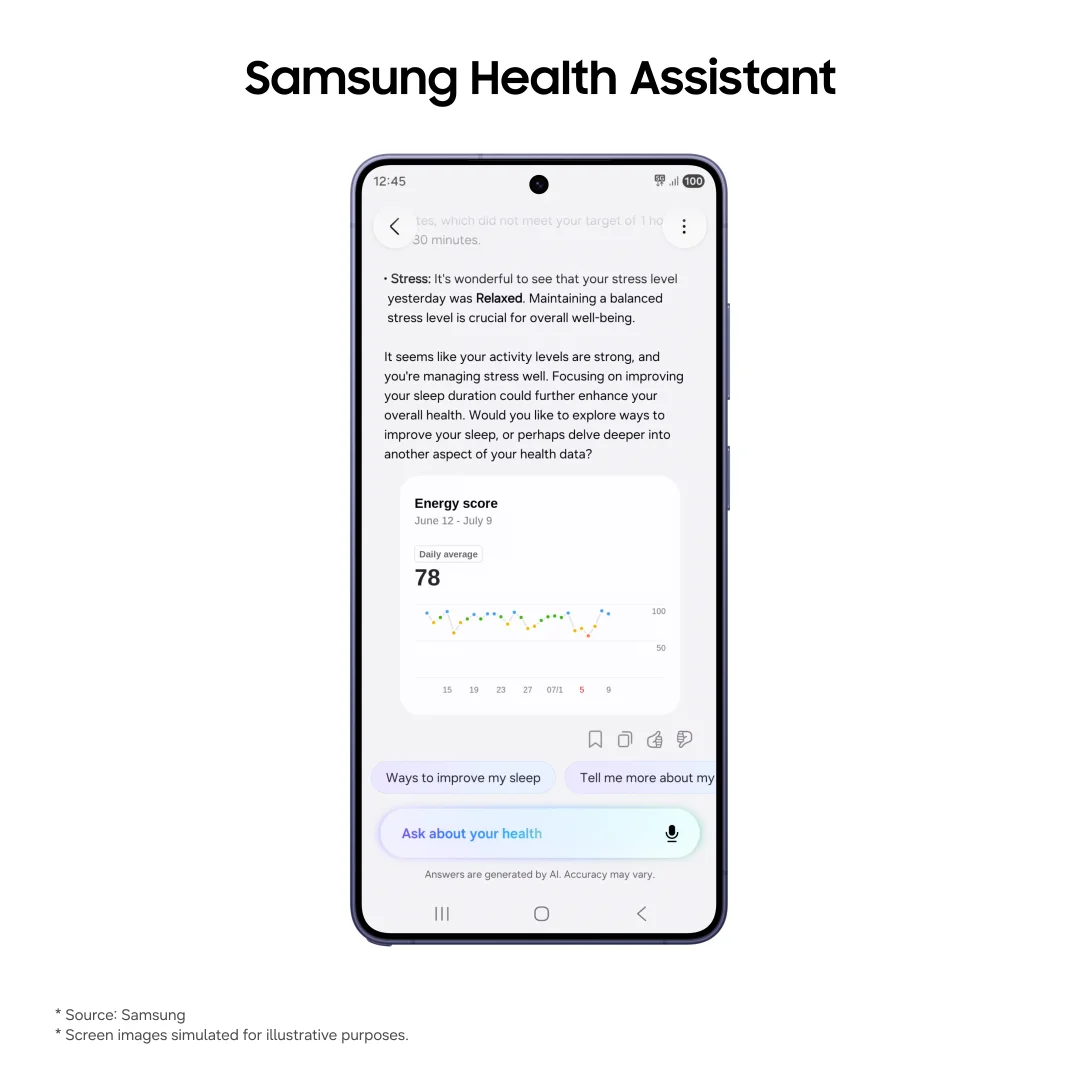
The five pillars – sleep, activity, nutrition, mindfulness, and vitals – represent a holistic framework for comprehensive health assessment, each offering distinct opportunities for AI-driven insights:
-
Sleep: Modern science increasingly underscores the critical role of sleep in overall health, impacting everything from cognitive function to immune response. Samsung devices, particularly smartwatches, are adept at tracking various sleep metrics, including sleep stages (REM, light, deep), duration, consistency, and even snoring detection. Health Assistant will analyze these patterns, identifying irregularities like frequent awakenings or insufficient deep sleep. It can then provide tailored advice, such as recommending a consistent bedtime, suggesting environmental adjustments for better sleep hygiene, or even guiding users through relaxation techniques before sleep.
-
Activity: Beyond basic step counting, Health Assistant integrates data from various physical activities, whether it’s structured workouts, daily movement, or even passive activity. It understands different exercise types, intensities, and recovery periods. The AI can help users set realistic and progressive fitness goals, monitor their progress, and adapt recommendations based on performance and recovery needs. For instance, if a user consistently struggles with morning runs, the assistant might suggest adjusting the time or intensity, or exploring alternative exercises.
-
Nutrition: While direct food logging can be laborious, Health Assistant aims to integrate nutritional data, either through user input or by inferring dietary habits from activity and vital sign data. It can provide personalized dietary recommendations based on individual goals (e.g., weight management, muscle gain, energy levels), highlight potential nutrient deficiencies, and suggest healthier alternatives. The AI might correlate dietary patterns with energy crashes or digestive issues, offering insights into how food choices impact daily well-being.
-
Mindfulness: In an increasingly stressful world, mindfulness and mental well-being are paramount. Samsung devices can track stress levels through heart rate variability (HRV) and other physiological markers. Health Assistant can identify periods of elevated stress and recommend appropriate interventions, such as guided meditation, breathing exercises, or simply suggesting a break. By linking mental state to physical metrics, the AI helps users understand the mind-body connection and proactively manage their stress.
-
Vitals: This pillar encompasses critical physiological data like heart rate, blood oxygen saturation (SpO2), ECG readings, and blood pressure (where available). Health Assistant continuously monitors these vital signs, looking for deviations from a user’s baseline. It can alert users to potential anomalies that might warrant medical attention, track trends over time to identify emerging health risks, and provide context on how lifestyle choices impact these crucial indicators. The ability to monitor trends in vitals offers a powerful tool for preventive health management.
Anticipating the Future: Coaching and Hyper-Personalization
Looking ahead, Samsung envisions Health Assistant evolving into an even more sophisticated coaching tool. The company plans to explore capabilities that directly assist users in achieving their health objectives through sustained behavioral change. This involves moving beyond static recommendations to dynamic, adaptive coaching strategies that help users form healthier habits and overcome challenges. This could include personalized challenges, nudges, and motivational support, all tailored to the individual’s progress and psychological profile.
A key enabler for this future vision is the "Personal Data Engine." This advanced engine will serve as a contextual layer, allowing Health Assistant to deliver hyper-personalized responses that are acutely sensitive to a user’s daily schedule, preferences, and lifestyle. For example, the assistant could learn a user’s work schedule from their calendar, understand their preferred exercise times, and even factor in upcoming events (like a planned vacation or a stressful project deadline) when providing recommendations. Instead of a generic suggestion to "exercise more," it might suggest a specific 30-minute workout tailored to the user’s current fitness level, available time slot, and preferred activity type, considering if they have an important meeting later that day. This level of contextual awareness promises to make the health guidance feel less like an automated prompt and more like advice from a truly understanding personal coach.
Market Implications and Expert Perspectives

The introduction of Health Assistant by Samsung carries significant implications for both the consumer electronics market and the broader digital health industry. For Samsung, it strengthens its ecosystem play, further integrating its diverse product lines (smartphones, wearables, smart home devices) around a central theme of user well-being. This differentiation could be a powerful tool in attracting and retaining users in an increasingly competitive landscape. It also positions Samsung as a leader in applying generative AI and advanced machine learning to practical, everyday applications that genuinely improve quality of life.
Industry analysts are likely to view this move as a strategic response to the growing demand for personalized health solutions and a direct challenge to competitors. "The market for AI-powered health assistants is rapidly expanding, driven by advancements in sensor technology and machine learning," stated a hypothetical industry analyst. "Samsung’s integrated approach, leveraging its vast device ecosystem, gives it a strong advantage in delivering a truly comprehensive and contextualized health experience. The key will be ensuring data accuracy, user trust, and demonstrating tangible health outcomes."
From a healthcare perspective, the potential for AI-driven preventive health is immense. "Tools like Health Assistant could play a crucial role in empowering individuals to take a more proactive stance on their health," a hypothetical medical professional might comment. "By identifying subtle patterns and offering validated recommendations, it can bridge the gap between self-monitoring and early intervention, potentially reducing the burden on traditional healthcare systems. However, robust data privacy measures and clear disclaimers about the non-diagnostic nature of such tools will be paramount."
Challenges and Ethical Considerations
While the potential benefits are clear, the development and deployment of AI-powered health assistants also present several challenges and ethical considerations. Data privacy and security are paramount, given the sensitive nature of health information. Samsung will need to ensure robust encryption, clear data usage policies, and user consent mechanisms to build and maintain trust. The "Personal Data Engine" must be designed with privacy at its core, giving users granular control over what information is shared and how it is utilized.
Another challenge lies in the accuracy and reliability of AI-generated recommendations. While Samsung emphasizes validation by medical professionals, the AI’s interpretations are based on aggregated data and algorithms, not a direct medical diagnosis. Clear communication to users that Health Assistant is a wellness tool and not a substitute for professional medical advice is essential. Furthermore, there’s the ethical consideration of algorithmic bias; ensuring the AI is trained on diverse datasets to provide equitable recommendations across various demographics is critical to prevent unintended health disparities.
Conclusion: A Glimpse into the Future of Proactive Health
The beta launch of Samsung’s Health Assistant marks a pivotal moment in the evolution of digital health. By harnessing the power of artificial intelligence to synthesize complex health data from multiple dimensions of wellness, Samsung is moving towards a future where personal health management is not just about tracking, but about proactive guidance, personalized coaching, and a deeper understanding of one’s own body and mind. The journey from a limited beta release to a global, fully integrated service will undoubtedly involve continuous refinement, user feedback, and adaptation to emerging health science. However, the vision is clear: to empower individuals with intelligent tools that foster healthier lifestyles and contribute to long-term well-being, paving the way for a truly connected and proactive approach to personal health in the digital age. The question remains for users in countries where it has not yet been released, such as Indonesia: will this advanced AI assistant become an indispensable part of their daily health regimen once it officially launches? The industry will be watching closely as Samsung continues to push the boundaries of what is possible in consumer health technology.
