
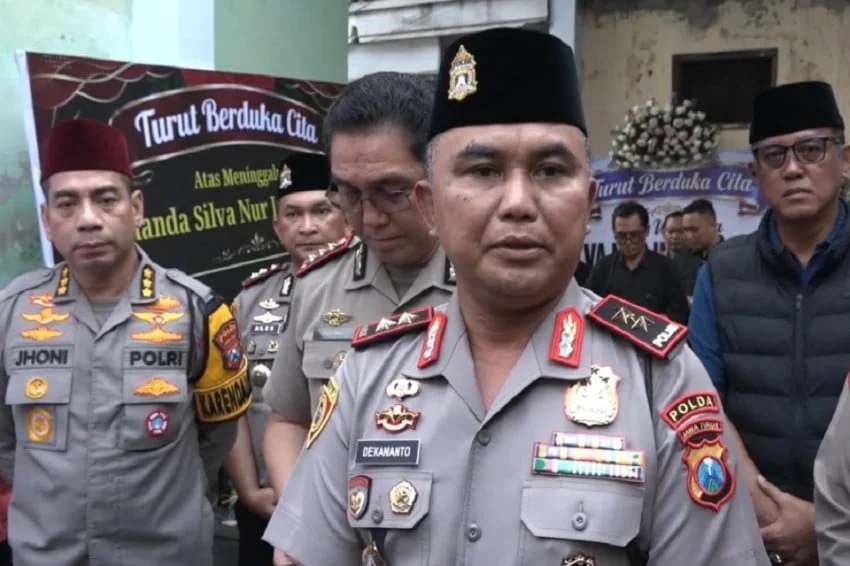
The East Java Regional Police have officially detained 38 individuals suspected of participating in a violent mob action that resulted in the destruction and arson of police vehicles in the Saptorenggo village residential area, Pakis District, Malang Regency. The incident, which unfolded amid heightened public tensions, occurred following a highly publicized case of fatal bullying involving a local high school student. East Java Regional Police Chief, Inspector General Dekananto Eko Purwono, confirmed the arrests on Saturday, November 28, 2028, noting that all suspects are currently undergoing intensive interrogation at the East Java Regional Police headquarters in Surabaya.
The escalation of violence in Malang underscores a volatile intersection between social media-fueled vigilante justice and the formal judicial process. Authorities are now grappling with the aftermath of the riot, which saw not only the destruction of state property but also significant public disorder in a residential zone.
Chronology of the Escalation
The unrest in the Emerald Garden housing complex, located in Saptorenggo, was the culmination of mounting public outrage directed at the family of a suspect involved in the death of a high school student, identified as Silva Nur Intania. The incident serves as a grim reflection of the fragility of civil order when public anger is mobilized through digital platforms.
According to police reports, the sequence of events began on the morning of November 28, following the rapid dissemination of messages on various social media channels. These messages encouraged residents and local activists to gather at the Emerald Garden complex, which was reportedly the residence of the parents of one of the bullying suspects. By midday, a large crowd had formed, with the situation quickly spiraling from a protest into a confrontation with law enforcement personnel stationed to maintain order.
As the crowd surged, the situation turned violent. Several individuals began damaging police vehicles parked near the site, eventually setting at least one vehicle on fire. The police were forced to deploy reinforcements to disperse the crowd and prevent further damage to private and public property. The operation concluded in the afternoon, leading to the apprehension of 38 individuals identified as key participants, including those suspected of physical destruction and those accused of orchestrating the unrest.
The Role of Digital Provocation
Inspector General Dekananto Eko Purwono emphasized that the arrests were not limited to those physically present at the site of the arson. A significant portion of the investigation is currently focused on the role of digital provocateurs.
"We have secured individuals who acted as provocateurs, those who initiated the destruction, and those who engaged in arson," Dekananto stated during a press briefing following his visit to the funeral home of the late Silva Nur Intania. "Crucially, we have also detained several individuals responsible for managing accounts that actively incited the public to gather and commit these acts of violence. These accounts are being subjected to an intensive forensic examination."
The use of social media to organize mass actions against private residences has become a growing concern for law enforcement in East Java. The authorities have identified a pattern where unverified information and calls for "justice" are disseminated to bypass legal channels, often leading to mob-led retribution that disrupts public safety.
Background: The Bullying Case
The incident in Saptorenggo is inextricably linked to the tragic death of Silva Nur Intania, a high school student whose passing ignited widespread indignation in Malang. The legal proceedings against four suspects—all peers of the victim—have faced intense public scrutiny.
In a move to maintain the integrity of the judicial process and ensure the security of the suspects, the East Java Regional Police had previously issued a strict directive prohibiting the four suspects from participating in school examinations outside of the detention facility. This decision was met with mixed reactions, with some segments of the public demanding even harsher restrictions, while others questioned the long-term educational implications for the minors involved. The tension surrounding this decision likely contributed to the heightened emotional state of the local community, creating a powder keg environment that exploded during the November 28 incident.
Legal and Societal Implications
The detention of 38 suspects marks a significant legal intervention by the East Java Police. Under Indonesian law, those involved in the destruction of property and inciting public disorder face severe criminal charges. The police are currently building cases based on the Electronic Information and Transactions (ITE) Law for those who instigated the violence online, as well as the Criminal Code (KUHP) for the acts of vandalism and arson.
Legal analysts suggest that the mass arrest is intended to serve as a deterrent against vigilante justice. In cases involving minors or high-profile social issues, the temptation for the public to "take the law into their own hands" often stems from a lack of trust in the speed or transparency of the justice system. By taking swift action against the rioters, the police aim to reassert their role as the sole arbiters of order.
However, the event also highlights a systemic challenge for the Indonesian National Police (Polri). Managing public sentiment in the age of viral information requires a dual approach: rigorous law enforcement against those who incite violence and a proactive communication strategy to keep the public informed about the progress of criminal investigations.
Official Response and Future Measures
The East Java Regional Police have pledged to continue their investigation until all participants in the Saptorenggo incident are held accountable. The police have also increased patrols in areas perceived to be "flashpoints" for potential unrest.
Inspector General Dekananto reiterated the importance of public restraint. "We understand the grief and the anger felt by the community regarding the case of the late Silva Nur Intania. However, we urge the public to allow the law to take its course. Violence and destruction of property only serve to create new victims and further complicate the legal process," he stated.
In addition to the criminal investigation, the provincial government of East Java and the local Malang administration are expected to review security protocols for residential complexes to prevent similar occurrences. There is a growing call for community leaders and educational institutions to play a more active role in de-escalating tensions before they reach the point of violent mobilization.
Broader Impact on Public Safety
The events in Malang serve as a case study for the volatile intersection of social justice advocacy and mob violence. The destruction of police vehicles is particularly symbolic, representing an attack on the institutions responsible for maintaining the very order that allows for the peaceful resolution of disputes.
As the 38 suspects undergo interrogation, the legal community is watching closely to see how the charges will be differentiated based on the level of involvement. The distinction between a participant in a spontaneous protest and an individual who actively orchestrates an attack via social media will be a key factor in the upcoming trials.
Ultimately, the stability of Malang and the broader East Java region depends on the ability of the police to navigate these high-tension incidents without further alienating the public. As the investigation progresses, the focus remains on ensuring that justice is served—not only for the tragic death of Silva Nur Intania but also for the preservation of public order in the face of escalating digital volatility. The police’s firm stance in this incident signals a zero-tolerance policy toward mob violence, regardless of the perceived moral justifications held by the participants.
The coming weeks will likely see further developments as the police conclude their forensic analysis of the digital evidence and prepare the case files for the public prosecutor. For now, the city of Malang remains under heightened security, with officials urging residents to refrain from participating in any gatherings that incite illegal actions or public disorder.
