
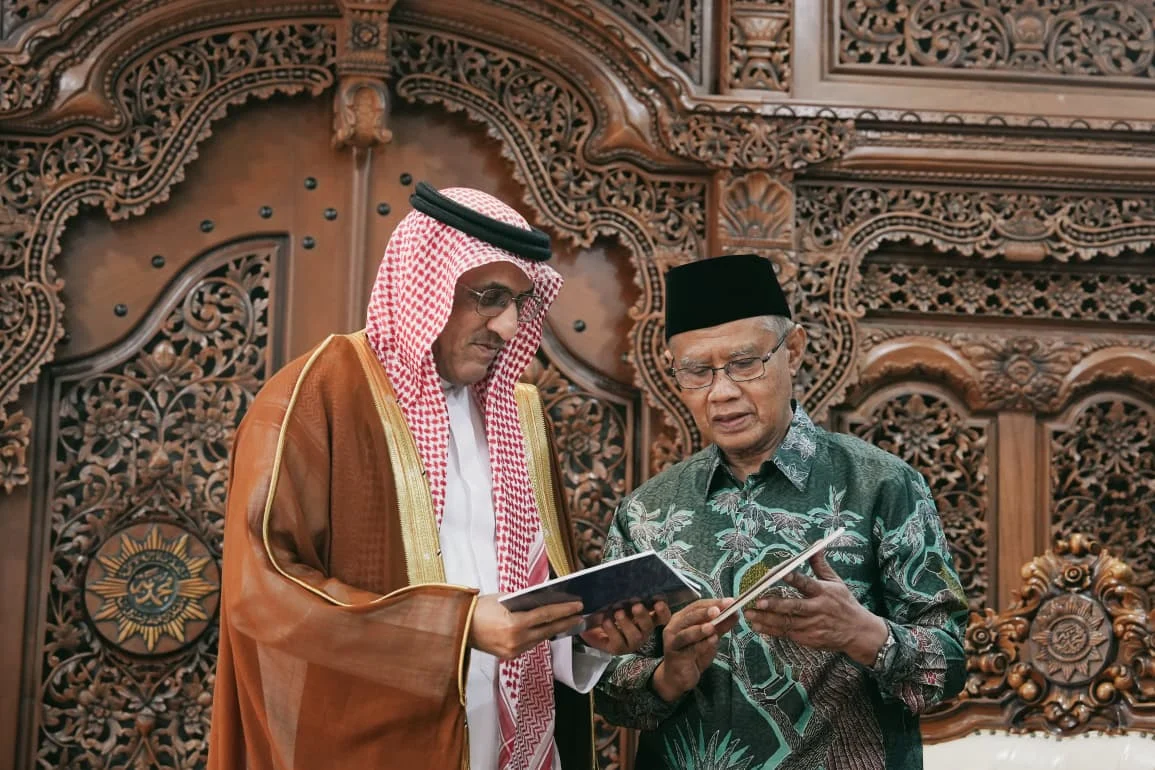
The Central Leadership of Muhammadiyah, one of Indonesia’s largest Islamic organizations, officially welcomed the Ambassador of the Kingdom of Saudi Arabia to Indonesia, Faisal bin Abdullah Al-Amudi, at the Muhammadiyah Central Office in Central Jakarta. The high-level diplomatic engagement served as a strategic platform to review and expand long-standing bilateral relations, address pressing geopolitical issues concerning the Islamic world, enhance economic and educational partnerships, and optimize the management and safety of the annual Hajj and Umrah pilgrimages.
The delegation from the Kingdom of Saudi Arabia was received by a prominent lineup of Muhammadiyah leaders, including General Chairperson of the Central Leadership of Muhammadiyah Haedar Nashir, Chairperson Anwar Abbas, Treasurer General Hilman Latief, and Muhammad Ziyad, Chairperson of the Hajj and Umrah Guidance Institution (LPHU) of Muhammadiyah. This diplomatic encounter underscores Muhammadiyah’s active role in international diplomacy and its ongoing commitment to serving as a bridge between the Indonesian Muslim community and the broader Middle Eastern landscape, specifically the Kingdom of Saudi Arabia.
Deepening Historical Ties and Mutual Appreciation
During the diplomatic talks, Haedar Nashir emphasized the profound historical connection shared between the Kingdom of Saudi Arabia and Muhammadiyah. Established more than a century ago, Muhammadiyah has consistently maintained a constructive and cooperative dialogue with Saudi authorities, rooted in shared Islamic values and a mutual dedication to advancing the welfare of the global Muslim community.
Haedar formally expressed Muhammadiyah’s deep respect and appreciation for the custodianship exercised by the Saudi monarchy over the Two Holy Mosques—Makkah and Madinah. He noted that the Kingdom’s dedication to maintaining these sacred sites allows millions of Muslims worldwide to perform their religious obligations safely and comfortably each year. Furthermore, Haedar highlighted that the positive diplomatic and spiritual rapport built over decades must be continuously preserved, nurtured, and adapted to meet contemporary challenges.
The meeting highlighted how non-state actors like Muhammadiyah play an essential complementary role to formal state diplomacy (Track Two diplomacy). By facilitating direct dialogues with key foreign missions in Jakarta, Muhammadiyah helps articulate the aspirations of millions of Indonesian Muslims while fostering a deeper cultural and religious understanding between nations.
Geopolitical Concerns and the Urgent Call for Islamic Unity
A significant portion of the dialogue between the Muhammadiyah leadership and Ambassador Faisal bin Abdullah Al-Amudi was dedicated to regional security, geopolitical stability, and the pressing need for solidarity among Muslim-majority nations. As conflicts and sectarian tensions continue to afflict various parts of the Middle East and the broader Gulf region, Haedar raised deep concerns regarding the devastating human and social costs borne by civilian populations caught in the crossfire.
Haedar strongly cautioned against internal conflicts and military aggressions among Muslim nations and communities. He articulated that hostility within the Islamic ummah fundamentally undermines the core principles of Islamic brotherhood (ukhuwah islamiyah) and severely weakens the collective standing of Muslims on the global stage.
"If fellow Muslim nations, Muslim countries, or groups within Muslim populations attack one another, it will only result in the fragility of the Islamic world in the eyes of other global powers and nations," Haedar stated during the discussion.
Echoing these concerns, Muhammadiyah expressed its strong support for regional diplomatic initiatives aimed at de-escalating conflicts across the Middle East. The organization urged Saudi Arabia, given its influential geopolitical and religious stature, to continue spearheading multilateral efforts that prioritize dialogue, peaceful conflict resolution, and long-term stability. The leaders agreed that unity is not merely an ideological ideal but a practical necessity for the survival, dignity, and socio-economic advancement of the global Muslim population.
Ensuring the Safety and Well-Being of Pilgrims
Given Indonesia’s status as the country with the largest Muslim population in the world, the logistics, safety, and spiritual welfare of Indonesian pilgrims traveling to Saudi Arabia for Hajj and Umrah remain a paramount concern for Muhammadiyah. With hundreds of thousands of Indonesians participating in these pilgrimages annually, the discussion naturally gravitated toward optimizing coordination between Indonesian religious organizations and Saudi authorities.
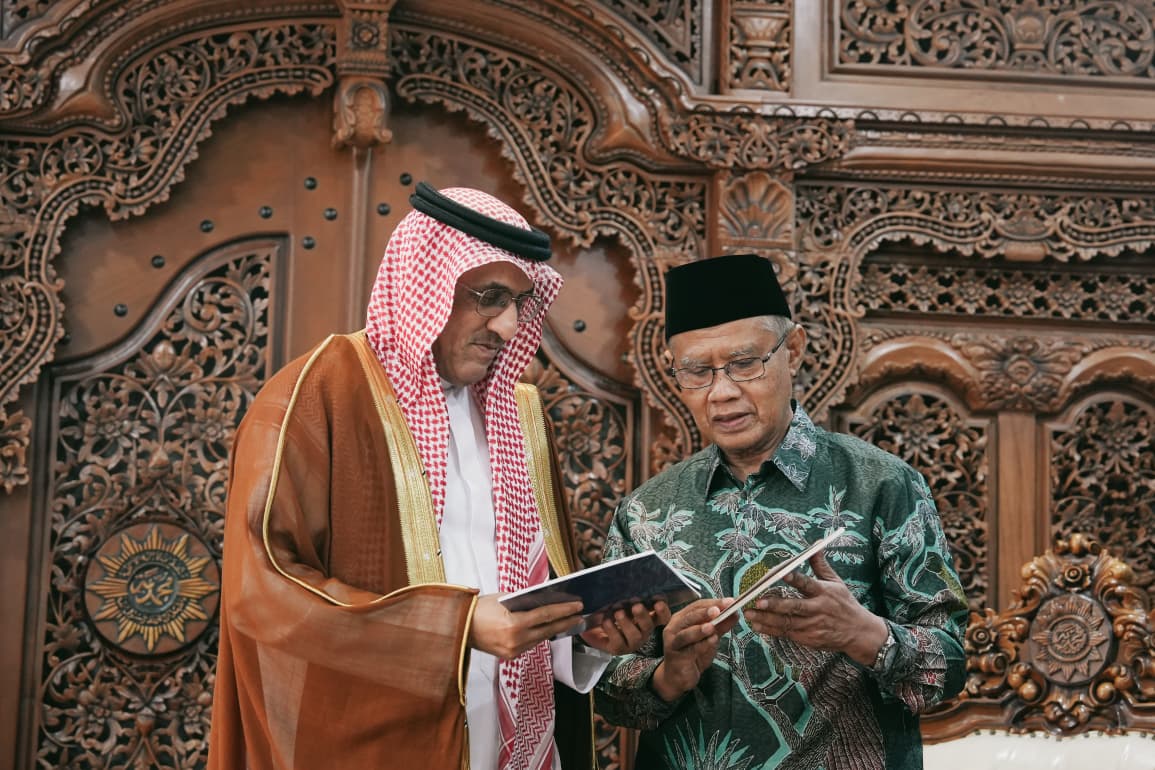
Muhammad Ziyad, speaking through the LPHU PP Muhammadiyah, emphasized the necessity of seamless institutional collaboration to address common logistical bottlenecks, health protocols, and accommodation standards. In response, Ambassador Faisal reaffirmed the unwavering commitment of the Saudi government to guarantee the safety, security, and comfort of all pilgrims visiting the Two Holy Mosques. The ambassador noted that the Kingdom continuously invests heavily in infrastructure, crowd management technologies, and regulatory frameworks to ensure that the annual pilgrimage proceeds without major disruptions.
Both parties acknowledged that transparent communication and proactive cooperation between Saudi administrative bodies and Indonesian religious institutions are vital to resolving any operational challenges that arise during peak pilgrimage seasons.
Expanding Educational, Cultural, and Economic Collaborations
Beyond diplomacy and religious pilgrimage management, the meeting laid out a comprehensive framework for expanding practical cooperation in education, human resource development, and economic empowerment. Muhammadiyah, which operates hundreds of higher education institutions, thousands of schools, and extensive health and social welfare networks across Indonesia, sought to deepen academic exchanges with Saudi institutions.
Haedar proposed an expansion of educational partnerships focusing on Arabic language proficiency, Islamic studies, and modern scientific integration for educators, university lecturers, preachers (mubalig), and mosque prayer leaders (imam). By upgrading the competencies of these key community figures through joint scholarships, training programs, and institutional linkages, both Muhammadiyah and Saudi Arabia hope to foster a moderate, enlightened, and forward-looking interpretation of Islam that counters radicalism and extremism.
Ambassador Faisal responded enthusiastically to these proposals, reiterating that the Saudi government stands fully prepared to facilitate deeper collaborations with Muhammadiyah. He emphasized that the Kingdom values its partnership with civil society organizations that actively contribute to societal enlightenment and economic prosperity.
"The relationship that has been well established will certainly be enhanced, and we are ready to provide assistance and cooperation with Muhammadiyah in advancing and prospering the Muslim community specifically," Ambassador Faisal affirmed.
Broader Socio-Economic Implications and Future Outlook
The visit of Ambassador Faisal bin Abdullah Al-Amudi to the Muhammadiyah Central Office carries substantial implications for the future of Indonesia-Saudi relations. In an era marked by rapid globalization and complex transnational challenges, the strengthening of ties between state representatives and influential civil society organizations creates a resilient framework for bilateral cooperation.
From an analytical perspective, this engagement signals a maturation of religious diplomacy in Southeast Asia. Muhammadiyah’s proactive stance on regional peace and Islamic solidarity positions the organization not merely as a domestic educational and social service provider, but as a credible international voice advocating for moderation (wasathiyah Islam) and global harmony.
Furthermore, the emphasis on economic cooperation points toward future initiatives involving halal industry development, Islamic finance, and trade partnerships that could mutually benefit the economies of both Indonesia and Saudi Arabia. As both entities move forward with the commitments made during this high-level meeting, the implementation of joint educational programs, enhanced pilgrimage services, and coordinated humanitarian efforts will serve as key performance indicators of this enduring partnership.
Ultimately, the meeting concluded with a shared optimism that the historical bonds between Muhammadiyah and the Kingdom of Saudi Arabia will continue to yield tangible benefits. By addressing modern geopolitical realities through the lens of shared values and mutual respect, both institutions have reinforced their dedication to fostering a more peaceful, unified, and prosperous global Muslim community.
