
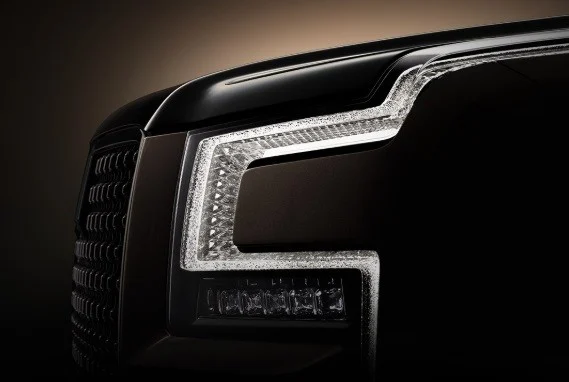
The global automotive hierarchy is facing a significant shift as BYD, the world’s leading manufacturer of new energy vehicles (NEVs), prepares to challenge the established titans of ultra-luxury motoring. On October 27, 2026, the Chinese automotive giant released the first official teasers for its latest flagship model, the Yangwang Altior, an all-electric sedan engineered to compete directly with the Rolls-Royce Ghost. This move signals a bold ambition by BYD to transcend its reputation as a mass-market electric vehicle producer and assert dominance in the high-end luxury segment.
Scheduled for an official global debut in Dubai, United Arab Emirates, on November 5, 2026, the Yangwang Altior represents the pinnacle of BYD’s technological capabilities. By choosing Dubai—a hub of wealth and luxury vehicle consumption—as the backdrop for the unveiling, BYD is signaling its clear intent to capture the attention of the world’s most discerning car buyers.
Technical Specifications and Engineering Prowess
The Yangwang Altior is designed to command presence on the road. With a total length of 5.5 meters and an expansive wheelbase of 3,350 mm, the vehicle offers interior dimensions that rival the most spacious sedans currently available on the market. These proportions are essential for a car competing in the ultra-luxury segment, where rear-seat passenger comfort and legroom are paramount.
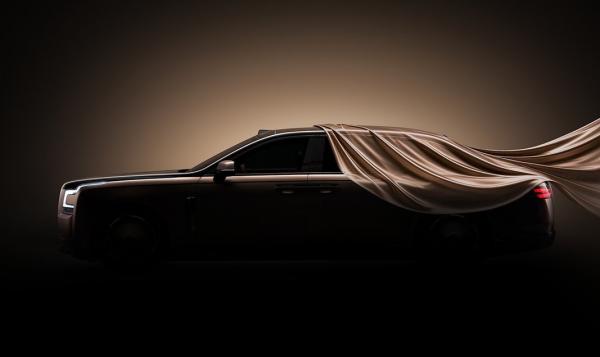
While full performance metrics have yet to be disclosed, industry analysts anticipate that the Altior will leverage BYD’s "e4" platform technology, which has already garnered significant praise in the Yangwang U8 SUV. This platform utilizes a quad-motor independent drive system, allowing for precise torque vectoring at each wheel. Such technology is expected to provide the Altior with exceptional handling characteristics, potentially offering a "magic carpet ride" experience that competitors like Rolls-Royce are famed for, but with the added silent efficiency of a high-capacity electric powertrain.
The estimated price point of 2 million yuan, approximately $280,000 USD or Rp5.4 billion, places the vehicle firmly in the territory of ultra-high-net-worth vehicle purchases. This pricing strategy suggests that BYD is not merely competing on value—a hallmark of its mass-market lineup—but is instead positioning the Yangwang brand as a premium status symbol that justifies its cost through artisanal craftsmanship and cutting-edge innovation.
Brand Strategy and Global Naming Convention
The evolution of the Yangwang brand is a calculated element of BYD’s global expansion. During a recent briefing, Hu Xiaoqing, General Manager of the Yangwang Sales Division, clarified the branding strategy for the new sedan. While the vehicle is known as the "Dingyao" within the domestic Chinese market, it will carry the name "Altior" for all international markets.
The choice of "Altior," derived from the Latin word meaning "higher" or "more elevated," reflects the company’s intent to reach the zenith of the automotive market. This naming shift is consistent with international luxury branding practices, where manufacturers ensure that product names resonate with global audiences while maintaining a distinct identity. The move also serves to distance the luxury arm from the main BYD badge, allowing the Yangwang sub-brand to operate with the exclusivity required for the ultra-luxury tier.

Design Philosophy: Fusing Heritage with Futurism
The design language of the Altior represents a departure from the conservative styling often found in traditional luxury sedans. Instead, the design team has drawn inspiration from "Ding," the ancient Chinese ritual bronze vessels. These artifacts, which feature distinct legs and handles, symbolize status, power, and longevity in Chinese culture.
By integrating these cultural motifs into the vehicle’s exterior—most notably in the front fascia—BYD is attempting to create a unique "design DNA" that is unmistakably Chinese yet globally sophisticated. This aesthetic approach mirrors the success of the Yangwang U8, which introduced this "Time Gate" design language to a global audience. The Altior expands on this, utilizing clean, flowing lines that disguise the vehicle’s massive footprint, providing an aerodynamic profile that is essential for maximizing electric range.
The Competitive Landscape
The entry of the Altior into the ultra-luxury sedan market arrives at a critical juncture for the automotive industry. For decades, the segment has been dominated by heritage brands such as Rolls-Royce, Bentley, and Mercedes-Maybach. These companies have relied on decades of brand equity, bespoke customization, and the perceived superiority of internal combustion engines.
However, the rapid transition to electrification has created a level playing field. Traditional luxury marques are currently in the process of adapting their platforms for electric propulsion, while BYD has been developing its own EV-only architecture for years.

Analysts note that the Yangwang Altior’s challenge to the Rolls-Royce Ghost is a testament to the maturation of the Chinese automotive industry. In the past, Chinese manufacturers were viewed primarily as producers of budget-friendly vehicles. Today, firms like BYD are setting global benchmarks in battery chemistry, software integration, and autonomous driving readiness. If the Altior can match the build quality and refined cabin atmosphere of its European counterparts, it could potentially lure buyers who are looking for the next generation of luxury—one that is defined by sustainable technology rather than traditional engine heritage.
Strategic Implications for the Market
The unveiling of the Altior in Dubai is not merely a product launch; it is a strategic maneuver to test the appetite for non-Western ultra-luxury vehicles. The Middle Eastern market is traditionally loyal to established European brands; however, it is also a market that prizes innovation and high-tech features.
Should the Altior succeed in capturing market share, the ripple effects will be significant:
- Market Repositioning: It will force legacy manufacturers to accelerate their transition to electric luxury, potentially lowering the barrier to entry for other high-end EV manufacturers.
- Supply Chain Dominance: As the world’s largest manufacturer of batteries and electric components, BYD’s ability to scale the Altior’s production will be closely watched. If they can produce a vehicle of this caliber at a scale that exceeds traditional "hand-built" luxury production methods, they may revolutionize the cost structure of the segment.
- Technological Benchmarking: The industry will be looking to see if the Altior’s software suite—which is expected to include advanced AI-driven features and comprehensive driver-assistance systems—can outperform the proprietary systems currently being deployed by luxury rivals.
Looking Ahead: The Road to November 5
As the automotive world prepares for the November 5 debut in Dubai, the anticipation is palpable. The transition from teaser images to a physical, production-ready vehicle will provide the final answers regarding the Altior’s interior luxury, the extent of its customization options, and the specific performance metrics of its electric drivetrain.
The Yangwang Altior stands as a symbol of China’s broader industrial ambition. It is a clear statement that the company is no longer content with volume and efficiency; it is now actively seeking to define what the "future of luxury" looks like in an era defined by decarbonization. Whether the Altior will successfully unseat the established icons of the industry remains to be seen, but its arrival confirms that the era of the ultra-luxury electric sedan has truly begun.
The implications for shareholders, competitors, and consumers are profound. For BYD, the success of the Altior is the final piece of the puzzle in its transformation into a comprehensive automotive conglomerate. For the industry, it is a reminder that the competitive landscape is shifting, and the definitions of prestige are being rewritten in real-time. As the countdown to the Dubai event begins, the global automotive community remains fixated on whether this new challenger from the East can effectively bridge the gap between high-tech efficiency and old-world opulence.
