
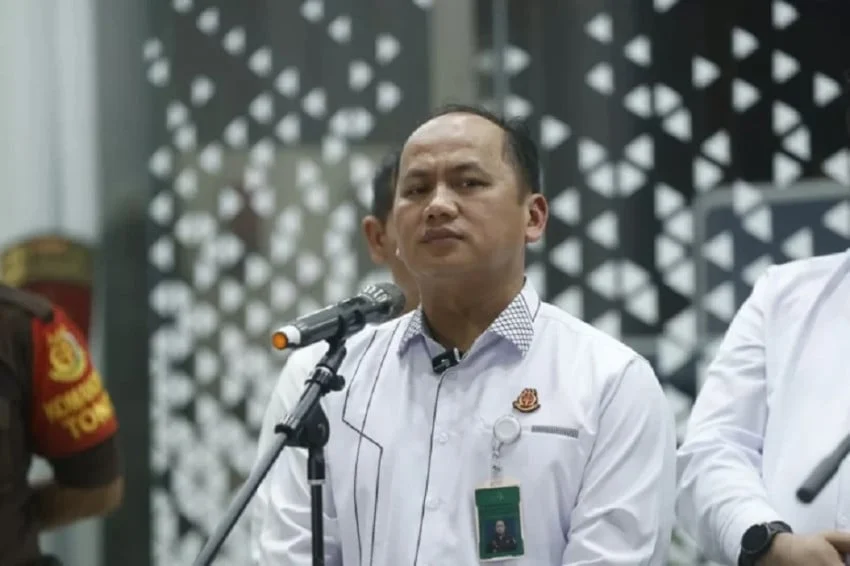
The investigation into the alleged corruption surrounding nickel mining governance in Southeast Sulawesi has reached a critical juncture as the Attorney General’s Office officially designated prominent businessman Arif Kurniawan, widely known as the Nickel King or Raja Nikel, as a suspect for alleged money laundering offenses. This high-profile legal development marks a significant escalation in the state’s ongoing efforts to sanitize the lucrative yet troubled natural resource sector, particularly within regions heavily endowed with critical battery minerals. The application of the money laundering statute against Arif Kurniawan underscores a strategic shift by law enforcement agencies moving beyond primary predicate offenses to aggressively track, freeze, and seize illicit financial flows and hidden assets amassed from systematic environmental and regulatory subversion.
Legal experts, civil society watchdogs, and anti-corruption observers have widely heralded the Attorney General’s Office for its unwavering resolve in pursuing high-net-worth individuals and corporate entities linked to resource extraction cartels. The broader implications of this case extend well beyond the borders of Southeast Sulawesi, serving as a litmus test for Indonesia’s judicial system to demonstrate that commercial dominance and localized political patronage do not confer immunity from the rule of law. As investigators dig deeper into the corporate webs, shell companies, and offshore accounts associated with the suspect, the case is anticipated to expose systemic vulnerabilities that have long plagued the nickel extraction licensing and distribution ecosystem.
Chronology and Investigation Milestones
The formal elevation of Arif Kurniawan to suspect status under the anti-money laundering framework is the culmination of an exhaustive, multi-month investigation spearheaded by the Junior Attorney General for Special Crimes. The inquiry into the Southeast Sulawesi nickel governance irregularities did not happen overnight; it represents the systematic unspooling of a complex web of administrative manipulation, illegal mining operations operating outside of official quotas, and the alleged circumvention of state revenue collection mechanisms.
Investigators initiated the comprehensive probe following intelligence reports and audits indicating massive financial discrepancies in regional mining operations. Over the course of the intensive intelligence-gathering and investigative phase, the Attorney General’s Office amassed a formidable evidentiary foundation. Official records indicate that the investigative team conducted formal examinations of no fewer than 60 witnesses, drawing from corporate executives, regional government officials, regulatory authorities, and financial intermediaries.
Furthermore, the evidentiary portfolio assembled by prosecutors includes the meticulous seizure of approximately 4,000 physical documents—ranging from corporate deeds, environmental impact assessments, and shipping manifests to financial ledger records and tax filings. To complement the documentary evidence, investigators secured 71 electronic evidence items, encompassing digital communications, server backups, and transaction records detailing the movement of capital across domestic and potentially international banking channels. Before formally executing the title upgrade to money laundering charges, prosecutors consulted extensively with specialized experts in money laundering countermeasures as well as certified forensic accountants specializing in state financial loss calculations. This rigorous methodological approach was designed to withstand anticipated legal challenges, including pretrial motions commonly deployed by high-profile corporate suspects in Indonesian courts.
Institutional Sinergy and the Push for Accountability
The handling of the Southeast Sulawesi nickel corruption scandal has drawn praise not only for its thoroughness but also for demonstrating effective institutional synergy within the Attorney General’s Office. Observers have noted that the investigative division under the specialized directorate has operated with a high degree of autonomy, shielded from external political interference and backed by the explicit mandate of the Attorney General.
Academic circles have been particularly vocal in validating this approach. Ismail Rumadan, a prominent researcher at the Research Center for Law under the National Research and Innovation Agency and an academic at the National University in Jakarta, emphasized the gravity of the institutional actions. According to Rumadan, the methodical targeting of both individual perpetrators and corporate vehicles demonstrates that contemporary law enforcement is increasingly equipped to dismantle organized economic crimes in the natural resources sector. He noted that the pursuit of Raja Nikel shatters the illusion of untouchability historically enjoyed by powerful figures with deep-seated political connections and extensive commercial patronage networks.
The emphasis on money laundering charges in addition to corruption allegations reflects a modern prosecutorial strategy. Rather than merely proving that a corrupt transaction occurred, investigators are actively pursuing the proceeds of crime to replenish state coffers through asset recovery mechanisms. This methodology aligns with international best practices promoted by the Financial Action Task Force, which urges developing nations rich in critical minerals to deploy anti-money laundering tools to combat environmental and resource-based corruption effectively.
Broader Economic and Industrial Implications
The prosecution of Arif Kurniawan arrives at a critical juncture for Indonesia’s industrial policy. As the global green transition accelerates demand for electric vehicle batteries, Indonesia has positioned itself as a global processing hub for nickel, implementing aggressive downstreaming policies designed to capture higher economic value domestically. However, the rapid expansion of the nickel industry has historically outpaced regulatory oversight, giving rise to systemic governance deficits, environmental degradation, illegal extraction outside designated concession boundaries, and non-compliance with royalty and tax obligations.
The alleged malfeasance in Southeast Sulawesi—one of the primary historical hearts of Indonesian nickel production—illustrates the darker side of the commodity boom. Unregulated and corrupt mining practices not only deprive the central and regional governments of crucial non-tax state revenues but also inflict long-term ecological damage on local ecosystems, threatening coastal fisheries and agricultural lands relied upon by indigenous and local communities.
By aggressively targeting key figures like the Nickel King, the state is signaling to the broader mining community that illicit enrichment at the expense of national patrimony will face severe judicial consequences. Industry analysts suggest that this enforcement action will likely induce a chilling effect on speculative and illegal mining syndicates, forcing mining corporations to tighten compliance protocols, adhere strictly to environmental safeguards, and honor financial obligations to the state.
Future Outlook of the Judicial Process
As the case transitions from the investigative phase toward the preparation of the indictment and subsequent trial proceedings at the Corruption Court, public and institutional scrutiny will remain intense. The primary challenge moving forward will lie in the comprehensive tracing and securing of all assets derived from the alleged criminal enterprise, both domestically and across international jurisdictions if capital flight has occurred.
The Attorney General’s Office faces the ongoing task of ensuring that the trial proceeds transparently and robustly, free from procedural vulnerabilities that could undermine the prosecution’s case. The successful conviction and asset forfeiture of figures central to the Southeast Sulawesi nickel network would establish a powerful legal precedent, fundamentally reshaping the governance landscape of Indonesia’s extractive industries and reinforcing the state’s authority over its strategic mineral wealth.
